Verbs of Mental Processes - Verbs for Assumption and Estimation

Here you will learn some English verbs referring to assumption and estimation such as "guess", "presume", and "speculate".

review-disable

review

flashcard-disable

flashcard

spelling-disable

spelling

quiz-disable

quiz

start-learning
Verbs of Mental Processes
to guess [verb]

to estimate or form a conclusion about something without sufficient information to verify its accuracy

Ex: Without a map , we had to guess the way to the beach .
to think [verb]

to imagine, expect, or intend something
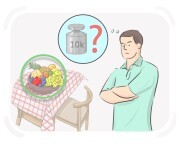
Ex: I think I 'll have the salad for lunch today .

to guess something using available information

Ex: Investors often reckon the potential return on investment before making financial decisions .

to think or believe that something is possible or true, without being sure
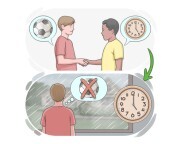
Ex: I suppose the project will be completed on time if everyone stays on track .

to think that something is true based on probability or likelihood
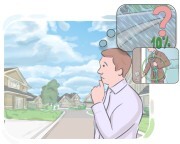
Ex: Seeing the closed doors , she presumed that the store had already shut for the day .

to think that something is true without having proof or evidence

Ex: Yesterday , he mistakenly assumed that the meeting was canceled .

to come to a conclusion without enough evidence

Ex: Finding the office empty , she surmised that the meeting had been rescheduled without prior notice .

to form a theory or opinion about a subject without knowing all the facts
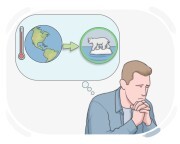
Ex: When the stock prices suddenly dropped , investors started to speculate on the reasons for the market downturn .

to formulate a hypothesis to explain something, often as a starting point for further investigation or study

Ex: Based on market trends , the company has theorized that launching a new product line would attract a wider customer base .

to propose a theory or explanation based on limited evidence

Ex: Before testing the new drug , pharmacologists hypothesized about its potential effectiveness in treating the medical condition .

to form an idea or opinion about something with limited information or unclear evidence

Ex: In the absence of concrete data , people began to conjecture about the potential causes of the mysterious sound .

to suppose or guess something without concrete evidence
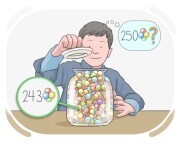
Ex: I imagine he 'll be surprised when he sees the birthday cake we got for him .

to estimate something by calculating and guessing

Ex: We need to guesstimate how much time it will take to complete the project .

to guess the value, number, quantity, size, etc. of something without exact calculation
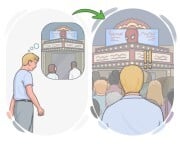
Ex: He estimated the distance to be around five miles .

to guess or calculate a value, size, etc. to be lower than it actually is
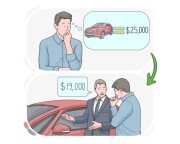
Ex: The manager regretted underestimating the demand for the new product .

to guess or calculate a value, size, or etc. to be higher than it actually is

Ex: The project manager cautioned against overestimating the budget for the upcoming project .

to estimate something using past experiences or known data

Ex: Economists use historical data to extrapolate potential impacts of policy changes on the market .

to make a rough guess about quantities or time
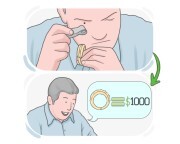
Ex: We need to approximate the time it will take to complete the project .
to value [verb]

to determine or assign a monetary worth to something

Ex: The jeweler valued the diamond ring at a significant amount .

to determine the worth or importance of something

Ex: Before making a purchase , consumers often valuate the quality and pricing of products .

to guess or predict future outcomes or trends based on current data or analysis

Ex: Meteorologists use weather patterns to project the likelihood of storms in the coming days .