English Conjunctions of "Contrast"

These conjunctions are used to show a relationship between two clauses, where the second clause presents a fact or idea that is in contrast to the first clause.

review-disable

review

flashcard-disable

flashcard

spelling-disable

spelling

quiz-disable

quiz

start-learning
Conjunctions
but [conjunction]

used for introducing a word, phrase, or idea that is different to what has already been said
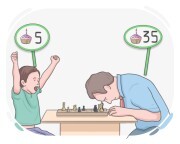
Ex: The cat is adorable , but it can be mischievous at times .
yet [conjunction]

used to add a statement that is surprising compared to what has just been said

Ex: The car is expensive , yet it lacks some basic features .
even though [conjunction]

used to indicate that despite a certain fact or situation mentioned in the first clause, the second clause follows

Ex: Even though he was tired , he stayed up late to finish the project .
though [conjunction]

used to say something surprising compared to the main idea

Ex: Though it was raining hard , we continued our picnic .
although [conjunction]

used to introduce a contrast to what has just been said

Ex: She managed to pass the exam although she did n't study much .
even if [conjunction]

used to introduce a hypothetical or conditional situation that contrasts with reality, implying that regardless of whether a certain condition is fulfilled or not, the outcome or action mentioned will still occur

Ex: He will find a way to succeed even if he faces numerous challenges .
while [conjunction]

despite the fact that; even though

Ex: While he faced numerous challenges , he never gave up on his dream .
whereas [conjunction]

used to introduce a statement that is true for one thing and false for another

Ex: The first book was long and detailed , whereas the second one was short and concise .
albeit [conjunction]

used to introduce a contrasting or qualifying statement

Ex: The movie received positive reviews , albeit from a limited audience .
rather than [conjunction]

used to express a preference or choice between two alternatives

Ex: They opted for a quiet dinner at home rather than go out to a restaurant .
much as [conjunction]

used to show a contrast between two things or situations

Ex: Much as he tried to hide his disappointment , it was evident in his expression .
when [conjunction]

used to imply unexpected or ironic outcomes

Ex: He remained calm when everyone else panicked .
whilst [conjunction]

used to indicate a contrast between two ideas or actions

Ex: He is outgoing , whilst his brother is shy .
let alone [conjunction]

much less

Ex: He would never walk again , let alone play golf .
no that [conjunction]

used to introduce a clarification, exception, or contrast to a previous statement or idea

Ex:
save [conjunction]

used to introduce an exception or concession to what has been stated previously

Ex: The plan was well-thought-out , save that it failed to account for unexpected delays .
only [adverb]

used to introduce a restriction, exception, or limitation to what has been stated

Ex: She agreed to join us , only she had to leave early .
except [conjunction]

used before you mention something that makes a statement not completely true