


pattern

Humanités SAT - Loi et Obligations

Ici, vous apprendrez quelques mots anglais liés à la loi et aux obligations, tels que "affidavit", "felony", "judicial", etc., dont vous aurez besoin pour réussir vos SATs.

Réviser

Flashcards

formes

Orthographe

Quiz

Commencer à apprendre
SAT Vocabulary for Humanities
proceeding

the formal process or legal action taken within a court to resolve a dispute, administer justice, etc.

procédure,  instance

procédure, instance

Ex: The court proceeding lasted for several weeks as both sides presented their arguments and evidence. 
provision

an agreed-upon condition or requirement outlined in an agreement, law, or document

disposition,  clause

disposition, clause

Ex: The contract includes a provision for early termination with a penalty. 
affidavit

a written statement affirmed by oath that can be used as evidence in court

affidavit

affidavit

Ex: She signed an affidavit, swearing under oath to tell the truth in her statement to the court. 
testimony

a formal statement saying something is true, particularly made by a witness in court

témoignage, déposition

témoignage, déposition

Ex: The witness provided compelling testimony that corroborated the victim's account. 
accusation

a statement declaring someone's guiltiness with certainty

accusation

accusation

ruling
ruling
[nom]

a decision made by someone with official power, particularly a judge

décision

décision

Ex: The Supreme Court's ruling on the case set a precedent for future privacy rights. 
felony
felony
[nom]

a serious crime such as arson, murder, rape, etc.

crime, forfait

crime, forfait

Ex: Tax evasion is a felony offense that can lead to substantial fines and imprisonment if convicted. 
parole
parole
[nom]

(law) the permission for a prisoner to leave prison before the end of their imprisonment sentence, on the condition of good conduct

liberté conditionnelle

liberté conditionnelle

Ex: After serving half of his sentence in prison, the inmate was eligible for parole, subject to certain conditions and supervision. 
penalty
penalty
[nom]

a punishment given for breaking a rule, law, or legal agreement

pénalité

pénalité

Ex: If you fail to file your taxes on time, you will incur a penalty. 
libel
libel
[nom]

a written statement in a legal case, outlining the harmful statements made against someone and what they seek from the court

diffamation, calomnie

diffamation, calomnie

Ex: The defendant's legal team responded to the libel with a motion to dismiss, arguing that the statements in question did not constitute defamation. 
counterclaim

a response in court, stating an opposing demand

contre-demande

contre-demande

trustee
trustee
[nom]

a person or group of people who control the property or money that belongs to another person

fidéicommissaire, curateur, fiduciaire

fidéicommissaire, curateur, fiduciaire

Ex: The trustee managed the estate to ensure the beneficiaries received their inheritance according to the will. 
offender

a person who commits a crime

délinquant, délinquante

délinquant, délinquante

Ex: The police apprehended the offender and took him into custody. 
verdict
verdict
[nom]

an official decision made by the jury in a court after the legal proceedings

verdict

verdict

Ex: The jury reached an unanimous verdict of guilty after deliberating for several hours. 
acquittal

an official judgment in court of law that declares someone not guilty of the crime they were charged with

acquittement

acquittement

Ex: The defendant was relieved to receive an acquittal after a lengthy trial, as the jury found them not guilty of all charges. 
penitentiary

a prison or correctional facility where individuals convicted of serious crimes are confined and undergo rehabilitation

pénitencier, établissement pénitentiaire

pénitencier, établissement pénitentiaire

Ex: The notorious criminal was sentenced to life in the state penitentiary. 
reformatory

an institution designed to reform or rehabilitate young offenders rather than simply punish them

établissement de rééducation, maison de correction

établissement de rééducation, maison de correction

Ex: The troubled teenager was sent to a reformatory to receive guidance and education. 
statutory
statutory
[Adjectif]

according to or allowed by law

statutaire

statutaire

Ex: The company's actions were found to be in compliance with statutory regulations. 
judicial
judicial
[Adjectif]

belonging or appropriate for a court, a judge, or the administration of justice

judiciaire

judiciaire

Ex: The judicial branch of government oversees the interpretation and application of laws through courts and judges. 
indeterminate
indeterminate
[Adjectif]

(of a judicial sentence) establishing a range of time within which the offender will serve their sentence, with the possibility of early release

indéterminé, à durée indéterminée

indéterminé, à durée indéterminée

Ex: In some cases, an indeterminate sentence may be more appropriate than a fixed term. 
to indict
to indict
[verbe]

to officially accuse a person of a crime

inculper

inculper

Ex: The grand jury decided to indict the suspect on charges of robbery and assault. 
to banish
to banish
[verbe]

to force someone to leave a country, often as a form of punishment or to keep them away

bannir, exiler

bannir, exiler

Ex: The king decided to banish the traitor from the kingdom for his treachery. 
to exile
to exile
[verbe]

to force someone to live away from their native country, usually due to political reasons or as a punishment

exiler

exiler

Ex: The political dissident was exiled from the country for speaking out against the government. 
to outlaw
to outlaw
[verbe]

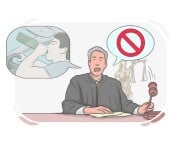
to officially state that something is illegal

interdire, proscrire

interdire, proscrire

Ex: The government decided to outlaw the sale of counterfeit goods to protect consumers. 
to authorize

to officially give permission for a specific action, process, etc.

autoriser

autoriser

Ex: The manager will authorize the contract by signing it, giving official approval for the business deal. 
to enact
to enact
[verbe]

to approve a proposed law

décréter

décréter

Ex: The legislature voted to enact new regulations governing environmental protection. 
to convict
to convict
[verbe]

to announce officially that someone is guilty of a crime in a court of law

reconnaître coupable

reconnaître coupable

Ex: The jury deliberated and decided to convict the defendant of murder. 
to execute
to execute
[verbe]

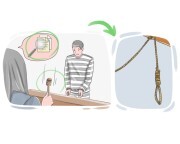
to kill someone, especially as a legal penalty

exécuter

exécuter

Ex: The condemned criminal was executed by lethal injection after exhausting all appeals. 
to prosecute

to try to charge someone officially with a crime in a court as the lawyer of the accuser

intenter une action

intenter une action

Ex: The lawyer was hired to prosecute the case on behalf of the victim’s family. 
to arbitrate

to officially resolve a disagreement between people

arbitrer, trancher,	jouer le rôle d'arbitre

arbitrer, trancher, jouer le rôle d'arbitre

Ex: The two companies, unable to reach an agreement, decided to have a third party arbitrate their dispute. 
non-disclosure agreement

a legally binding contract between parties, typically individuals or businesses, that outlines confidential information that the parties agree not to disclose to others

accord de confidentialité, contrat de non-divulgation

accord de confidentialité, contrat de non-divulgation

Ex: Before discussing the details of the new product, the company required all employees to sign a non-disclosure agreement. 
confidentiality

the assurance that sensitive information will not be divulged without proper consent

confidentialité, secret professionnel

confidentialité, secret professionnel

Ex: In the medical field, patient confidentiality is paramount to protect sensitive health information. 
obligation

an action that one must perform because they are legally or morally forced to do so

obligation, contrainte

obligation, contrainte

Ex: Paying taxes is a civic obligation that supports public services and infrastructure. 
infringement

an action that is against a law. regulation, or agreement

infraction, violation

infraction, violation

infraction

the act of breaking or not obeying a law, agreement, etc.

infraction

infraction

Ex: The police issued a citation for the minor infraction of jaywalking. 
inviolable
inviolable
[Adjectif]

unable to be broken or dishonored, often due to its importance or protection by law or custom

inviolable, inaliénable

inviolable, inaliénable

Ex: The nation's constitution is considered an inviolable document, safeguarding the rights of its citizens. 
to exempt
to exempt
[verbe]

to officially excuse someone from a requirement or obligation

exempter

exempter

Ex: The government announced a program to exempt low-income families from certain property taxes. 
to commit
to commit
[verbe]

to state that one is bound to do something specific

se tenir à, s’engager

se tenir à, s’engager

Ex: Upon joining the project, team members committed to meeting deadlines and delivering high-quality results. 
to entrust
to entrust
[verbe]

to give someone the responsibility of taking care of something important, such as a task, duty, or information

confier, déléguer

confier, déléguer

Ex: The manager decided to entrust the key project to the experienced team lead. 
to pledge
to pledge
[verbe]

to make a binding agreement

s'engager, promettre

s'engager, promettre

Ex: The employees were pledged to confidentiality regarding the upcoming product launch. 
to slander
to slander
[verbe]

to make false and adverse statements about someone for defamation

calomnier

calomnier

LanGeek
Télécharger l'application LanGeek