
Hubungan - Keluarga
Kuasai idiom bahasa Inggris mengenai keluarga, seperti "lahir dan dibesarkan" dan "domba hitam".
Tinjau ulang
Kartu flash
Kuis
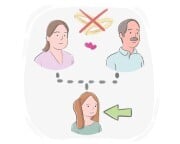
a child who had parents that were not married to one another

anak di luar nikah, anak haram
Di masa lalu, anak di luar nikah sering menghadapi stigma sosial.
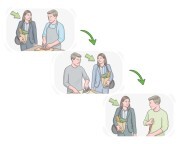
a woman that is regarded as the one who provides for her family
ibu tulang punggung, penopang keluarga
Sebagai ibu tulang punggung rumah tangga, dia bekerja dua pekerjaan.
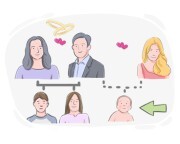
used to refer to a child whose parents were not married at the time of birth
lahir di luar nikah, anak di luar nikah
Dia lahir di luar nikah, tetapi keluarganya sangat menyayanginya.
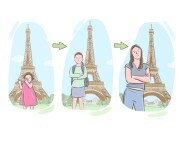
used to refer to a place one was born or grew up in
lahir dan besar di, orang asli daerah
Mereka lahir dan besar di kota kecil ini.

to be expecting a child
hamil, sedang mengandung
Sepertinya kakakku hamil.
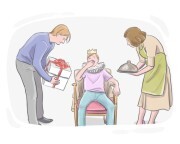
to protect or treat someone or something in an overly cautious or overprotective manner
terlalu melindungi, memanjakan berlebihan
Dia terlalu dilindungi saat kecil.
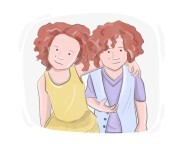
a specific sibling combination consisting of a boy and a girl, typically born consecutively in the same family
sepasang anak laki-laki dan perempuan, pasangan kakak-adik
Pasangan itu akhirnya punya satu anak laki-laki dan satu perempuan.
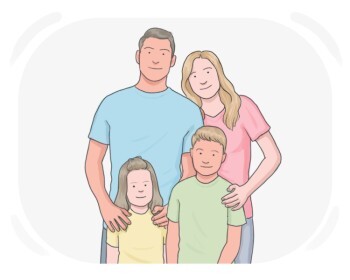
used to describe someone with whom one shares a family relation
daging dan darah sendiri, kerabat sedarah
Dia adalah daging dan darahnya, bukan orang asing.

a lecture or reprimand a wife gives to her husband in private
teguran istri secara pribadi, omelan rumah tangga
Dia takut pada teguran pribadi setelah setiap pertengkaran.
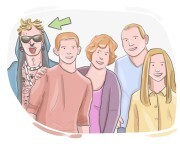
someone who is regarded as shameful, embarrassing, or disgraceful within their family or group
kambing hitam keluarga, aib keluarga
Mereka memperlakukannya seperti kambing hitam.
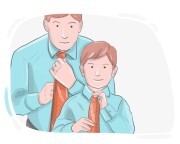
someone who closely resembles their parent, especially in terms of personality, traits, or behavior
buah jatuh tak jauh dari pohonnya, sangat mirip orang tuanya
Semua orang bilang dia mirip ayahnya.
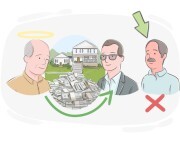
to disinherit or withdraw financial support from a family member as a way to express disapproval or to enforce certain behaviors or decisions
mencabut warisan, menghentikan dukungan finansial
Dia berjanji akan mencabut warisan anaknya jika terus berjudi.
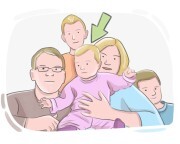
used to refer to the youngest child of a family
si bungsu dalam keluarga, anak bungsu
Dia adalah si bungsu dalam keluarga.
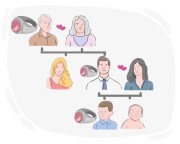
used to refer to the passing down of traditions, knowledge, values, or skills from one generation to the next, especially from a father to his son
dari ayah ke anak, warisan antar generasi
Pengetahuan ini diwariskan dari ayah ke anak.

to be a characteristic, quality, ability, or medical condition that occurs repeatedly among members of the same family, often because it is inherited
one's relatives, friends, and other people with whom one has close personal or family connections
pregnant or expecting a baby, especially when referring to pregnancy in a polite or indirect manner
pregnant, especially when referring to an unexpected or unplanned pregnancy in a casual or humorous manner
pregnant, particularly when the pregnancy is unexpected or discussed in a humorous or indirect way
pregnant or expecting a baby, used as a humorous or lighthearted way of referring to pregnancy
a family situation or stage of life in which the children have grown up and moved away from home, leaving their parents living without them
used to refer to one's closest and most intimate family members or friends
to behave as though a family or group is happy, united, and free from conflict, especially when disagreements or tensions actually exist
a woman who is excessively protective, attentive, or concerned about the well-being of others, often treating them as though they need constant care and supervision
a boy or man who is considered excessively dependent on or attached to his mother, especially when he relies on her for decisions, approval, or emotional support
a distant relative or someone related through extended family connections who is familiar enough to be greeted affectionately, although not part of one's immediate family
one's biological children or descendants, especially when emphasizing the family relationship in a humorous, dramatic, or old-fashioned manner
to leave one's parents' home and begin living independently, especially upon reaching adulthood or starting a new stage of life
used to refer affectionately or humorously to the arrival or expected arrival of a baby, especially when expressing hopes or expectations about having children
pregnant or carrying an unborn baby, especially when expressing the condition in a formal, literary, or old-fashioned manner
to be pregnant and therefore thought to need more food or nourishment than usual, often used humorously to explain an increased appetite
the birth of a baby, especially when regarded as a happy, fortunate, or important occasion for the family
a newborn baby or very young child, especially when regarded as a source of great happiness, affection, and excitement for the family
