


大妈妈
在我们的家庭中,她不仅是一位母亲,还是我们的大妈妈,不辞辛劳地以爱和奉献来满足我们的需求。
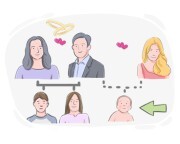
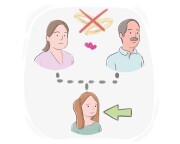
used to refer to a child whose parents were not married at the time of birth
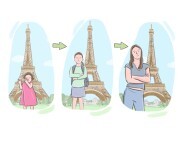
used to refer to a place one was born or grew up in
![to [have] a bun in the oven](https://cdn.langeek.co/photo/21997/thumb/180?type=jpeg "to [have] a bun in the oven")
![to [wrap] {sb} (up|) in cotton wool](https://cdn.langeek.co/photo/40191/thumb/180?type=jpeg "to [wrap] {sb} (up|) in cotton wool")
to protect or treat someone or something in an overly cautious or overprotective manner
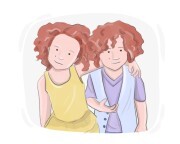
鸽子对
史密斯夫妇很高兴有一对鸽子对,因为他们一直梦想着既有一个儿子又有一个女儿。
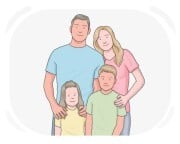
used to describe someone with whom one shares a family relation

帘后训话
彼得在忘记他们的结婚纪念日后,收到了妻子的一次幕后训话。
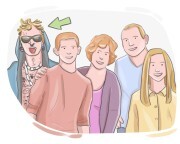
害群之马
爱丽丝的反叛行为和对权威的漠视使她赢得了学校害群之马的名声。
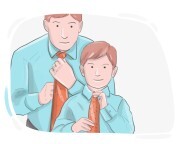
someone who closely resembles their parent, especially in terms of personality, traits, or behavior
![to [cut] {sb} off with a (cent|penny)](https://cdn.langeek.co/photo/40235/thumb/180?type=jpeg "to [cut] {sb} off with a (cent|penny)")
to disinherit or withdraw financial support from a family member as a way to express disapproval or to enforce certain behaviors or decisions
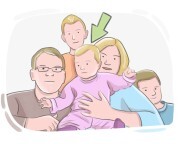
used to refer to the youngest child of a family
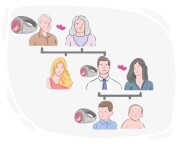
used to refer to the passing down of traditions, knowledge, values, or skills from one generation to the next, especially from a father to his son