
Vocabulário para IELTS (Acadêmico) - História
Aqui você aprenderá algumas palavras em inglês sobre história, como "explorador", "civilização", "monumento", etc., que são necessárias para o exame IELTS.
Revisar
Flashcards
Ortografia
Quiz


clothing characteristic of a particular country, social class, or historical period

traje tradicional, vestimenta tradicional
a person who visits unknown places to find out more about them
explorador, aventureiro
Ela sonhava em se tornar uma exploradora e viajar para ilhas remotas.
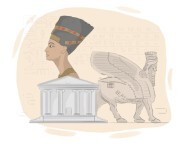
related to the study or depiction of events, people, or objects from the past
histórico
O documentário forneceu um relato detalhado dos eventos históricos durante a guerra.
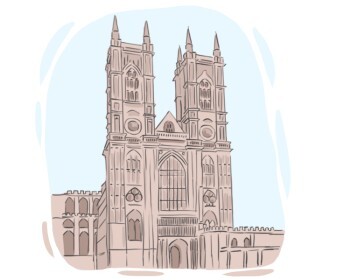
a group of buildings where a community of monks or nuns lives or formerly lived, typically including a church
abadia, mosteiro

a period of history identified with a particular event
época, era
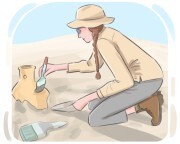
a person whose job is to study ancient societies using facts, objects, buildings, etc. remaining in excavation sites
arqueólogo
a society that has developed its own culture and institutions in a particular period of time or place
civilização, sociedade
O surgimento da civilização na Mesopotâmia marcou o início da história registrada.
a major division of geological time that is divided into periods
era, época

a territory governed by an emperor or empress, under imperial authority
império, império

in an earlier period
anteriormente, outrora
A cidade era antigamente uma vila tranquila, mas transformou-se numa cidade movimentada.
a person who studies, researches, or writes about history
the point or place where something has its foundation or beginning
origem, fonte

a traditional story about gods, heroes, or supernatural events, often explaining a culture's history, beliefs, or natural phenomena
mito
an old building, structure, or site preserved or valued for its historical importance
monumento, edifício histórico

the fundamental change of power, government, etc. in a country by people, particularly involving violence
revolução
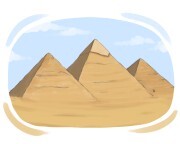
a stone monument built in ancient Egypt usually as a tomb for the pharaohs, which has a triangular or square base that slopes up to the top
pirâmide, monumento piramidal
A pirâmide de Gizé é uma das sete maravilhas do mundo antigo.
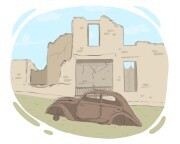
the remains of a building, town, or other structure that has been destroyed or fallen into decay

the people from whom a person is descended
ascendência, linhagem

people in the highest class of society who have a lot of power and wealth and usually high ranks and titles
aristocracia, nobreza
A aristocracia se opôs a muitas reformas sociais que ameaçavam seus privilégios.
the study of past events for the purpose of determining the order by which they occurred
cronologia, estudo cronológico

a structure or town that has been designed for military defense against enemy attacks
fortaleza, cidadela
Eles buscaram refúgio dentro da fortaleza durante o ataque à sua vila.
a person who takes over a job, position, title, or role after someone else
sucessor, sucessora
referring to the previous state or condition of an object, organization, or place, which has since changed
antigo, anterior

used to refer to a date that is after the birth of Jesus Christ
depois de Cristo, d.C.

marking the years before Christ's supposed birth
antes de Cristo
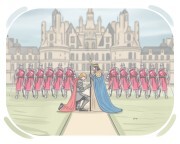
an era in European history, between about AD 1000 and AD 1500, when the authority of kings, people of high rank, and the Christian Church was unquestionable
a Idade Média, o período medieval
A Idade Média viu a propagação da arquitetura gótica, evidente nas grandes catedrais construídas durante esse tempo.
