
Vocabular pentru IELTS (Academic) - Istorie
Aici vei învăța câteva cuvinte în engleză despre istorie, cum ar fi "explorator", "civilizație", "monument" etc., care sunt necesare pentru examenul IELTS.
Revizuire
Fișe de studiu
Ortografie
Chestionar

clothing characteristic of a particular country, social class, or historical period

costum tradițional, îmbrăcăminte tradițională
a person who visits unknown places to find out more about them
explorator, aventurier
Exploratorii au jucat un rol cheie în descoperirea de noi continente.
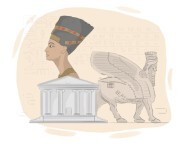
related to the study or depiction of events, people, or objects from the past
istoric
Au vizitat un sit istoric pentru a afla mai multe despre patrimoniul regiunii.
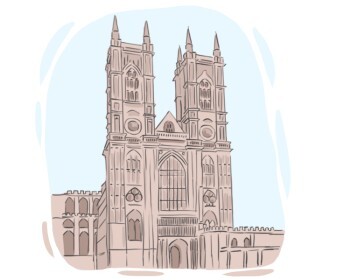
a group of buildings where a community of monks or nuns lives or formerly lived, typically including a church
abație, mănăstire

a period of history identified with a particular event
epocă, eră
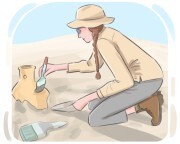
a person whose job is to study ancient societies using facts, objects, buildings, etc. remaining in excavation sites
arheolog
a society that has developed its own culture and institutions in a particular period of time or place
civilizație, societate
Egiptul antic este considerat una dintre cele mai mari civilizații din istorie.
a major division of geological time that is divided into periods
eră, perioadă

a territory governed by an emperor or empress, under imperial authority
imperiu, imperiu

in an earlier period
fost, altădată
Ea a fost anterior profesoară înainte de a urma o carieră în jurnalism.
a person who studies, researches, or writes about history
istoric, istorică
the point or place where something has its foundation or beginning
origine, sursă

a traditional story about gods, heroes, or supernatural events, often explaining a culture's history, beliefs, or natural phenomena
mit
an old building, structure, or site preserved or valued for its historical importance
monument, clădire istorică

the fundamental change of power, government, etc. in a country by people, particularly involving violence
revoluție
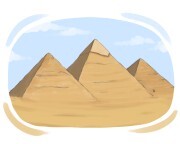
a stone monument built in ancient Egypt usually as a tomb for the pharaohs, which has a triangular or square base that slopes up to the top
piramidă, monument piramidal
Turistii se adună să vadă vechile piramide din Egipt.
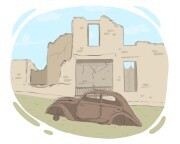
the remains of a building, town, or other structure that has been destroyed or fallen into decay
ruină, ruine

the people from whom a person is descended
ascendență, neam

people in the highest class of society who have a lot of power and wealth and usually high ranks and titles
aristocrație, nobilime
Evenimentul a fost frecventat de membri ai aristocrației în ținută elegantă.
the study of past events for the purpose of determining the order by which they occurred
cronologie, studiul cronologic

a structure or town that has been designed for military defense against enemy attacks
cetate, citadelă
Cetatea veche stătea pe vârful dealului, dominând ținutul înconjurător.
a person who takes over a job, position, title, or role after someone else
succesor, urmaș
referring to the previous state or condition of an object, organization, or place, which has since changed
fost, anterior

used to refer to a date that is after the birth of Jesus Christ
după Hristos, d.Hr.

marking the years before Christ's supposed birth
înainte de Hristos
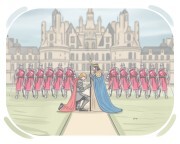
an era in European history, between about AD 1000 and AD 1500, when the authority of kings, people of high rank, and the Christian Church was unquestionable
Evul Mediu, perioada medievală
Multe universități și centre de învățământ importante au fost înființate în Europa în timpul Evului Mediu.
