
Woordenschat voor IELTS (Academisch) - History

Hier leer je enkele Engelse woorden over geschiedenis, zoals "ontdekkingsreiziger", "beschaving", "monument", etc., die nodig zijn voor het IELTS-examen.

review-disable

Herzien

flashcard-disable

Flashcards

spelling-disable

Spelling

quiz-disable

Quiz

Begin met leren
Woordenschat voor IELTS (Academisch)
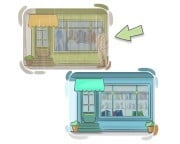
costume [zelfstandig naamwoord]

اجرا کردن

clothing characteristic of a particular country, social class, or historical period

Ex: Costume often signifies identity or heritage .
explorer [zelfstandig naamwoord]
اجرا کردن

ontdekkingsreiziger

Ex: Ancient explorers relied on stars and maps to navigate the seas .

Oude ontdekkingsreizigers vertrouwden op sterren en kaarten om over zeeën te navigeren.

historical [bijvoeglijk naamwoord]
اجرا کردن

historisch

Ex: He enjoys reading historical novels that bring the past to life .

Hij geniet van het lezen van historische romans die het verleden tot leven brengen.

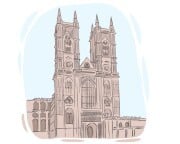
abbey [zelfstandig naamwoord]
اجرا کردن

abdij

Ex: We visited the abbey during our vacation , marveling at its breathtaking architecture and tranquil surroundings .

We bezochten de abdij tijdens onze vakantie en bewonderden de adembenemende architectuur en de rustige omgeving.

age [zelfstandig naamwoord]
اجرا کردن

tijdperk

Ex: An age of economic prosperity followed the industrial revolution , leading to increased wealth and development .

Een tijdperk van economische welvaart volgde op de industriële revolutie, wat leidde tot meer rijkdom en ontwikkeling.

civilization [zelfstandig naamwoord]
اجرا کردن

beschaving

Ex: Many aspects of Greek civilization influence contemporary philosophy and art .

Veel aspecten van de Griekse beschaving beïnvloeden de hedendaagse filosofie en kunst.

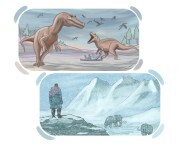
era [zelfstandig naamwoord]
اجرا کردن

a formal subdivision of geological time, typically spanning several periods

Ex: Geologists debate the boundaries of each era .
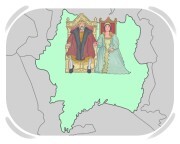
empire [zelfstandig naamwoord]
اجرا کردن

a territory governed by an emperor or empress, under imperial authority

Ex: The empire maintained order through a complex bureaucracy .
formerly [bijwoord]
اجرا کردن

vroeger

Ex: The building , formerly a bank , has been converted into a trendy art gallery .

Het gebouw, vroeger een bank, is omgebouwd tot een trendy kunstgalerie.

historian [zelfstandig naamwoord]
اجرا کردن

historicus

Ex: The museum consulted a historian to verify the artifact 's origin .

Het museum raadpleegde een historicus om de oorsprong van het artefact te verifiëren.

origin [zelfstandig naamwoord]
اجرا کردن

oorsprong

Ex: They traced the origin of the disease to a specific animal species .

Ze hebben de oorsprong van de ziekte herleid tot een specifieke diersoort.

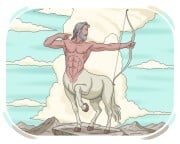
myth [zelfstandig naamwoord]
اجرا کردن

mythe

Ex: The villagers passed the myth down through generations .
monument [zelfstandig naamwoord]
اجرا کردن

monument

Ex: The Lincoln Memorial in Washington , D.C. , is a monument dedicated to the 16th President of the United States .

Het Lincoln Memorial in Washington, D.C., is een monument gewijd aan de 16e president van de Verenigde Staten.

revolution [zelfstandig naamwoord]
اجرا کردن

revolutie

Ex: The revolution was sparked by widespread discontent with the oppressive regime .

De revolutie werd veroorzaakt door wijdverbreide ontevredenheid met het onderdrukkende regime.

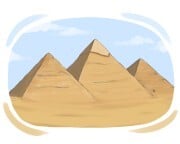
pyramid [zelfstandig naamwoord]
اجرا کردن

piramide

Ex: Scientists still study how ancient civilizations built their pyramids .

Wetenschappers bestuderen nog steeds hoe oude beschavingen hun piramides bouwden.

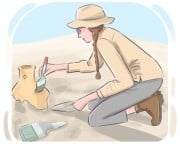
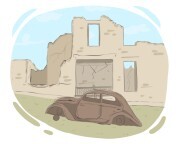
ruin [zelfstandig naamwoord]
اجرا کردن

ruïnes

Ex: The archaeologists worked to preserve the historical ruins .

De archeologen werkten aan het behoud van de historische ruïnes.

ancestry [zelfstandig naamwoord]
اجرا کردن

the people from whom a person is descended

Ex: Many people use DNA tests to explore their ancestry .
aristocracy [zelfstandig naamwoord]
اجرا کردن

aristocratie

Ex: The aristocracy often lived in grand estates and manors .

De aristocratie woonde vaak in grote landgoederen en herenhuizen.

fortress [zelfstandig naamwoord]
اجرا کردن

vesting

Ex: The walls of the fortress were built thick and high to withstand sieges .

De muren van het fort waren dik en hoog gebouwd om belegeringen te weerstaan.

successor [zelfstandig naamwoord]
اجرا کردن

opvolger

Ex: After the professor 's retirement , her most promising student became her successor in the department .

Na het pensioen van de professor werd haar meest veelbelovende student haar opvolger in de afdeling.

former [bijvoeglijk naamwoord]
اجرا کردن

voormalig

Ex:

De voormalige hoofdstad heeft nog steeds historische betekenis, hoewel het niet langer de zetel van de regering is.

anno Domini [bijwoord]
اجرا کردن

na Christus

Ex:

De bouw van het iconische Colosseum in Rome werd voltooid in anno Domini 80, en het blijft een symbool van de oude Romeinse techniek.

before Christ [bijwoord]
اجرا کردن

voor Christus

Ex:

De vroegst bekende geschreven wetten, de Code van Hammurabi, dateren uit ongeveer 1754 voor Christus.

the Middle Ages [zelfstandig naamwoord]
اجرا کردن

de Middeleeuwen

Ex:

De Zwarte Dood was een verwoestende pandemie die Europa trof in de late Middeleeuwen, waarbij miljoenen mensen omkwamen.