Music - Musical Pieces

Here you will learn some English words related to musical pieces such as "concerto", "sonata", and "nocturne".

review-disable

review

flashcard-disable

flashcard

spelling-disable

spelling

quiz-disable

quiz

start-learning
Music
adagio [noun]

a movement or composition intended to be played at a slow tempo

Ex: The composer 's adagio was known for its delicate melodies and emotional depth .
allegro [noun]

a movement or composition intended to be played at a brisk lively tempo

andante [noun]

a movement or composition intended to be played at a fairly slow tempo

concerto [noun]

a musical composition that is written for one or more solo instruments and accompanied by an orchestra with three movements
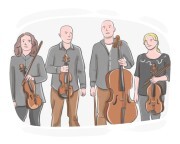
Ex: The cellist 's performance of the concerto was met with enthusiastic applause from the audience .
duet [noun]

a piece of music written for two performers

Ex: She looked forward to singing a duet with her favorite artist .
trio [noun]

a musical piece written for three singers or instruments

quartet [noun]

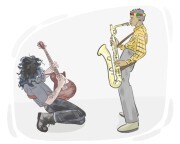
a musical piece written for four singers or instruments

Ex: The jazz quartet featured a saxophone , trumpet , bass , and drums .
quintet [noun]

a musical piece written for five singers or instruments

Ex: The vocal quintet 's performance of the classical piece received a standing ovation .
sextet [noun]

a musical piece written for six singers or instruments
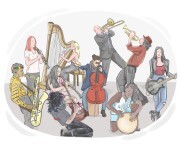
Ex: Composing a sextet requires careful attention to how each instrument or voice interacts with the others .
septet [noun]

a musical piece written for seven singers or instruments

octet [noun]

a musical piece written for eight singers or instruments

nonet [noun]

a musical piece written for nine singers or instruments

decet [noun]

a piece of music written for and performed by ten musicians with individual parts or voices

fantasia [noun]

a musical composition with an improvised style that does not have a fixed form

forte [noun]

dynamic marking indicating that a passage should be played loudly or with strong intensity

Ex: As the tension builds , the pianist 's fingers press the keys with increasing force , emphasizing the forte .
fugue [noun]

a classical piece of music with one or two simple repeated themes that develop into a polyphonic pattern which is more sophisticated

Ex: The composer introduced the main theme , which was then ingeniously developed through the intricate structure of the fugue .
march [noun]

a musical composition written specifically for marching

Ex:

a musical piece, typically for organ, performed as part of a church service, often before or after the liturgy

Ex:
chaconne [noun]

a musical composition in moderate triple time, popular in the baroque era

Ex: She practiced the chaconne diligently , focusing on mastering the repeating bass line and the elaborate variations that defined the piece .
aubade [noun]

a musical piece or poem appropriate to or influenced by the dawn or early morning

canon [noun]

a polyphonic composition in which each voice or instrument enters successively, repeating the main theme after a fixed interval
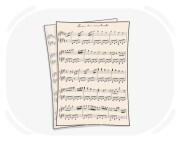
Ex: Each violin entered the canon one measure apart .
chorale [noun]

a musical composition resembling or including a harmonized Lutheran hymn or psalm

a musical work that has been created, such as a piece, song, or opus

Ex: The orchestra premiered a composition for strings and brass .

a piece of instrumental music with light character in various movements, usually written for a small orchestra

etude [noun]

an instrumental composition that is usually short and is intended for practice or demonstration of a skill

Ex: The etude focused on complex rhythms to enhance the drummer 's timing .
gavotte [noun]

a piece of music in moderately quick 4/4 time intended for a French dance popular in the 18th century

a short instrumental piece that is performed between the acts of an opera or other musical performance

largo [noun]

a musical piece that is intended to be performed at a very slow tempo and in a serious manner

minuet [noun]

a piece of music set to a formal couple dance marked with triple time rhythm, toe pointing and bowing, popular in the 17th and 18th centuries

Mass [noun]

a musical composition or ceremonial performance based on the texts of the Eucharistic liturgy

Ex:
medley [noun]

a set of musical pieces that are performed or sung successively in a continuous tune

nocturne [noun]

a romantic or dreamy composition written for the piano, dealing with night or evening

opus [noun]

a musical piece or collection that is written by a famous composer followed by the date in which it was created

Ex:
oratorio [noun]

a lengthy musical composition with a religious theme based on the Bible written for orchestra, choirs and singers without using costumes, action, or any scenery

Ex: Handel became a master of the oratorio form , writing numerous beautiful and influential works in this style .
raga [noun]

a piece of traditional Indian music marked by intervals and melodic patterns, used for improvisation

rhapsody [noun]

an instrumental composition marked with irregular form and improvisation, expressing strong emotions

Ex: The pianist performed Rachmaninoff 's " Rhapsody on a Theme of Paganini " with virtuosic flair , captivating the audience with its lyrical melodies and dazzling technique .
scherzo [noun]

a light and short instrumental piece of music in rapid triple time that is usually part of a symphony or sonata

a short and particular piece of music associated with a specific program or performer

solo [noun]

a musical piece written for one singer or instrument

Ex: He practiced his guitar solo for hours to perfect every note .
sonata [noun]

a musical composition for a solo instrument, typically accompanied by piano, in 3 or 4 movements of contrasting keys
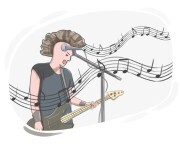
song [noun]

a piece of music that has words

Ex: The band is known for their rock songs with powerful lyrics .

a musical composition that is specifically written for two violins, a viola, and a cello, and typically consists of four movements

symphony [noun]

a long and sophisticated musical composition written for a large orchestra, in three or four movements

Ex:

a piece of music in one movement that is intended for symphony orchestra, telling a story or describing a place or an idea

track [noun]

a musical piece or song recorded on a CD, tape, or vinyl record

Ex: The track was a hit , with its catchy melody and upbeat rhythm .

a piece of music traditionally played during a wedding ceremony

Ex: In many cultures , the wedding march is a cherished tradition that symbolizes the beginning of a new chapter in life .
suite [noun]

a musical composition made up of several movements or pieces, loosely connected in theme or style

Ex: A jazz suite can include multiple short improvisations .
vocal [noun]

music composed for one or more singers, typically with instrumental accompaniment

Ex: The vocal was written specifically for the soprano 's range .

a short performance that is presented between two longer pieces

Ex: The play featured a comic interlude to lighten the mood between dramatic scenes .
intro [noun]

a short introduction to a literary or musical composition

score [noun]

a written representation of a musical composition, showing parts for different instruments on separate staves

Ex: Each musician follows the score for their instrument .

a composition for piano and orchestra, featuring a solo piano part with orchestral accompaniment

vivace [noun]

a lively piece of music that is fast-paced

a musical composition typically from the Baroque period, featuring a small group of solo instruments contrasted with a larger ensemble
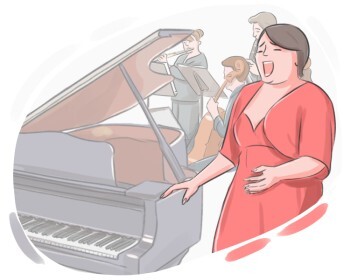
Ex: Baroque composers often experimented with the concerto grosso form , creating dynamic contrasts between the small group of soloists and the larger ensemble .
opera [noun]

a musical play sung and performed by singers

Ex: She 's an opera critic , writing reviews for a popular music magazine .
pavane [noun]

a piece of dance music in slow duple rhythm from southern Europe that became popular in England in the 16th century, couples danced to this in elegant attire

saraband [noun]

music that is intended for a stately Spanish dance in slow triple time with accent on the second beat, popular in the 17th and 18th centuries

gigue [noun]

a type of composition or movement characterized by its lively and energetic rhythm, often featuring intricate melodic and contrapuntal elements

Ex: The gigue is often performed with buoyant energy , inviting listeners to tap their feet and join in the dance .