

SAT Word Skills 4 - Lesson 2

review-disable

review

flashcard-disable

flashcard

spelling-disable

spelling

quiz-disable

quiz

start-learning
SAT Word Skills 4
asset [noun]

a valuable resource or quality owned by an individual, organization, or entity, typically with economic value and the potential to provide future benefits
Ex:

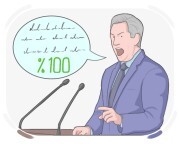
to clearly and confidently say that something is the case

Ex: In their groundbreaking research paper , the scientist had asserted the significance of their findings in advancing medical knowledge .
canto [noun]

any of the sections into which a long poem is divided

Ex: In his latest book , the author divided the narrative into ten cantos , each exploring a different theme .

short-term shelters for soldiers

Ex: The new cantonment will be constructed next month to accommodate the incoming battalion .
demonstrable [adjective]

clearly and easily understood

Ex: The demonstrable effects of the new policy were visible within a few weeks of implementation .

to practically show someone how to do something

Ex: The IT specialist demonstrated how to troubleshoot computer issues .
demonstrative [adjective]

showing no restraint in expressing one's feelings, particularly of love

Ex: They appreciated his demonstrative support during their difficult times .

a person whose job is explaining to a group of people how something works

Ex: The company will hire demonstrators to show customers how to use their new products .

to have a particular quality, attribute, knowledge, or skill

Ex: A good teacher should possess effective communication skills to connect with students .
semiannual [adjective]

done or happening twice a year

Ex: They organize a semiannual sale , offering discounts on all their products .

someone who is the owner of something

Ex: He will be the possessor of the title once he successfully completes the championship .
semiconscious [adjective]

not fully conscious

Ex: He was found semiconscious in the car , still confused and disoriented from the impact .
extraneous [adjective]

unnecessary or unrelated to the matter or subject at hand

Ex: The judge instructed the attorneys to stick to the relevant legal issues and avoid introducing extraneous matters during the trial .

to estimate something using past experiences or known data

Ex: Economists use historical data to extrapolate potential impacts of policy changes on the market .

the act of spending money excessively and unnecessarily

Ex: She regretted her extravagance on vacation , realizing she had overspent her budget .
extravagant [adjective]

making exaggerated or overly ambitious claims, promises, or statements that are often not grounded in reality

Ex: If he continues with such extravagant plans , the project may face significant setbacks .

a group of people, animals, birds, or objects

Ex: A congregation of birds flew across the sky as the sun began to set .
monitory [adjective]

giving warning

Ex: Warnings displayed on the screen are monitory , advising users to save their work before the system shuts down .

to come together in a group, often for a specific purpose or activity

Ex: The students will congregate in the auditorium for the assembly .
monition [noun]

a warning of an upcoming danger

Ex: The loud siren will be a monition of an impending emergency , prompting everyone to evacuate the building .