

pattern

SAT Word Skills 4 - Lesson 31

Review

Flashcards

Forms

Spelling

Quiz

Start learning
SAT Word Skills 4
pillory
pillory
[noun]

a wooden frame with holes for a human head and hands, used to publicly punish an offender in the past

Ex: In medieval times, the pillory was commonly used to shame petty criminals. 
Close
Sign in
to pillage

to plunder, typically during times of war or civil unrest

Ex: The invading army was condemned for its actions as it began to pillage villages, leaving destruction in its wake. 
Close
Sign in
absence
absence
[noun]

the state of not being at a place or with a person when it is expected of one
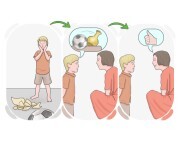
Ex: His absence from the meeting caused delays in making important decisions for the project. 
Close
Sign in
to absolve

to release someone from blame, guilt, or obligation, clearing them of any wrongdoing

Ex: Recognizing the misunderstanding, the manager chose to absolve the employee from blame. 
Close
Sign in
to abstract

to consider something separate from its specific context
Ex: He was able to abstract valuable insights from the extensive research. 
Close
Sign in
abstruse
abstruse
[Adjective]

difficult to understand due to being complex or obscure

Ex: The professor's abstruse lecture on theoretical physics left many students bewildered, struggling to grasp the complex concepts. 
Close
Sign in
improper
improper
[Adjective]

unfit for a particular person, thing, or situation

Ex: Using informal language in a professional email is considered improper communication. 
Close
Sign in
imprudent
imprudent
[Adjective]

unwise and not considerate about consequences of an action

Ex: Borrowing more money without a repayment plan would be highly imprudent. 
Close
Sign in
impudent
impudent
[Adjective]

rude and disrespectful, often toward authority or elders

Ex: The impudent child talked back to his grandmother, shocking everyone in the room. 
Close
Sign in
impuissance

the state of being weak or powerless

Ex: The king's impuissance was evident when his advisors ignored his commands. 
Close
Sign in
impracticable
impracticable
[Adjective]

not possible or very difficult to be done

Ex: The manager realized that their expectations were impracticable given the current budget. 
Close
Sign in
impolitic
impolitic
[Adjective]

having or showing poor judgment in action or speech

Ex: It was impolitic to make a joke about the situation, as it was a sensitive subject. 
Close
Sign in
piece de resistance

a part of a meal that is considered as the main dish

Ex: For the wedding feast, the pièce de résistance was a grand seafood platter that impressed all the guests. 
Close
Sign in
piecemeal
piecemeal
[Adverb]

in a gradual manner and at different times, rather than all at once

Ex: The information was revealed piecemeal, with new details emerging over time. 
Close
Sign in
tenuous
tenuous
[Adjective]

very delicate or thin

Ex: The spider's web was so tenuous that even the slightest breeze could break it. 
Close
Sign in
rampant
rampant
[Adjective]

characterized by unchecked, aggressive, or uncontrollable behavior

Ex: Crime was rampant in the city after the blackout. 
Close
Sign in
rampart
rampart
[noun]

a defensive wall or barrier, typically around a fort or city, used for protection

Ex: The soldiers stood watch on the rampart, keeping an eye out for any signs of an enemy invasion. 
Close
Sign in
LanGeek
Download LanGeek app