Adverbs of Result and Viewpoint - Adverbs of Negative Results

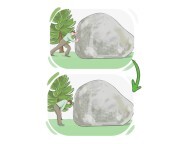
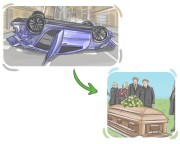
These adverbs are used to indicate that an action ended with unfavorable results, such as "disastrously", "irreparably", "fatally", etc.

review-disable

review

flashcard-disable

flashcard

spelling-disable

spelling

quiz-disable

quiz

start-learning
Adverbs of Result and Viewpoint

in a way that wastes time, resources, or effort
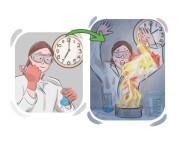
Ex: The company managed its finances inefficiently , leading to unnecessary expenses .

in an extremely unsuccessful or unfortunate way
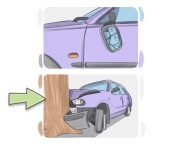
Ex: The product launch went disastrously when critical flaws in the design became apparent .
irreparably [adverb]

in a way that cannot be fixed

Ex: The car accident left the vehicle irreparably damaged , beyond the possibility of repair .
in vain [adverb]

without success or achieving the desired result

Ex: The team struggled to score a goal , but all their attempts were in vain as the opposing defense remained impenetrable .

in a manner that causes a lot of damage, often on a big scale

Ex: The space shuttle launch failed catastrophically , resulting in the loss of the entire crew .

with the intent of causing harm

Ex: The argument escalated destructively , causing irreparable damage to the relationship between the two friends .
tragically [adverb]

in a way that is extremely unfortunate, sorrowful, or leads to great distress

Ex: The earthquake struck tragically , leaving many families homeless and in despair .
improperly [adverb]

in a way that is not correct or not suitable

Ex: The teacher addressed the student 's concern but felt the question was improperly timed during the lecture .
fatally [adverb]

in a way that is capable of causing death

mortally [adverb]

in a way that results in death or severe harm

Ex: The disease spread mortally , affecting a large portion of the population .
lethally [adverb]

in a way that has the potential to cause serious harm or death
Ex: The venom of the snake was lethally potent , posing a grave danger to anyone bitten .
terminally [adverb]

in a manner that denotes an illness or condition that is incurable and expected to result in death

Ex: Friends gathered to say goodbye once he was judged terminally unwell .

in a way that presents difficulties or challenges

Ex: The new software was implemented problematically , causing frequent crashes and errors .
inevitably [adverb]

in a way that cannot be stopped or avoided, and certainly happens

Ex: If you neglect regular maintenance , the car will inevitably experience mechanical issues .

in a way that cannot be regained or recovered

Ex: The ancient artifact was mishandled and irretrievably damaged during excavation .

in a way that causes strong public disagreement
Ex: The artist 's latest work was exhibited controversially , eliciting diverse reactions from the audience .
ominously [adverb]

in a way that hints at something bad about to happen or a feeling of approaching danger

Ex: The economic indicators dropped ominously , raising concerns about an upcoming recession .

in a way that seems opposite to what one would expect

Ex: His decision to work fewer hours paradoxically resulted in increased productivity .
notoriously [adverb]

in a way that is widely known or recognized typically for negative reasons

Ex: The politician was notoriously known for making promises that were seldom fulfilled .
haphazardly [adverb]

in a way that lacks order or planning, often appearing random

Ex: The books on the shelf were arranged haphazardly , with no apparent system of organization .
unavoidably [adverb]

in a way that cannot be prevented or escaped

Ex: Despite careful planning , accidents unavoidably happen in high-risk industries .
inexorably [adverb]

in a way that is impossible to prevent or change

Ex: Despite their efforts , the team inexorably fell behind in the competition .
infamously [adverb]

in a manner that is widely known for bad reasons

Ex: The dictator was infamously ruthless , suppressing any dissent with brutal force .