Cambridge IELTS 17 - Academic - Test 1 - Reading - Passage 3 (2)

Here you can find the vocabulary from Test 1 - Reading - Passage 3 (2) in the Cambridge IELTS 17 - Academic coursebook, to help you prepare for your IELTS exam.

review-disable

review

flashcard-disable

flashcard

spelling-disable

spelling

quiz-disable

quiz

start-learning
Cambridge IELTS 17 - Academic
pacy [adjective]

(of a book, movie, etc.) having a fast-developing plot

prose [noun]

spoken or written language in its usual form, in contrast to poetry

Ex: The professor 's lectures were known for their eloquent prose , captivating students with their rich language and depth of insight .
deftly [adverb]

in a manner that is quick, precise, and skillful, especially with physical movements

Ex: He deftly caught the ball before it hit the ground .
elegantly [adverb]

in a tasteful, refined, or graceful manner

Ex: The hotel lobby was elegantly furnished in muted tones .
tale [noun]

a true or imaginary story, particularly one that is full of exciting events

evenhanded [adjective]

fair in judgment or treatment

Ex: In negotiations , it 's crucial to maintain an evenhanded stance to achieve a mutually beneficial outcome .
sympathy [noun]

a supportive or favorable attitude towards an opinion, goal, or viewpoint, indicating agreement or understanding

Ex: His sympathy for the cause led him to actively support the campaign .
fierce [adjective]

very strong or intense

Ex: The storm brought fierce winds and heavy rain , causing widespread damage .
republican [adjective]

related to a political ideology or party that typically supports limited government, free-market principles, and conservative social values

Ex: Republican policies often advocate for a strong national defense and strict immigration controls .
regime [noun]

a system of governing that is authoritarian and usually not selected in a fair election
Ex: The previous regime was known for its human rights violations .

the details about someone's family, experience, education, etc.

Ex: His background in social work inspired him to start a nonprofit organization .
tantalizing [adjective]

arousing desire or expectation for something unattainable or mockingly out of reach

to dress oneself in or place something on the body

Ex: The actor assumed the elaborate costume for his role on stage .
charm [noun]

a quality or trait that attracts others and creates a positive impression

Ex: The village 's old‑world charm draws many tourists .
trickery [noun]

the use of deceit or scheme to cheat or take advantage of someone

the use of deceptive methods or devices to achieve something

Ex: His elaborate subterfuge involved fake documents and misleading statements to get what he wanted .
tight [adjective]

extremely challenging to deal with

Ex: His grip on the business is tight , making changes nearly impossible .
corner [noun]

a predicament from which a skillful or graceful escape is impossible

to succeed in achieving the desired result

Ex: Their project is hitting the mark , whereas ours is just flopping .
ineffective [adjective]

(of a person) lacking the skill, competence, or ability to produce the desired outcome or perform successfully

Ex: The ineffective worker was often late and failed to meet deadlines .
monarch [noun]

a person who has the power to rule over a kingdom or empire, especially someone who inherits this power

Ex: She studied the history of the monarchs who ruled during the medieval period for her research project .

to treat or represent a person or thing in a way that is accurate and fair

Ex:

the quality of being intricate and compounded

in store [adjective]

(of an event, situation, or outcome) waiting to happen in the future, typically expected or anticipated

Ex: He did n’t know what was in store for him when he took the new job .
treat [noun]

an occurrence that causes special pleasure or delight
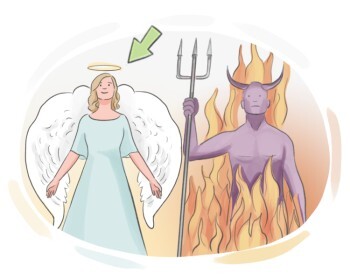
angelic [adjective]

having the characteristics of a saint or angel, such as kindness or innocence

Ex: Despite facing adversity , she maintained an angelic demeanor , always offering help to others .

to be one of the causes or reasons that helps something happen

Ex: Volunteer efforts significantly contribute to the charity 's growth .
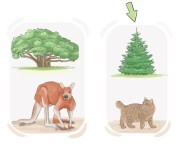
opposing [adjective]

characterized by active hostility

to flee [verb]

to escape danger or from a place

Ex: Hikers had to quickly flee when they encountered a bear on the trail .
relative [adjective]

measured or judged in comparison to something else

Ex: The size of the dog seems small , but it 's relative to its breed .
debate [noun]

a discussion about a particular issue between two opposing sides, mainly held publicly

Ex: A heated debate erupted in the council meeting over the proposed budget cuts .

a belief or opinion that is very strong

Ex: The artist expressed his convictions through powerful paintings that portrayed themes of equality and justice .
alliance [noun]

a formal agreement or treaty establishing cooperation between nations or groups for shared objectives
Ex: The business alliance between the two tech giants led to the development of innovative new products .
widespread [adjective]

existing or spreading among many people, groups, or communities through communication, influence, or awareness

Ex: The artist ’s work gained widespread recognition after being featured in an international exhibition .

a secret plan by a group to commit an unlawful, harmful, or treacherous act

Ex: The novel tells the story of a conspiracy against the monarchy .
decisive [adjective]

leaving no uncertainty or room for debate
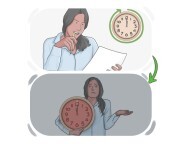
Ex: The company 's decisive growth in the last quarter proved the success of their new strategy .
to lack [verb]

to be without or to not have enough of something that is needed or desirable

Ex: The garden lacked proper sunlight , hindering the growth of certain plants .
sufficient [adjective]

having enough of something to meet a particular need or requirement

Ex: The team had a sufficient number of players to compete in the tournament .

to mention or express something in few words

Ex: The teacher indicated the due date for the assignment on the syllabus .
account [noun]

a detailed record or narrative description of events that have occurred

Ex: The witness ’s account of the incident helped the investigation .
aspect [noun]

a defining or distinctive feature of something
Ex: He explained every aspect of the plan in detail .
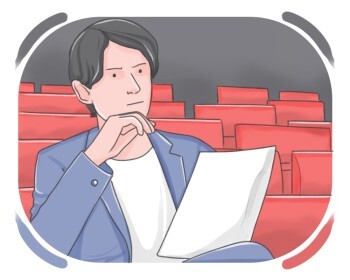
reviewer [noun]

someone who writes reviews and analysis of books, movies, etc.

the conditions or factors that surround and influence a particular situation

Ex:
view [noun]

a personal belief or judgment that is not based on proof or certainty
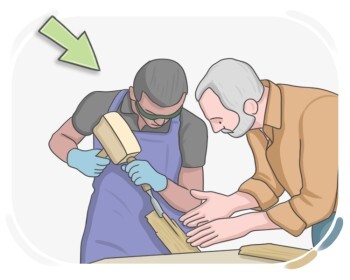
Ex: He shared his view on the new legislation .

to explain or show the meaning of something using examples, pictures, etc.

Ex: He illustrated the process by showing step-by-step pictures in the manual .
to argue [verb]

to provide reasons when saying something is the case, particularly to persuade others that one is right

Ex: The environmentalist argued for the preservation of the rainforest to protect biodiversity .

to fail to understand something or someone correctly

Ex: If you misunderstand the question , do n't hesitate to ask for clarification .
motive [noun]

a reason or purpose behind someone's actions or behavior

Ex: His motive for quitting the job was to pursue a better opportunity .
faith [noun]

loyalty or allegiance to a cause or a person

monarchy [noun]

a system of government or a country or state that is ruled by a king or queen

Ex: The citizens celebrated the anniversary of their monarchy with a grand parade .
to drive [verb]

to be the influencing factor that causes something to make progress
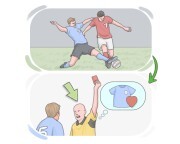
Ex: The desire for sustainability is driving changes in consumer behavior .
unbiased [adjective]

not having favoritism or prejudice toward any particular side or viewpoint

Ex: In order to make an informed decision , it 's important to consider unbiased sources of information .

the specific theme or topic that a work of art, speech, etc. contains
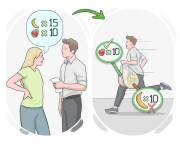
Ex: The documentary film delves into the subject matter of environmental conservation , raising awareness about the importance of protecting natural habitats .

to not notice or see something

Ex: The supervisor is currently overlooking minor discrepancies to prioritize urgent matters .
prevalent [adjective]

widespread or commonly occurring at a particular time or in a particular place

Ex: Gender inequality remains prevalent in many workplaces despite efforts to promote diversity .
to omit [verb]

to leave out or exclude something or someone, usually intentionally, from a list, text, or action

Ex: Please do not omit any important information when filling out the form .
deceit [noun]

a tendency toward dishonesty, falseness, or misleading behavior

Ex: She refused to tolerate deceit in personal relationships and ended the partnership .

to carry out or apply a particular method or activity, especially as a regular or established routine

Ex: The community practises traditional cooking methods .

to think about a problem or an issue and start to deal with it

Ex: The government must address the rising unemployment rate .

to assign someone to do a task, such as creating an artistic or literary piece

Ex: The organization commissioned a sculptor to create a unique piece for their headquarters .

in a manner that shows great willingness, interest, or excitement
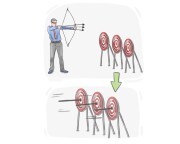
Ex: She accepted the challenge enthusiastically , demonstrating her dedication to the task .

to successfully achieve or accomplish something

Ex: Against all odds , the team pulled off a victory .
squadron [noun]

a large group or unit of people, vehicles, or things

Ex: The charity event was supported by a squadron of volunteers .
niggle [noun]

a minor issue, often involving a small complaint or irritation about something that is not very significant

Ex: He had a niggle about the way the project was being managed .