pattern

Cambridge IELTS 17 - Academic - Test 2 - Reading - Passage 3 (2)

Here you can find the vocabulary from Test 2 - Reading - Passage 3 (2) in the Cambridge IELTS 17 - Academic coursebook, to help you prepare for your IELTS exam.

Review

Flashcards

Forms

Spelling

Quiz
Start learning
Cambridge IELTS 17 - Academic
utility
utility
[noun]

the quality of being useful when applied

Close
Sign in
diverse
diverse
[Adjective]

showing a variety of distinct types or qualities

Ex: The festival showcased diverse musical genres .
Close
Sign in
enduring
enduring
[Adjective]

having the ability to last over a long period of time

Ex: The enduring legacy of his work influenced future generations.
Close
Sign in
merely
merely
[Adverb]

nothing more than what is to be said

Ex: She merely wanted to help , not to interfere .
Close
Sign in
to label
to label
[Verb]

to assign a quality to someone or something in order to categorize them
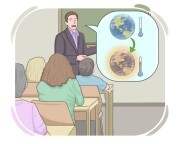
Ex: He was labeled as a rebel for his defiance of authority .
Close
Sign in
to advance

to propose an idea or theory for discussion

Ex: The architect advanced a unique design concept for the new building .
Close
Sign in
groundbreaking
groundbreaking
[Adjective]

original and pioneering in a certain field, often setting a new standard for others to follow

Ex: The architect's groundbreaking design for the new building won several awards for its innovative approach.
Close
Sign in
to refrain

to resist or hold back from doing or saying something
Ex: Even in the face of frustration , he managed to refrain from expressing his discontent during the meeting .
Close
Sign in
entirely
entirely
[Adverb]

to the fullest or complete degree

Ex: The room was entirely empty after the move .
Close
Sign in
variation
variation
[noun]

(biology) an organism that has characteristics resulting from chromosomal alteration

Close
Sign in
selection
selection
[noun]

a natural process resulting in the evolution of organisms best adapted to the environment

Close
Sign in
objective
objective
[noun]

a goal that one wants to achieve

Ex: Achieving the objective required careful strategy and dedication.
Close
Sign in
in sight
in sight
[Adjective]

at or within a reasonable distance for seeing

Close
Sign in
provenance

the origin or source of a particular thing
Ex: Historians study the provenance of manuscripts to understand their historical significance .
Close
Sign in
to operate

to function in a specific way

Ex: While the repairs were ongoing , the backup generator was operating to provide electricity .
Close
Sign in
to constrain

to restrict movement or actions through restraint or confinement

Ex: If he continues to misbehave , we will have to constrain him in a timeout chair .
Close
Sign in
prior
prior
[Adjective]

happening or existing before something else

Ex: Her prior experience in marketing helped her secure the new job .
Close
Sign in
to abandon

to stop supporting an idea, policy, concept, etc.

Ex: The organization was forced to abandon its plans for expansion due to budget constraints .
Close
Sign in
to explore

to investigate something to gain knowledge or understanding about it

Ex: Can you please explore alternative solutions to the problem ?
Close
Sign in
to defend
to defend
[Verb]

to support someone or try to justify an action, plan, etc.
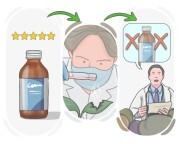
Ex: The writer 's latest book aims to defend her controversial views on social issues .
Close
Sign in
to disprove

to show that something is false or incorrect
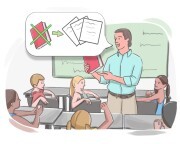
Ex: The lawyer attempted to disprove the witness 's testimony .
Close
Sign in
to outline

to give a brief description of something excluding the details

Ex: Before starting the research paper , the scientist outlined the hypotheses and methodologies to guide the study .
Close
Sign in
assumption

an idea or belief that one thinks is true without having a proof

Ex: The decision relied on the assumption that funding would be approved.
Close
Sign in
to criticize

to point out the faults or weaknesses of someone or something
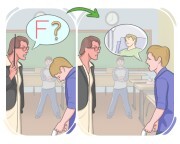
Ex: It 's unfair to criticize someone without understanding the challenges they face .
Close
Sign in
to justify

to provide a valid reason or explanation for an action, decision, or belief, usually something that others consider wrong
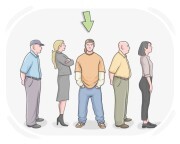
Ex: The government had to justify the allocation of funds to a particular project by outlining its potential benefits for the community .
Close
Sign in
standpoint

an opinion or decision that is formed based on one's belief or circumstances

Close
Sign in
exception
exception
[noun]

a person or thing that does not follow a general rule or is excluded from a class or group

Ex: The car insurance policy includes coverage for most damages, with the exception of those caused by natural disasters.
Close
Sign in
ideal
ideal
[noun]

someone or something considered to possess unmatched or unparalleled qualities of perfection

Ex: He aspires to meet the ideal of a dedicated and reliable employee .
Close
Sign in
to aspire
to aspire
[Verb]

to desire to have or become something

Ex: She aspires to become a renowned scientist and make significant discoveries .
Close
Sign in
recognition

acknowledgment or approval given to someone or something for their achievements, qualities, or actions

Ex: The company 's commitment to sustainability earned it global recognition.
Close
Sign in
reputation

the general opinion that the public has about someone or something because of what they did in the past

Ex: The artist 's reputation grew after several successful exhibitions of her work .
Close
Sign in
skepticism

a doubting or questioning attitude towards ideas, beliefs, or claims that are generally accepted

Ex: The proposal was met with skepticism by the board , who questioned its feasibility .
Close
Sign in
development

a process or state in which something becomes more advanced, stronger, etc.

Ex: They monitored the development of the plant to understand its growth patterns .
Close
Sign in
to seek
to seek
[Verb]

to try to find a particular thing or person

Ex: Right now , the search and rescue team is actively seeking survivors in the disaster area .
Close
Sign in
to turn away

to move away from one's area of interest or original path

Ex: After years of pursuing a career in finance , she felt the need to turn away and follow her passion for environmental activism .
Close
Sign in
necessity
necessity
[noun]

the fact that something must happen or is needed

Ex: The doctor explained the necessity of taking medication regularly .
Close
Sign in
to provoke

to give rise to a certain reaction or feeling, particularly suddenly

Ex: The comedian 's sharp wit could easily provoke laughter even in the most serious audiences .
Close
Sign in
to modify
to modify
[Verb]

to make minor changes to something so that it is more suitable or better

Ex: The teacher modified the lesson plan and saw positive results in student engagement .
Close
Sign in
coincidence

a situation in which two things happen simultaneously by chance that is considered unusual
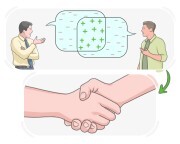
Ex: The similarity between their stories seemed more than just coincidence.
Close
Sign in
to compromise

to come to an agreement after a dispute by reducing demands

Ex: Both parties had to compromise to reach a mutually beneficial agreement .
Close
Sign in
misadventure

an event or experience that is unfortunate, unsuccessful, or troublesome, often due to poor planning, bad judgment, or unforeseen circumstances

Ex: He resigned in disgrace after a misadventure involving illegal campaign funds came to light .
Close
Sign in
pure
pure
[Adjective]

absolute or complete, without any admixture or qualification

Ex: The novel ’s pure excitement kept readers hooked from start to finish with its intense , unrelenting pace .
Close
Sign in
serendipity

the fact of accidentally experiencing or discovering something that is pleasant or valuable

Ex: It was serendipity that led her to the perfect solution to her problem while casually reading an article .
Close
Sign in
to affix
to affix
[Verb]

to attach or fasten something to another object or surface
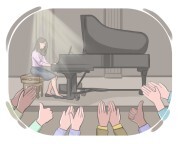
Ex: They have affixed labels to the products for identification purposes .
Close
Sign in
hymnbook
hymnbook
[noun]

a songbook containing a collection of hymns

Close
Sign in
brilliantly
brilliantly
[Adverb]

with exceptional intelligence, skill, or creativity

Ex: They played the symphony brilliantly from start to finish .
Close
Sign in
phenomenally
phenomenally
[Adverb]

to a degree that exceeds expectations or standards to a significant extent

Ex: His popularity skyrocketed phenomenally after the movie premiere .
Close
Sign in
post-it
post-it
[noun]

a small piece of colored paper that is sticky on one side and can be easily removed, used for leaving notes

Ex: Post-its are convenient for jotting down quick thoughts and organizing tasks.
Close
Sign in
ingenious
ingenious
[Adjective]

having or showing cleverness, creativity, or skill

Ex: The ingenious chef created a unique dish by combining unexpected ingredients in innovative ways .
Close
Sign in
designing
designing
[Adjective]

concealing crafty designs for advancing your own interest

Close
Sign in
banal
banal
[Adjective]

lacking creativity or novelty, making it uninteresting due to its overuse or predictability

Ex: The book ’s banal themes failed to leave a lasting impression .
Close
Sign in
mechanical
mechanical
[Adjective]

(of a task or job) repetitive, routine, and not requiring much thought or creativity

Ex: The job required mechanical actions , but no creative thinking .
Close
Sign in
fundamentally

in a manner that refers to the essential aspects of something

Ex: The success of any educational system is fundamentally tied to the quality of its teachers and the support they receive .
Close
Sign in
to invoke
to invoke
[Verb]

to mention someone or something of prominence as a support or reason for an argument or action

Ex: In his defense , he invoked his right to remain silent during questioning .
Close
Sign in
doubtful
doubtful
[Adjective]

improbable or unlikely to happen or be the case

Ex: The explanation seems doubtful, considering all the facts .
Close
Sign in
to [give] (the|) lie to {sth}

to show clearly that something is false, wrong, or not as it appears

Ex: The results gave the lie to the critics' doubts.
Close
Sign in
naive
naive
[Adjective]

lacking experience, wisdom, or understanding about the world, often resulting in being overly trusting or easily deceived

Ex: The naive interpretation of the contract terms caused misunderstandings between the parties involved .
Close
Sign in
LanGeek
Download LanGeek app