
Acuerdo y Desacuerdo - Desacuerdo y Oposición 3
Aquí aprenderás algunas palabras en inglés relacionadas con el desacuerdo y la oposición, como "feud", "faction" y "dustup".
Revisión
Tarjetas de memoria
formas
Ortografía
Cuestionario

to show one's disagreement or disapproval of an online post or comment by clicking on a specific icon

votar en contra, downvotear
La comunidad tiende a downvotear las publicaciones que son irrelevantes, ofensivas o contienen desinformación.
an action of expressing disapproval or disagreement with online content, typically by clicking a button
downvote
Los usuarios del foro pueden votar a favor las respuestas útiles y votar en contra las incorrectas.
![to [duke] it out](https://cdn.langeek.co/photo/44630/thumb/350?type=jpeg "to [duke] it out")
to argue or fight until a disagreement is resolved
resolverlo peleando, echarse un pulso hasta resolverlo
Los gerentes lo estuvieron peleando durante horas antes de llegar a un acuerdo.
to throw eggs at a person or thing, often to express contempt
huevo, tirar huevos
to involve someone in an argument, conflict, or complex situation
enredar
El reportaje de investigación del periodista involuntariamente involucró a varias figuras públicas en una controversia.
a brief conversation, often between two people who are in disagreement about something
discusión
said before one disagrees with someone in order to not be rude or offensive
un momento
Disculpe ! Esa fue mi idea, no la tuya !
to strongly argue, disapprove, or disagree with someone or something
protestar
Mañana, voy a protestar con mi casero por el aumento repentino del alquiler.
the action of strongly arguing, disapproving, or disagreeing with someone or something
protesta
conflict or disagreement between opposing groups within an organization or community
facción
a situation in which people are no longer friendly with each other as a result of a disagreement or quarrel
pelea
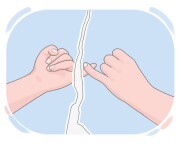
to no longer be friends with someone as a result of an argument
pelearse, dejar de ser amigo de alguien
Los hermanos solían pelearse ocasionalmente, pero siempre se reconciliaban al final.
used to make it clear that one is about to criticize or disagree with someone but is unwilling to do so
lejos de mí, Dios me libre de
a heated argument that lasts for a long time
enemistad
La disputa por los derechos de propiedad causó tensiones en el vecindario.
to have a lasting and heated argument with someone
pelear
Las pandillas rivales pelearon por el control del barrio durante años.
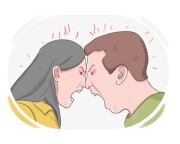
an argument over something
disputa, argumento
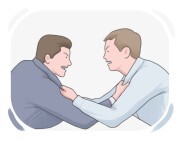
to take part in a violent physical action against someone
pelear, luchar
![to [fight] fire with fire](https://cdn.langeek.co/photo/44660/thumb/350?type=jpeg "to [fight] fire with fire")
to use methods or tactics similar to those of one's opponent in a fight or argument
pagar con la misma moneda, usar sus mismas armas
A veces hay que pagar con la misma moneda para que te tomen en serio.
the activity of physically attacking or struggling against others, especially in battle or war
pelea
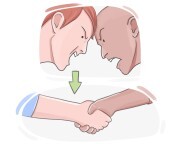
to fight until a result is achieved or an agreement is reached
resolver mediante enfrentamiento, mantener el conflicto hasta resolverlo
En la sala del tribunal, los abogados lucharán por resolver los problemas legales para buscar justicia para sus clientes.
to fight for what one wants or win an argument without the help of someone else
pelear las propias batallas
a state of agitation, confusion, or emotional excitement
lío
a noisy fight or argument involving multiple people
gresca
El debate se convirtió en un fracas cuando los ánimos se encendieron.
a loud, disorderly quarrel or brawl involving multiple people
pelea, lucha
El bar descendió a una refriega cuando los ánimos se encendieron.
a person who pretends to be a friend when in reality is one's rival or enemy
falso amigo, amigo-enemigo
absence of agreement or friendliness between people with different opinions
fricción, roces
Los debates políticos a menudo conducen a fricciones entre amigos con opiniones diferentes.

a difference, particularly an unwanted one, causing separation between two people, situations, or opinions
brecha
to engage in an activity, particularly an argument, in a forceful, energetic, or violent manner
ir con todo, discutir con furia
En cuanto empezó el proyecto, todo el equipo fue con todo.
to support someone or something in an argument with another person
pelear a muerte
a situation in which no progress can be made because opposing parties are unable to reach agreement
punto muerto, bloqueo
La dirección y los trabajadores se enfrentaron a un bloqueo contractual que amenazaba con cerrar la fábrica.

to negotiate, typically over the price of goods or services
regatear
En algunas culturas, se espera que los clientes regateen los precios cuando compran ciertos artículos.
used to emphasize an unexpected or surprising fact
da la casualidad
to express disapproval of something by making a noise in the throat
mostrar desacuerdo
El alcalde refunfuñó ante la propuesta de subir los impuestos, indicando su fuerte oposición.
a dispute or disagreement between people
pelea
Hubo un problema entre los vecinos por los niveles de ruido.
to make someone be at a position of disadvantage in an argument
estar en desventaja
![to [have] a problem with {sb/sth}](https://cdn.langeek.co/photo/72586/thumb/350?type=jpeg "to [have] a problem with {sb/sth}")
to not to be able to approve or accept someone or something
tener problema
to talk to someone frankly in order to settle a dispute or argument
aclarar las cosas con alguien, hablar claro para zanjarlo
En vez de chismear, ¿por qué no aclaras las cosas directamente con ella?

used to angrily state that despite one's disagreement with what someone has said, one will not argue about it
como quieras, haz lo que quieras
Suspiró y dijo: «Como quieras», luego salió de la habitación.
