
Difficulté - Acceptation et Soulagement
Plongez dans les idiomes anglais concernant l'acceptation et le soulagement, comme 'jeter l'éponge' et 'le calme après la tempête'.
Réviser
Flashcards
Quiz
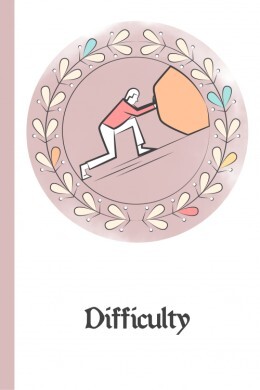
![to [come] to terms with {sth}](https://cdn.langeek.co/photo/46668/thumb/350?type=jpeg "to [come] to terms with {sth}")
to gradually learn to accept or deal with something unpleasant

se faire à quelque chose, apprendre à vivre avec
Il essaie encore de se faire à l'idée que sa carrière a changé de direction.
![to [grin] and [bear] {sth}](https://cdn.langeek.co/photo/46420/thumb/350?type=jpeg "to [grin] and [bear] {sth}")
to accept or tolerate a difficult or undesirable situation that one cannot change without complaint
prendre sur soi, serrer les dents
On ne pouvait rien faire contre le bruit, alors on a serré les dents toute la nuit.

an unpleasant thing that requires acceptance in order for a certain thing to be achieved
un mal nécessaire, une contrainte désagréable
Les longs contrôles de sécurité sont une contrainte désagréable dans les grands aéroports.
![to [leave|let] well alone](https://cdn.langeek.co/photo/46655/thumb/350?type=jpeg "to [leave|let] well alone")
to not try to interfere or make changes in a situation or with something that is already functioning satisfactorily to avoid causing unnecessary problems
ne pas toucher à ce qui marche, ne pas chercher les ennuis
Je sais que tu veux réorganiser les fichiers, mais pour l'instant il vaut mieux ne pas toucher à ce qui marche.
![to [let] {sb/sth} be](https://cdn.langeek.co/photo/42232/thumb/350?type=jpeg "to [let] {sb/sth} be")
to avoid getting involved with a person or thing or stop bothering them
laisser tranquille, ne pas s'en mêler
La plante pousse bien ; laisse-la tranquille et ne la déplace pas sans arrêt.
![to [let] {sth} roll off {one's} [back]](https://cdn.langeek.co/photo/46322/thumb/350?type=jpeg "to [let] {sth} roll off {one's} [back]")
to not allow negative things such as an unfair criticism, etc. to have any effect on one
laisser glisser, ne pas le prendre à cœur
Ne prends pas à cœur un avis injuste ; laisse-le glisser et continue à travailler.

said to a person after they have an unpleasant or sad experience to encourage them to keep on living as they used to
il faut continuer, la vie continue
La rupture a fait très mal, mais il faut continuer, même si aujourd'hui tu n'en as pas l'impression.
![(load|weight) off {one's} [mind]](https://cdn.langeek.co/photo/45335/thumb/350?type=jpeg "(load|weight) off {one's} [mind]")
something that is finally dealt with and does not bother one anymore
un poids en moins, un grand soulagement
Rembourser le dernier prêt a été un grand soulagement pour moi.
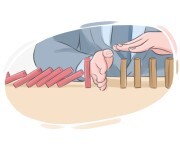
to regain control of oneself after being in a bad mood or emotional state
se ressaisir, reprendre le dessus
Je sais que tu es déçu, mais il faut reprendre le dessus et te concentrer.
![to [take] {sth} on the chin](https://cdn.langeek.co/photo/40761/thumb/350?type=jpeg "to [take] {sth} on the chin")
to accept unpleasant or difficult things or situations, such as criticism or misfortune, without complaining
encaisser le coup, l'accepter sans se plaindre
Elle a encaissé la critique et s'en est servie pour améliorer son travail.

said after an unfortunate event to mean one must accept the situation as it is
parfois, il faut faire avec
Le vol a été annulé à la dernière minute ; parfois, les choses tournent comme ça.
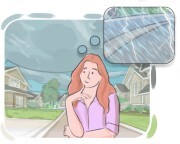
a peaceful time when things has improved following a period of difficulty, stress, or chaos
le calme après la tempête, une accalmie après le chaos
Une fois l'audit terminé, le bureau est entré dans le calme après la tempête.

a time when everything seems peaceful or fine before serious problems arise
le calme avant la tempête, une accalmie avant les ennuis
Les ventes semblent stables pour l'instant, mais je pense que ce n'est qu'une accalmie avant une autre tempête.
a situation that is an absolute disaster or is the worst thing that could possibly happen
une catastrophe absolue, le pire qui puisse arriver
Elle a réagi comme si le vase cassé était une catastrophe absolue.
used for saying that one must continue an activity, performance, etc. despite any problem or difficulty
il faut continuer, le spectacle doit continuer
Même après la panne des lumières, les acteurs savaient que le spectacle devait continuer.
used to say that one cannot control everything as bad things happen regardless
c'est la vie, on ne maîtrise pas tout
Parfois, une bonne idée échoue sans raison claire ; c'est la vie.
to accept the fact that one has been defeated
jeter l'éponge, s'avouer vaincu
Elle a refusé de s'avouer vaincue, même après trois tentatives ratées.
to deal with a bad or imperfect situation as positively as possible
a sign that a difficult period may soon improve or end
space, time, or freedom to think, rest, or recover
used to say that a heavy worry or burden is removed
a positive part of a bad situation
to stop worrying about, arguing about, or holding on to something emotionally
to take a break from stress, pressure, or intense work
used for telling someone to accept and consider something as true or valid, usually after a disagreement or argument
c'est comme ça, que ça te plaise ou non
Je t'avais prévenu que ça arriverait, et c'est arrivé ; que ça te plaise ou non.
![to [live] from day to day](https://cdn.langeek.co/photo/41838/thumb/350?type=jpeg "to [live] from day to day")
to experience life in the present moment and focus less on long-term plans or financial preparations
vivre au jour le jour, vivre sans trop penser au lendemain
Il n'a jamais beaucoup économisé, car il préférait vivre au jour le jour.
