
Dificultad - Aceptación y Alivio
Sumérgete en los modismos ingleses sobre aceptación y alivio, como 'tirar la toalla' y 'la calma después de la tormenta'.
Revisión
Tarjetas de memoria
Cuestionario
![to [come] to terms with {sth}](https://cdn.langeek.co/photo/46668/thumb/350?type=jpeg "to [come] to terms with {sth}")
to gradually learn to accept or deal with something unpleasant

aceptarlo poco a poco, aprender a vivir con ello
La familia necesita tiempo para aceptar poco a poco el diagnóstico.
![to [grin] and [bear] {sth}](https://cdn.langeek.co/photo/46420/thumb/350?type=jpeg "to [grin] and [bear] {sth}")
to accept or tolerate a difficult or undesirable situation that one cannot change without complaint
aguantarse sin quejarse, tragar y seguir adelante
Odiaba el uniforme, pero las normas del colegio hacían que tuviera que aguantarse sin quejarse.

an unpleasant thing that requires acceptance in order for a certain thing to be achieved
mal necesario, una obligación desagradable
Veía los recortes presupuestarios como un mal necesario para mantener viva la empresa.
![to [leave|let] well alone](https://cdn.langeek.co/photo/46655/thumb/350?type=jpeg "to [leave|let] well alone")
to not try to interfere or make changes in a situation or with something that is already functioning satisfactorily to avoid causing unnecessary problems
no tocar lo que ya funciona, no buscarse problemas
Cada vez que cambian el sistema de reservas, algo se rompe; deberían no tocar lo que ya funciona.
![to [let] {sb/sth} be](https://cdn.langeek.co/photo/42232/thumb/350?type=jpeg "to [let] {sb/sth} be")
to avoid getting involved with a person or thing or stop bothering them
dejarlo en paz, no meterse
Intenté ayudar, pero me pidió que la dejara en paz.
![to [let] {sth} roll off {one's} [back]](https://cdn.langeek.co/photo/46322/thumb/350?type=jpeg "to [let] {sth} roll off {one's} [back]")
to not allow negative things such as an unfair criticism, etc. to have any effect on one
dejar que le resbale, no tomárselo a pecho
Tiene la piel dura y deja que los chismes de la oficina le resbalen.

said to a person after they have an unpleasant or sad experience to encourage them to keep on living as they used to
hay que seguir adelante, la vida sigue
Perdimos el partido, pero hay que seguir adelante; entrenaremos más duro la semana que viene.
![(load|weight) off {one's} [mind]](https://cdn.langeek.co/photo/45335/thumb/350?type=jpeg "(load|weight) off {one's} [mind]")
something that is finally dealt with and does not bother one anymore
quitarse un peso de encima, un gran alivio
Cuando se firme el contrato, nos quitaremos un peso de encima.
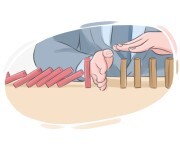
to regain control of oneself after being in a bad mood or emotional state
reponerse, salir de ese estado
Estuvo de mal humor toda la mañana, pero después de comer se repuso.
![to [take] {sth} on the chin](https://cdn.langeek.co/photo/40761/thumb/350?type=jpeg "to [take] {sth} on the chin")
to accept unpleasant or difficult things or situations, such as criticism or misfortune, without complaining
aguantar el golpe, aceptarlo sin quejarse
Cuando cancelaron el proyecto, lo aceptó sin quejarse en vez de culpar a nadie.
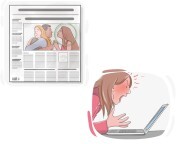
said after an unfortunate event to mean one must accept the situation as it is
a veces las cosas salen así, hay que aceptarlo tal como viene
Yo quería la oficina de la esquina, pero se la dieron a otra persona; a veces las cosas salen así.
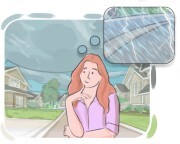
a peaceful time when things has improved following a period of difficulty, stress, or chaos
la calma después de la tormenta, un respiro tras el caos
La primera mañana tranquila después de la mudanza fue la calma después de la tormenta.

a time when everything seems peaceful or fine before serious problems arise
la calma antes de la tormenta, tranquilidad antes de los problemas
Los niños jugaban tranquilos, lo que normalmente significa tranquilidad antes de los problemas.
a situation that is an absolute disaster or is the worst thing that could possibly happen
una catástrofe total, lo peor que puede pasar
Perder el primer tren pareció una catástrofe, pero no fue lo peor que podía pasar.
used for saying that one must continue an activity, performance, etc. despite any problem or difficulty
hay que seguir adelante, el espectáculo debe continuar
Perdimos a dos miembros del equipo antes del evento, pero había que seguir adelante.
used to say that one cannot control everything as bad things happen regardless
así es la vida, no todo está bajo nuestro control
El tiempo nos arruinó el picnic, pero así es la vida.
to accept the fact that one has been defeated
tirar la toalla, darse por vencido
El candidato tiró la toalla tras perder apoyo en varios estados clave.
to deal with a bad or imperfect situation as positively as possible
a sign that a difficult period may soon improve or end
space, time, or freedom to think, rest, or recover
used to say that a heavy worry or burden is removed
a positive part of a bad situation
to stop worrying about, arguing about, or holding on to something emotionally
to take a break from stress, pressure, or intense work
used for telling someone to accept and consider something as true or valid, usually after a disagreement or argument
así son las cosas, te guste o no
La votación fue justa y perdiste, así que así son las cosas, acéptalo.
![to [live] from day to day](https://cdn.langeek.co/photo/41838/thumb/350?type=jpeg "to [live] from day to day")
to experience life in the present moment and focus less on long-term plans or financial preparations
vivir al día, vivir sin pensar demasiado en el mañana
Desde el diagnóstico, han intentado vivir al día y disfrutar de los pequeños momentos.
