pattern

Vocabulaire Essentiel pour le TOEFL - Ordre et Loi

Ici, vous apprendrez quelques mots anglais sur la loi et l'ordre, tels que "justice", "projet de loi", "clause", etc., qui sont nécessaires pour l'examen TOEFL.

Réviser

Flashcards

formes

Orthographe

Quiz

Commencer à apprendre
Essential Words Needed for TOEFL
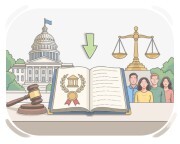
justice
justice
[nom]

a behavior or treatment that is fair and just

justice
justice

Ex: The victim's family sought justice through the court system for the crimes committed against their loved one. 
constitution

the official laws and principles by which a country or state is governed

constitution

constitution

Ex: The constitution of this country guarantees freedom of speech and the separation of powers among its branches of government. 
bill
bill
[nom]

a new law that is proposed to a parliament to be discussed about

projet de loi

projet de loi

Ex: After several debates, the bill was passed and became law. 
clause
clause
[nom]

a separate part of a legal document that requires or talks about something specific

clause

clause

Ex: The rental agreement includes a clause specifying the responsibilities of both the landlord and the tenant. 
statute
statute
[nom]

an officially written and established law

loi

loi

Ex: The new statute requires all drivers to use hands-free devices while driving. 
act
act
[nom]

a law that is passed by a parliament or congress

loi, acte

loi, acte

Ex: The new education act aims to improve the quality of schools nationwide. 
legislative
legislative
[Adjectif]

relating to the making and passing of laws by government bodies

législatif

législatif

Ex: The legislative branch of government is responsible for proposing, debating, and passing laws. 
legislation

a formal rule or collection of rules enacted by a governing authority

législation

législation

Ex: The new environmental legislation limits carbon emissions from factories. 
attorney

a lawyer who represents someone in a court of law

avocat, avocate

avocat, avocate

Ex: The attorney presented a strong case in court on behalf of his client. 
to pass
to pass
[verbe]

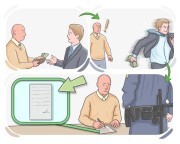
to make or accept a law by voting or by decree

faire passer, adopter
faire passer, adopter

Ex: In 1996, Congress unanimously passed the Food Quality Protection Act. 
declaration

(law) an official written document that people sign to agree on something or accept something as true

déclaration

déclaration

Ex: The parties signed a declaration of intent to formalize their agreement. 
hearing
hearing
[nom]

(law) an official gathering in a court of law, especially without the presence of the jury, to find out information about a case and listen to evidence

audition
audition

Ex: The judge scheduled a hearing to review the evidence presented by both parties. 
judicial
judicial
[Adjectif]

belonging or appropriate for a court, a judge, or the administration of justice

judiciaire

judiciaire

Ex: The judicial branch of government oversees the interpretation and application of laws through courts and judges. 
legitimate
legitimate
[Adjectif]

officially allowed or accepted according to the rules or laws that apply to a particular situation

légitime

légitime

Ex: The company's operations were deemed legitimate after passing all regulatory inspections. 
plea
plea
[nom]

(law) a formal statement made by someone confirming or denying their accusation

appel, demande, requête

appel, demande, requête

Ex: The defendant entered a plea of not guilty to the charges. 
to prosecute

to try to charge someone officially with a crime in a court as the lawyer of the accuser

intenter une action

intenter une action

Ex: The lawyer was hired to prosecute the case on behalf of the victim’s family. 
representation

the state of being represented or the act of representing

représentation, figuration

représentation, figuration

authority

a person or group that exercises administrative or controlling power over others

autorités

autorités

Ex: Local authorities regulate public services. 
ruling
ruling
[nom]

a decision made by someone with official power, particularly a judge

décision
décision

Ex: The Supreme Court's ruling on the case set a precedent for future privacy rights. 
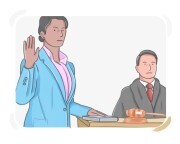
to sentence

to officially state the punishment of someone found guilty in a court of law

condamner
condamner

Ex: The judge will sentence the convicted criminal to five years in prison. 
to testify
to testify
[verbe]

to make a statement as a witness in court saying something is true

témoigner

témoigner

Ex: Witnesses are called to testify about what they saw during the accident. 
testimony

a formal statement saying something is true, particularly made by a witness in court

témoignage, déposition

témoignage, déposition

Ex: The witness provided compelling testimony that corroborated the victim's account. 
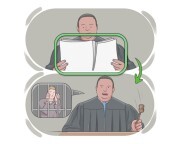
witness
witness
[nom]

a person who testifies under oath in a court of law

témoin
témoin

Ex: The witness testified in court about what they saw. 
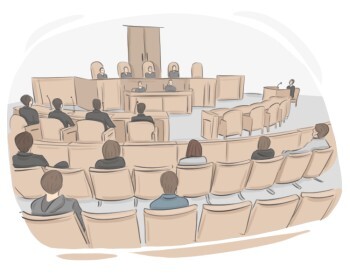
evidence

anything that proves the truth or possibility of something, such as facts, objects, or signs

preuves
preuves

Ex: The prosecution presented compelling evidence, including DNA analysis and eyewitness testimony, to support their case. 
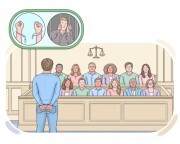
trial
trial
[nom]

a legal process where a judge and jury examine evidence in court to decide if the accused is guilty

procès
procès

Ex: The trial lasted for several weeks as witnesses testified and evidence was presented. 
verdict
verdict
[nom]

an official decision made by the jury in a court after the legal proceedings

verdict

verdict

Ex: The jury reached an unanimous verdict of guilty after deliberating for several hours. 
bail
bail
[nom]

an amount of money that must be paid in order for someone who is accused of a crime to be released until their trial

caution

caution

Ex: The judge set bail at $10,000 for the defendant's release from jail before the trial. 
to appeal
to appeal
[verbe]

to officially ask a higher court to review and reverse the decision made by a lower court

faire appel, interjeter appel
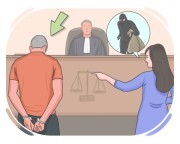
faire appel, interjeter appel

Ex: The defense attorney filed a motion to appeal the sentencing imposed by the trial court. 
defendant

a person in a law court who is sued by someone else or is accused of committing a crime

défendeur, défenderesse, accusé, accusée

défendeur, défenderesse, accusé, accusée

Ex: The defendant pleaded not guilty to the charges of theft and fraud. 
draft
draft
[nom]

a preliminary version of a written text, subject to revision before being finalized

brouillon

brouillon

Ex: She emailed the first draft of her essay. 
to charge
to charge
[verbe]

to officially accuse someone of an offense

inculper

inculper

Ex: The prosecutor decided to charge the suspect with theft based on the evidence. 
action
action
[nom]

a formal or legal process in which it is decided if someone has done something wrong or illegal

procédure, procès
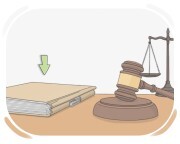
procédure, procès

Ex: The action was filed to resolve the dispute between the two parties. 
lawsuit
lawsuit
[nom]

a complaint or claim that someone brings to a law court for settlement

procès, action en justice
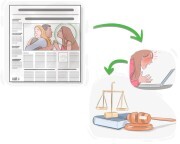
procès, action en justice

Ex: She filed a lawsuit against the company for wrongful termination. 
to sue
to sue
[verbe]

to bring a charge against an individual or organization in a law court

poursuivre (en justice), intenter un procès à

poursuivre (en justice), intenter un procès à

Ex: The dissatisfied customer decided to sue the company for breach of contract. 
proceedings

actions taken in a court of law in order to settle an argument

procédure judiciaire, action en justice

procédure judiciaire, action en justice

Ex: The lawyer reviewed the court proceedings carefully before the trial. 
sheriff
sheriff
[nom]

an elected officer of law in a county

shérif

shérif

Ex: The sheriff's deputies patrolled the rural county to ensure community safety. 
inspector

a police officer holding an intermediate rank

inspecteur, inspectrice

inspecteur, inspectrice

Ex: The inspector led the investigation into the robbery. 
LanGeek
Télécharger l'application LanGeek