Essential Vocabulary for TOEFL - Law and Order

Here you will learn some English words about law and order, such as "justice", "bill", "clause", etc. that are needed for the TOEFL exam.

review-disable

review

flashcard-disable

flashcard

spelling-disable

spelling

quiz-disable

quiz

start-learning
Essential Vocabulary for TOEFL
justice [noun]

a behavior or treatment that is fair and just

Ex: Many people protested , demanding justice for the wrongfully accused .

the official laws and principles by which a country or state is governed

Ex: The Indian constitution is one of the longest and most detailed in the world , outlining the structure of government and the rights of its people .
bill [noun]

a new law that is proposed to a parliament to be discussed about

Ex: The senator sponsored the bill to address healthcare reform .
clause [noun]

a separate part of a legal document that requires or talks about something specific

Ex: The insurance policy has a deductible clause , which outlines the amount the policyholder must pay out of pocket before the insurer covers the rest .
statute [noun]

an officially written and established law

Ex: He challenged the statute in court , arguing that it was unconstitutional .
act [noun]

a law that is passed by a parliament or congress

Ex: The environmental protection act was introduced to safeguard natural resources .
legislative [adjective]

relating to the making and passing of laws by government bodies

Ex: Lobbying is a common practice where interest groups seek to influence legislative decisions .

a formal rule or collection of rules enacted by a governing authority

Ex: The legislation on data privacy has changed how companies handle user information .
attorney [noun]

a lawyer who represents someone in a court of law

Ex: The attorney prepared the necessary documents for the property transfer .
to pass [verb]

to make or accept a law by voting or by decree

Ex: The first Transport Act was passed in 1907 .

(law) an official written document that people sign to agree on something or accept something as true

Ex:
hearing [noun]

(law) an official gathering in a court of law, especially without the presence of the jury, to find out information about a case and listen to evidence
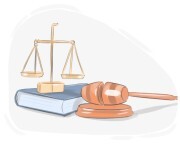
Ex: During the evidentiary hearing , the prosecution presented forensic evidence to support their case .
judicial [adjective]

belonging or appropriate for a court, a judge, or the administration of justice

Ex:
legitimate [adjective]

officially allowed or accepted according to the rules or laws that apply to a particular situation

Ex: Only legitimate voters are allowed to participate in the election process .
plea [noun]

(law) a formal statement made by someone confirming or denying their accusation
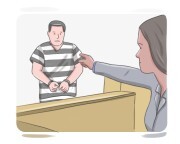
Ex: She entered a plea of guilty to avoid a lengthy court proceeding .

to try to charge someone officially with a crime in a court as the lawyer of the accuser

Ex: The prosecutor ’s office chose not to prosecute , citing insufficient evidence .

a person or group that exercises administrative or controlling power over others

Ex:
ruling [noun]

a decision made by someone with official power, particularly a judge
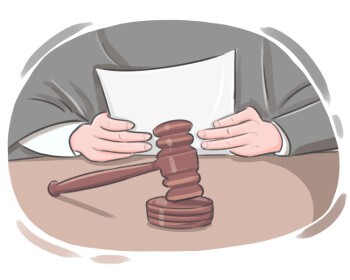
Ex: The ruling by the arbitration panel ended the long-standing dispute between the two companies .

to officially state the punishment of someone found guilty in a court of law
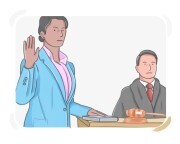
Ex: The judge carefully considered the evidence before deciding how to sentence the defendant .

to make a statement as a witness in court saying something is true

Ex: Experts may be called to testify regarding their professional opinions on a case .

a formal statement saying something is true, particularly made by a witness in court

Ex: Her testimony was crucial in establishing the defendant 's guilt .
witness [noun]

a person who testifies under oath in a court of law
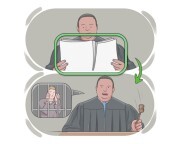
Ex: The defense cross-examined the witness thoroughly .
evidence [noun]

anything that proves the truth or possibility of something, such as facts, objects, or signs
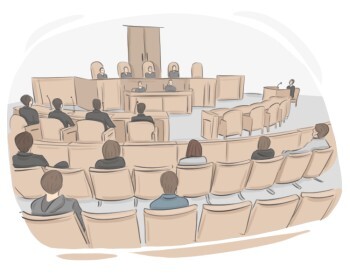
Ex: Before drawing conclusions , it 's important to carefully evaluate all available evidence and consider alternative explanations .
trial [noun]

a legal process where a judge and jury examine evidence in court to decide if the accused is guilty

Ex: After a lengthy trial , the defendant was found guilty and sentenced to ten years in prison .
verdict [noun]

an official decision made by the jury in a court after the legal proceedings

Ex: The defense team was surprised by the unexpected verdict of not guilty .
bail [noun]

an amount of money that must be paid in order for someone who is accused of a crime to be released until their trial

Ex: The bail bondsman agreed to post bail on behalf of the defendant in exchange for a fee .

to officially ask a higher court to review and reverse the decision made by a lower court

Ex: The tenant 's lawyer advised them to appeal the eviction order issued by the housing court .

a person in a law court who is sued by someone else or is accused of committing a crime

Ex: The defense attorney cross-examined the witness to cast doubt on the defendant 's involvement .
draft [noun]

a preliminary version of a written text, subject to revision before being finalized

Ex: He rewrote the report after reading the draft .

to officially accuse someone of an offense

Ex: The district attorney is considering whether to charge the defendant with assault .
action [noun]

a formal or legal process in which it is decided if someone has done something wrong or illegal

Ex: The court decided to dismiss the action due to lack of evidence .
lawsuit [noun]

a complaint or claim that someone brings to a law court for settlement
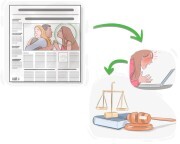
Ex: The lawsuit was settled out of court with both parties agreeing to a financial settlement .
to sue [verb]

to bring a charge against an individual or organization in a law court

Ex: The author opted to sue the publisher for copyright infringement .

actions taken in a court of law in order to settle an argument

Ex: Both parties agreed to settle the dispute outside of the formal court proceedings .
sheriff [noun]

an elected officer of law in a county

Ex: The sheriff 's office responded promptly to emergencies and provided support during natural disasters .

a police officer holding an intermediate rank

Ex: She was promoted to inspector last year .