

pattern

Linguistica - Parole relative alla linguistica

Qui imparerai alcune parole inglesi relative alla linguistica come "trattino", "marcatore" e "corpus".

Revisione

Flashcard

forme

Ortografia

Quiz

Inizia a imparare
Words Related to Linguistics
form
form
[sostantivo]

the spoken or written shape of a word used for identification or description

forma, struttura

forma, struttura

Ex: The plural form of the noun confused new learners. 
Chiudi
Accedi
grammar
grammar
[sostantivo]

the study or use of words and the way they are put together or changed to make sentences

grammatica

grammatica

Ex: I practice my English grammar every day by writing journal entries. 
Chiudi
Accedi
natural language
natural language
[sostantivo]

any human language that has developed organically over time for communication purposes, distinguishing it from constructed or artificial languages

linguaggio naturale, lingua naturale

linguaggio naturale, lingua naturale

Chiudi
Accedi
artificial language

a language deliberately created by humans for specific purposes, such as international communication or fictional settings, rather than evolving naturally over time

lingua artificiale, linguaggio artificiale

lingua artificiale, linguaggio artificiale

Chiudi
Accedi
constructed language

a language intentionally created by individuals or groups, often for specific purposes, such as improving communication, facilitating learning, or serving fictional or artistic purposes

lingua costruita, lingua artificiale

lingua costruita, lingua artificiale

Chiudi
Accedi
markedness
markedness
[sostantivo]

the asymmetrical relationship between linguistic forms or features, where one form or feature is considered more "marked" or less typical than another

marcatezza, asimmetria linguistica

marcatezza, asimmetria linguistica

Chiudi
Accedi
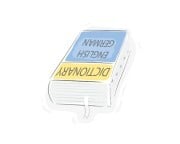
dictionary
dictionary
[sostantivo]

a book or electronic resource that gives a list of words in alphabetical order and explains their meanings, or gives the equivalent words in a different language

dizionario

dizionario

Ex: A pocket-sized dictionary can be handy during travels to help communicate in different languages. 
Chiudi
Accedi
entry word
entry word
[sostantivo]

the specific word or form that serves as the main or primary lexical entry in a dictionary or reference work, typically representing the headword or base form of a word from which various inflected forms and derived words are derived

parola d'ingresso, lemma

parola d'ingresso, lemma

Chiudi
Accedi
anglophone
anglophone
[sostantivo]

a person or a community of people whose first language or primary language is English

anglofono

anglofono

Chiudi
Accedi
spoken word
spoken word
[sostantivo]

an utterance expressed in speech rather than written form

parola pronunciata

parola pronunciata

Chiudi
Accedi
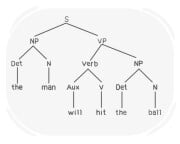
syntax
syntax
[sostantivo]

(linguistics) the way in which words and phrases are arranged to form grammatical sentences in a language

sintassi

sintassi

Ex: In linguistics, syntax refers to the rules that govern the structure of sentences, determining how words are arranged to convey meaning. 
Chiudi
Accedi
corpus
corpus
[sostantivo]

a large and structured collection of authentic texts or spoken language samples, used for linguistic analysis and research purposes

corpus, raccolta di testi

corpus, raccolta di testi

Chiudi
Accedi
translation
translation
[sostantivo]

the process of changing written or spoken words from one language to another while maintaining the same meaning

traduzione

traduzione

Ex: The translation of the novel from French to English took six months. 
Chiudi
Accedi
sign language
sign language
[sostantivo]

a system used to communicate with deaf people that involves using hands and body gestures instead of words

linguaggio dei segni

linguaggio dei segni

Chiudi
Accedi
Proto-Indo-European

the hypothetical language that is believed to be the root of all Indo-European languages

proto-indoeuropeo

proto-indoeuropeo

Chiudi
Accedi
orthography
orthography
[sostantivo]

the standardized set of rules and conventions for spelling and writing within a particular language or writing system, guiding the proper representation of words and symbols

ortografia, sistema ortografico

ortografia, sistema ortografico

Chiudi
Accedi
emic unit
emic unit
[sostantivo]

a meaningful unit of analysis that is derived from within the specific cultural or linguistic context being studied, taking into account the perspectives and interpretations of the individuals or community under investigation

unità emica, entità emica

unità emica, entità emica

Chiudi
Accedi
quote
quote
[sostantivo]

a sentence from a speech, book, etc. that is repeated somewhere else because it is wise or interesting

preventivo

preventivo

Ex: The quote "All that glitters is not gold" serves as a timeless reminder to look beyond appearances. 
Chiudi
Accedi
exclamation
exclamation
[sostantivo]

a sudden and short sound, word or phrase, uttered to express anger, excitement, etc.

esclamativo

esclamativo

Ex: "Ouch!" was the exclamation that escaped his lips after stubbing his toe. 
Chiudi
Accedi
jargon
jargon
[sostantivo]

obscure language intended to impress or confuse rather than communicate clearly

gergo, linguaggio oscuro

gergo, linguaggio oscuro

Ex: Avoid using jargon in instructions for the general public. 
Chiudi
Accedi
marker
marker
[sostantivo]

a linguistic element or feature that signals or indicates a specific grammatical, semantic, or pragmatic function within a language

marcatore, indicatore

marcatore, indicatore

Chiudi
Accedi
phraseme
phraseme
[sostantivo]

a fixed or semi-fixed phrase or expression with a specific meaning or function that extends beyond the sum of its individual words

frasema, espressione fissa

frasema, espressione fissa

Chiudi
Accedi
linguistic determinism

a concept in linguistics that suggests that the structure and vocabulary of a language shape the thoughts and perception of its speakers, influencing their worldview and cognition

determinismo linguistico, determinismo del linguaggio

determinismo linguistico, determinismo del linguaggio

Chiudi
Accedi
reflexivity
reflexivity
[sostantivo]

a grammatical or semantic property of a language or construction that indicates that the subject of a verb is also the object or recipient of the action performed by the subject, creating a self-referential or reflective relationship within the sentence

riflessività, la proprietà riflessiva

riflessività, la proprietà riflessiva

Chiudi
Accedi
to agree
to agree
[Verbo]

(grammar) to have the same grammatical number, gender, case or person

concordare, accordarsi

concordare, accordarsi

Ex: The subject and verb must agree in number. 
Chiudi
Accedi
to conjugate

(grammar) to show how a verb changes depending on number, person, tense, etc.

coniugato

coniugato

Ex: In Spanish class, we learned how to conjugate regular verbs in the present tense. 
Chiudi
Accedi
to decline
to decline
[Verbo]

(grammar) to inflect or state the different forms of a noun, pronoun or adjective according to gender, number, etc.

declinare

declinare

Ex: In Latin class, we learned how to decline nouns like "puella" to indicate their role in a sentence. 
Chiudi
Accedi
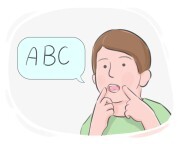
to spell
to spell
[Verbo]

to write or say the letters that form a word one by one in the right order

fare lo spelling

fare lo spelling

Ex: He struggles to spell the word "restaurant" correctly. 
Chiudi
Accedi
to aspirate

(phonetics) to pronounce a vowel or a consonant with a strongly released breath

Aspirare

Aspirare

Chiudi
Accedi
to roll
to roll
[Verbo]

(phonetics) to pronounce the /r/ sound with an alveolar trill

rotolare

rotolare

Ex: In Spanish, the 'r' is often rolled or trilled, as in the word "perro" (dog). 
Chiudi
Accedi
to stress
to stress
[Verbo]

(phonetics) to utter a syllable in a word or phrase with more emphasis

accentuare

accentuare

Ex: In the word "banana," English speakers stress the second syllable: ba-NA-na. 
Chiudi
Accedi
to voice
to voice
[Verbo]

(phonetics) to articulate a speech sound with the vibration of the vocal cords

vocalizzare

vocalizzare

Ex: She voiced the "z" sound in the word "zebra" by allowing her vocal cords to vibrate while pronouncing it. 
Chiudi
Accedi
to articulate

to pronounce or utter something in a clear and precise way

articolare

articolare

Ex: It's important for public speakers to articulate their words effectively to engage the audience. 
Chiudi
Accedi
to encode
to encode
[Verbo]

(linguistics) to express a concept, thought, or idea in a foreign language

codificare

codificare

Ex: The translator worked diligently to encode the author's intentions. 
Chiudi
Accedi
to drill
to drill
[Verbo]

to learn by repetition and practice

forare

forare

Ex: She drilled her lines for the play until she knew them perfectly. 
Chiudi
Accedi
to gabble
to gabble
[Verbo]

to utter words rapidly and without making sense

ciarlare

ciarlare

Chiudi
Accedi
to stammer
to stammer
[Verbo]

to speak with involuntary stops and repetitions of certain words

balbettare

balbettare

Ex: Nervous about giving his first public speech, he began to stammer, repeating the opening words several times. 
Chiudi
Accedi
to stumble
to stumble
[Verbo]

to make an error or repeated errors while speaking

inciampare

inciampare

Ex: The nervous speaker tended to stumble when asked unexpected questions during the interview. 
Chiudi
Accedi
to hyphenate

to divide or connect by a hyphen in writing

sillabato

sillabato

Chiudi
Accedi
to punctuate

to use punctuation marks in a text in order to make it more understandable

mettere la punteggiatura in, punteggiare

mettere la punteggiatura in, punteggiare

Ex: When you write an essay, it is important to punctuate your sentences correctly to ensure that your ideas are clearly communicated. 
Chiudi
Accedi
to parse
to parse
[Verbo]

(grammar) to divide a sentence into its grammatical constituents, identifying the syntactic role of each part

analizzare

analizzare

Chiudi
Accedi
to quote
to quote
[Verbo]

to say the exact sentence or group of words someone else used in a movie, book, etc.

citare

citare

Ex: During his presentation, he quoted a famous line from "The Godfather": "I'm gonna make him an offer he can't refuse." 
Chiudi
Accedi
to elide
to elide
[Verbo]

(phonetics) to omit or leave out a vowel or a syllable in the pronunciation of a word

elidire

elidire

Chiudi
Accedi
to infix
to infix
[Verbo]

to insert a morpheme or affix within a word, typically by placing it in the middle of a root or base form

infissare, inserire un infisso

infissare, inserire un infisso

Chiudi
Accedi
LanGeek
Scarica l'app LanGeek