
Lingvistică - Words Related to Linguistics
Aici vei învăța câteva cuvinte în engleză legate de lingvistică, cum ar fi "liniuță", "marcator" și "corpus".
Revizuire
Fișe de studiu
forme
Ortografie
Chestionar

the spoken or written shape of a word used for identification or description

formă, structură
the system and study of rules governing how words change and combine to form sentences in a language
gramatică, gramatică
any human language that has developed organically over time for communication purposes, distinguishing it from constructed or artificial languages
limbaj natural, limbă naturală
a language deliberately created by humans for specific purposes, such as international communication or fictional settings, rather than evolving naturally over time
limbă artificială, limbă construită
a language intentionally created by individuals or groups, often for specific purposes, such as improving communication, facilitating learning, or serving fictional or artistic purposes
limbă construită, limbă artificială
the asymmetrical relationship between linguistic forms or features, where one form or feature is considered more "marked" or less typical than another
marcare, asimetrie lingvistică
a book or digital resource that lists words and explains their meanings or gives their equivalents in another language
dicționar, lexicon
the specific word or form that serves as the main or primary lexical entry in a dictionary or reference work, typically representing the headword or base form of a word from which various inflected forms and derived words are derived
cuvânt de intrare, intrare lexicală
a person or a community of people whose first language or primary language is English
anglofon
an utterance expressed in speech rather than written form
cuvânt rostit, cuvânt verbal
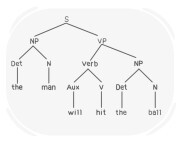
(linguistics) the way in which words and phrases are arranged to form grammatical sentences in a language
sintaxă, structură gramaticală
În lingvistică, sintaxa se referă la regulile care guvernează structura propozițiilor, determinând cum sunt aranjate cuvintele pentru a transmite sens.
a large and structured collection of authentic texts or spoken language samples, used for linguistic analysis and research purposes
corpus, colecție de texte

the process of expressing written or spoken material in another language while preserving its meaning
traducere

a system used to communicate with deaf people that involves using hands and body gestures instead of words
limbajul semnelor, limba semnelor
the hypothetical language that is believed to be the root of all Indo-European languages
proto-indo-europeană, indo-europeană comună
the standardized set of rules and conventions for spelling and writing within a particular language or writing system, guiding the proper representation of words and symbols
ortografie, sistem ortografic
a meaningful unit of analysis that is derived from within the specific cultural or linguistic context being studied, taking into account the perspectives and interpretations of the individuals or community under investigation
unitate emică, entitate emică
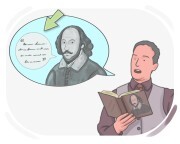
a sentence from a speech, book, etc. that is repeated somewhere else because it is wise or interesting
citat, fragment
a sudden and short sound, word or phrase, uttered to express anger, excitement, etc.
exclamație, strigăt
« Au! » a fost exclamația care i-a scăpat de pe buze după ce și-a lovit degetul de la picior.
obscure language intended to impress or confuse rather than communicate clearly
jargon, limbaj obscur
Evitați utilizarea jargonului în instrucțiunile pentru publicul larg.
a linguistic element or feature that indicates a particular grammatical, semantic, or discourse function
marcator, indicator
a fixed or semi-fixed phrase or expression with a specific meaning or function that extends beyond the sum of its individual words
frazem, expresie fixă
a concept in linguistics that suggests that the structure and vocabulary of a language shape the thoughts and perception of its speakers, influencing their worldview and cognition
determinism lingvistic, determinism al limbajului
a grammatical or semantic property of a language or construction that indicates that the subject of a verb is also the object or recipient of the action performed by the subject, creating a self-referential or reflective relationship within the sentence
reflexivitate, proprietatea reflexivă
(grammar) to have the same grammatical number, gender, case or person
a fi de acord, a concorda
(grammar) to show how a verb changes depending on number, person, tense, etc.
a conjuga
Profesorul de lingvistică a explicat cum diferite limbi conjugă verbele diferit în funcție de structurile lor gramaticale.
(grammar) to inflect or state the different forms of a noun, pronoun or adjective according to gender, number, etc.
declina, conjuga (în context gramatical)
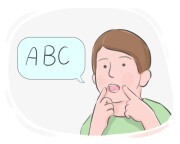
to write or say the letters that form a word one by one in the right order
sillaba, scrie corect
(phonetics) to pronounce a vowel or a consonant with a strongly released breath
aspira, pronunță cu o eliberare puternică a respirației
(phonetics) to pronounce the /r/ sound with an alveolar trill
rostogoli
(phonetics) to utter a syllable in a word or phrase with more emphasis
accentua, pune accentul pe
(phonetics) to articulate a speech sound with the vibration of the vocal cords
sonoriza, vocaliza
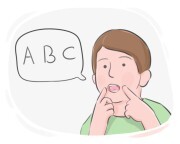
to pronounce or utter something in a clear and precise way
articula, pronunța clar
(linguistics) to express a concept, thought, or idea in a foreign language
codifica, exprima
Traducătorul a lucrat diligent pentru a codifica intențiile autorului.
to practice something repeatedly in order to learn or improve it
exersa, repeta
to speak with involuntary stops and repetitions of certain words
bâlbâi, bâigui
Nervos pentru primul său discurs public, a început să bâlbâie, repetând de mai multe ori cuvintele de deschidere.
to make an error or repeated errors while speaking
a se împiedica, a bâlbâi
to use punctuation marks in a text in order to make it more understandable
punctuație
Când scrii un eseu, este important să punctezi corect propozițiile tale pentru a te asigura că ideile tale sunt comunicate clar.
(grammar) to divide a sentence into its grammatical constituents, identifying the syntactic role of each part
analiza, descompune
to say the exact sentence or group of words someone else used in a movie, book, etc.
cita, reproduce
| Lingvistică | |||
|---|---|---|---|
| Neurolingvistică | Limbajul semnelor | Învățarea limbilor și competența lingvistică | Words Related to Linguistics |
