
Linguistics - Words Related to Linguistics
Here you will learn some English words related to linguistics such as "hyphenate", "marker", and "corpus".
Review
Flashcards
Forms
Spelling
Quiz

the spoken or written shape of a word used for identification or description
the system and study of rules governing how words change and combine to form sentences in a language
any human language that has developed organically over time for communication purposes, distinguishing it from constructed or artificial languages
a language deliberately created by humans for specific purposes, such as international communication or fictional settings, rather than evolving naturally over time
a language intentionally created by individuals or groups, often for specific purposes, such as improving communication, facilitating learning, or serving fictional or artistic purposes
the asymmetrical relationship between linguistic forms or features, where one form or feature is considered more "marked" or less typical than another

a book or digital resource that lists words and explains their meanings or gives their equivalents in another language
the specific word or form that serves as the main or primary lexical entry in a dictionary or reference work, typically representing the headword or base form of a word from which various inflected forms and derived words are derived
a person or a community of people whose first language or primary language is English
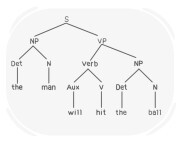
(linguistics) the way in which words and phrases are arranged to form grammatical sentences in a language
a large and structured collection of authentic texts or spoken language samples, used for linguistic analysis and research purposes

the process of expressing written or spoken material in another language while preserving its meaning

a system used to communicate with deaf people that involves using hands and body gestures instead of words
the hypothetical language that is believed to be the root of all Indo-European languages
the standardized set of rules and conventions for spelling and writing within a particular language or writing system, guiding the proper representation of words and symbols
a meaningful unit of analysis that is derived from within the specific cultural or linguistic context being studied, taking into account the perspectives and interpretations of the individuals or community under investigation
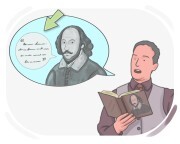
a sentence from a speech, book, etc. that is repeated somewhere else because it is wise or interesting
a sudden and short sound, word or phrase, uttered to express anger, excitement, etc.
obscure language intended to impress or confuse rather than communicate clearly
a linguistic element or feature that indicates a particular grammatical, semantic, or discourse function
a fixed or semi-fixed phrase or expression with a specific meaning or function that extends beyond the sum of its individual words
a concept in linguistics that suggests that the structure and vocabulary of a language shape the thoughts and perception of its speakers, influencing their worldview and cognition
a grammatical or semantic property of a language or construction that indicates that the subject of a verb is also the object or recipient of the action performed by the subject, creating a self-referential or reflective relationship within the sentence
(grammar) to have the same grammatical number, gender, case or person
(grammar) to show how a verb changes depending on number, person, tense, etc.
(grammar) to inflect or state the different forms of a noun, pronoun or adjective according to gender, number, etc.
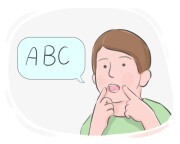
to write or say the letters that form a word one by one in the right order
(phonetics) to pronounce the /r/ sound with an alveolar trill
(phonetics) to utter a syllable in a word or phrase with more emphasis
(phonetics) to articulate a speech sound with the vibration of the vocal cords
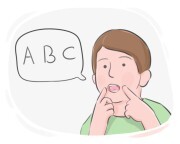
to pronounce or utter something in a clear and precise way
(linguistics) to express a concept, thought, or idea in a foreign language
to practice something repeatedly in order to learn or improve it
to speak with involuntary stops and repetitions of certain words
to make an error or repeated errors while speaking
to use punctuation marks in a text in order to make it more understandable
(grammar) to divide a sentence into its grammatical constituents, identifying the syntactic role of each part
to say the exact sentence or group of words someone else used in a movie, book, etc.
| Linguistics | |||
|---|---|---|---|
| Neurolinguistics | Sign Language | Language Learning and Proficiency | Words Related to Linguistics |
