
Словарный запас для IELTS Academic (Оценка 6-7) - Психология
Здесь вы выучите некоторые английские слова, связанные с психологией, которые необходимы для академического экзамена IELTS.
Обзор
Флэш-карточки
Правописание
Тест


a natural reaction or behavior that occurs automatically, without conscious thought or reasoning

инстинкт
Птица-мать следовала своему инстинкту, чтобы построить гнездо и защитить свои яйца.
a set of characteristics, behaviors, or qualities commonly observed in a specific situation or group of individuals
синдром
Люди, демонстрирующие синдром «я, я, я», часто ставят свои собственные потребности и желания выше потребностей других, независимо от воздействия на коллективное благополучие.
a strong and irresistible urge to do something
принуждение
Каждый раз, когда она проходит мимо книжного магазина, она чувствует непреодолимое побуждение купить новый роман.
(psychology) a mental condition in which a person has a false belief system that is contradicted by evidence
бред
a perceptual experience in which an individual perceives something that is not present in the external environment
галлюцинация, иллюзия
Слуховые галлюцинации могут включать в себя слышание голосов или звуков, которые другие не воспринимают.
an unreasonable and persistent fear that others want to harm you
паранойя
Он страдал от паранойи и никому не доверял.
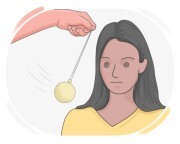
a state of heightened focus and concentration in which a person becomes more responsive to suggestions
гипноз
Она прошла несколько сеансов регрессивного гипноза в попытке вспомнить вытесненные воспоминания о своей детской травме.
a group of partly or completely repressed emotions or impulses that affect a person's behavior and patterns of thought
комплекс
Его страх неудачи был связан с комплексом, развившимся в детстве.
(psychology) the unconscious process in which an individual associates their feelings, ideas or attitudes to someone else as a defense mechanism
проекция
a disease, illness, or medical condition that impairs normal physical or mental function
расстройство
Ей диагностировали расстройство щитовидной железы.
(psychology) the conscious part of the mind that mediates between the unconscious and the reality which gives one a sense of self
Я, самость
(psychology) the part of the unconscious mind that is the source of basic instincts and drives
Оно
(psychology) the part of the mind that is only partly conscious, representing social norms learned from the parents
Сверх-Я
an emotional disorder in which there is a strange fear of being fat and an obsessive desire to lose weight which results in refusing to eat
анорексия, отсутствие аппетита
mental condition that causes extreme and unusual changes in one's energy level, mood, or emotions
мания
(psychology) mental processes through which knowledge and understanding are acquired
познание
a severe medical condition that leads to partial or complete loss of memory
амнезия
После автомобильной аварии у неё была временная амнезия, и она не могла вспомнить день перед аварией.
a person's awareness, viewpoint, or attitude regarding a specific issue or domain
сознание
Его политическое сознание повлияло на его выборы при голосовании.
the part of the mind that is not currently in focused awareness, but still influences thoughts, feelings, and behavior, often through automatic or involuntary processes
подсознание
Его подсознание постоянно возвращало воспоминания, которые он забыл.
the part of the mind where thoughts, feelings, and memories exist without a person being aware of them
бессознательное, подсознание
Глубокие страхи часто хранятся в бессознательном.
a medical condition of the mind caused by extreme shock, which could last for a very long time
травма
Она искала терапию, чтобы помочь ей справиться с эмоциональной травмой после автомобильной аварии.
a strong and uncontrollable interest or attachment to something or someone, causing constant thoughts, intense emotions, and repetitive behaviors
одержимость
Его одержимость чистотой заставляла его убирать дом несколько раз в день.
the conscious knowledge and recognition of one's own thoughts, feelings, sensations, and actions, leading to a reflective understanding of oneself as a distinct individual with unique characteristics and experiences
самосознание, осознание себя
Благодаря самосознанию люди могут размышлять о своих эмоциях, распознавая и понимая свои собственные чувства.
