pattern

Vocabulary for IELTS Academic (Band 6-7) - Politics

Here, you will learn some English words related to Politics that are necessary for the Academic IELTS exam.

Review

Flashcards

Forms

Spelling

Quiz

Start learning
Vocabulary for Academic IELTS (6-7)
democracy
democracy
[noun]

a form of government where the power is vested in the hands of the people, either directly or through elected representatives

Ex: In a democracy, all citizens have the right to express their opinions freely and participate in decision-making processes. 
Close
Sign in
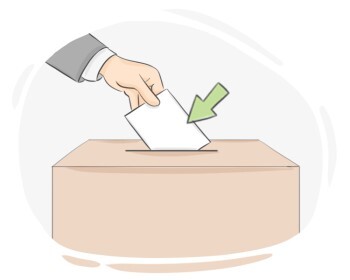
referendum

a vote in which all the people of a country are asked to decide on one political question

Ex: Many people voted in the referendum. 
Close
Sign in
federalism

a political system in which a central government controls the affairs of each self-governed state
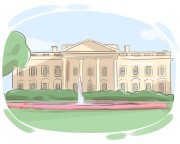
Ex: Federalism allows for a division of powers between the national government and state governments, promoting a balance of authority. 
Close
Sign in
regime
regime
[noun]

a system of governing that is authoritarian and usually not selected in a fair election

Ex: The previous regime was known for its human rights violations. 
Close
Sign in
ideology
ideology
[noun]

a set of beliefs or principles that guide a community or nation

Ex: The nation's founding ideology emphasized freedom and equality for all. 
Close
Sign in
lobbyist
lobbyist
[noun]

someone who attempts to persuade politicians to agree or disagree with a law being made or changed

Close
Sign in
opposition

the main political party opposed to the government

Ex: The opposition criticized the government's handling of the economic crisis. 
Close
Sign in
monarchy
monarchy
[noun]

a system of government or a country or state that is ruled by a king or queen

Ex: The monarchy has existed in the country for centuries, with the king serving as the head of state. 
Close
Sign in
constituency

a group of people in a specific area who elect a representative to a legislative position

Ex: The candidate promised to address the concerns of their entire constituency. 
Close
Sign in
faction
faction
[noun]

arguments and disagreements between small groups of people within a political party or an organization

Close
Sign in
ballot
ballot
[noun]

a document listing the options or candidates used in voting
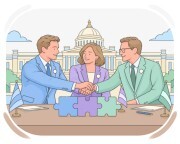
Ex: Voters received their ballot at the polling station. 
Close
Sign in
coalition
coalition
[noun]

an alliance between two or more countries or between political parties when forming a government or during elections

Ex: The coalition government was formed by two major political parties to ensure stability and consensus on key policy issues. 
Close
Sign in
propaganda

information and statements that are mostly biased and false and are used to promote a political cause or leader
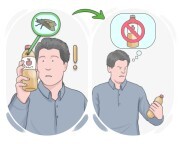
Ex: The regime used propaganda to control the narrative and maintain public support. 
Close
Sign in
to boycott

to refuse to buy, use, or participate in something as a way to show disapproval or to try to bring about a change

Ex: Many customers boycotted the store after its poor customer service. 
Close
Sign in
embargo
embargo
[noun]

an official order according to which any commercial activity with a particular country is banned

Close
Sign in
socialism
socialism
[noun]

an economic system in which the state owns and manages major resources, industries, or capital

Ex: Socialism ensures that public assets benefit the population. 
Close
Sign in
capitalism

an economic and political system in which industry, businesses, and properties belong to the private sector rather than the government

Ex: Capitalism is an economic system where private individuals and businesses own the means of production and operate for profit. 
Close
Sign in
patriotism

the feeling of love or devotion toward one's country, its values, culture, history, and interests

Ex: John's unwavering patriotism led him to serve in the military, defending his country's values and freedoms. 
Close
Sign in
liberalism

the political belief that promotes personal freedom, democracy, gradual changes in society, and free trade

Ex: Liberalism emphasizes the importance of individual rights and freedoms, advocating for a society where people can express their views openly. 
Close
Sign in
communism
communism
[noun]

a political system in which the government controls all industry, every citizen is equally treated, and private ownership does not exist

Ex: Communism is a political and economic ideology advocating for a classless society where the means of production are owned collectively. 
Close
Sign in
regulation

a rule made by the government, an authority, etc. to control or govern something within a particular area

Ex: The new regulations require all vehicles to undergo emissions testing annually. 
Close
Sign in
clause
clause
[noun]

a separate part of a legal document that requires or talks about something specific
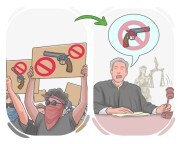
Ex: The rental agreement includes a clause specifying the responsibilities of both the landlord and the tenant. 
Close
Sign in
to revoke
to revoke
[Verb]

to officially cancel or withdraw something, such as a law, a decision, a license, or a privilege
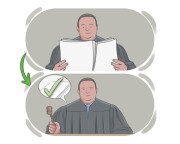
Ex: The board of directors voted unanimously to revoke the CEO's authority following a series of financial scandals. 
Close
Sign in
to legislate

to create or bring laws into effect through a formal process
Ex: They are currently legislating new measures to address environmental concerns. 
Close
Sign in
to regulate

to control or adjust something in a way that agrees with rules and regulations

Ex: The government agency works to regulate environmental policies to protect natural resources. 
Close
Sign in
to enact
to enact
[Verb]

to approve a proposed law

Ex: The legislature voted to enact new regulations governing environmental protection. 
Close
Sign in
to censure

to strongly criticize in an official manner

Ex: The teacher had to censure a student who consistently disrupted the class. 
Close
Sign in
conservatism

a political belief with an inclination to keep the traditional values in a society by avoiding changes

Ex: Many voters align with conservatism due to its emphasis on preserving traditional values. 
Close
Sign in
to legitimatize

to make something lawful, acceptable, or valid

Ex: The government sought to legitimize the new law by obtaining approval from the legislature. 
Close
Sign in
LanGeek
Download LanGeek app