
Inglés y Conocimientos del Mundo para ACT - Tierra y Agua
Aprende vocabulario ACT sobre accidentes geográficos terrestres y acuáticos, incluidos el terreno, los ríos, los lagos, los océanos, las costas y otros elementos geográficos de la Tierra.
Revisión
Tarjetas de memoria
Ortografía
Cuestionario

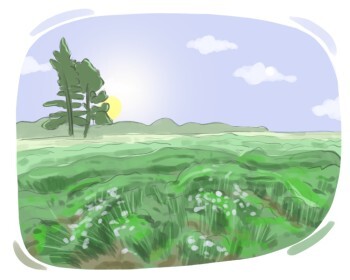
a piece of land covered in grass and sometimes wild flowers, often used for hay

prado, pradera
En verano, el prado está lleno de flores coloridas.
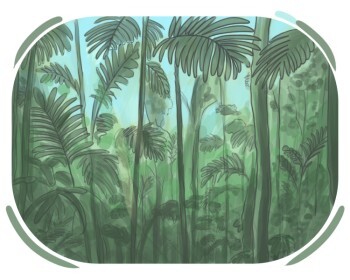
a thick, tropical forest with tall trees and consistently heavy rainfall
bosque lluvioso
El Amazonas es el bosque tropical más grande del mundo.

a flat-bottomed desert basin that periodically fills with water to form a temporary lake, but remains dry for most of the year
playa, cuenca desértica de fondo plano
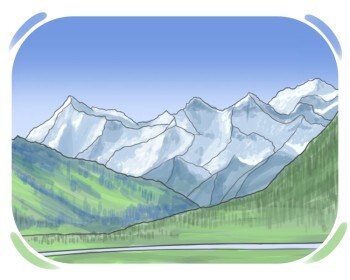
a long, narrow crest forming the upper part of a hill or mountain
cresta, cima
a field where animals eat grass
pasto
El agricultor rotó sus animales a un nuevo pastizal cada semana.
a low hill at the base of a mountain or mountain range
estribación, pie de monte
Las estribaciones frondosas son perfectas para viñedos y huertos.
an area of land, particularly in reference to its physical or natural features
terreno
Los urbanistas tuvieron en cuenta las características naturales del terreno al diseñar la infraestructura de la ciudad, incorporando espacios verdes y vías fluviales en sus planes.
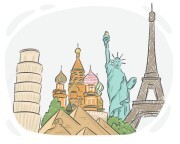
a structure or a place that is historically important
monumento
Los visitantes acuden en masa al Acrópolis en Atenas para admirar los templos antiguos y absorber su significado histórico.
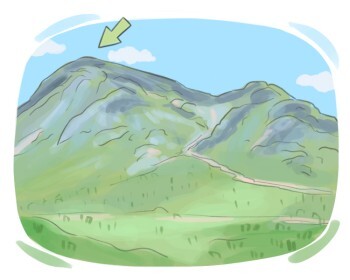
the highest point or summit, especially of a mountain or hill, where the incline culminates
cresta, cima
El antiguo castillo fue construido estratégicamente en la cresta de un acantilado empinado para proporcionar una ventaja defensiva.
a large rock, usually one that has been shaped by natural forces such as water or ice
roca, peñasco
Los niños treparon por el peñasco, pretendiendo que era un muro de castillo en su reino imaginario.
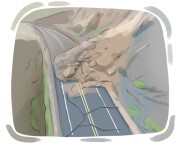
a sudden fall of a large mass of dirt or rock down a mountainside or cliff
derrumbe
Un deslizamiento de tierra masivo ocurrió después del terremoto, causando una destrucción generalizada.
a small, natural hill or raised area of earth, typically formed by natural processes
montículo, loma
El sendero conducía a un montículo rocoso con una hermosa vista del valle.
related to travel or transport over land, especially across long distances or difficult terrain
terrestre, por tierra
Optaron por una aventura terrestre, conduciendo de costa a costa.
to undergo gradual wearing away or reduction in size, typically as a result of natural forces or environmental factors
erosionar, desgastar
Las dunas costeras se erosionan gradualmente, remodelando el paisaje con cada marea.
a coastal wetland area that is covered by mud or silt at low tide and exposed at high tide
marisma, llanura de marea
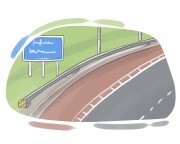
a flat strip or ledge of land, located along the side of a road, typically used for drainage or as a barrier
berma, arcén
Estacionó su auto en la berma cubierta de hierba al lado de la carretera.
a high, steep cliff or bank overlooking a body of water, often formed by erosion or geological processes
acantilado, precipicio
El faro estaba situado en un acantilado con vistas al puerto.
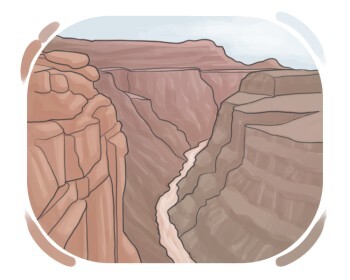
a steep-sided valley, often with a stream running through it
desfiladero
El sendero corría a lo largo del borde de un cañón profundo.
the expansive flat Arctic regions, of North America, Asia, and Europe, in which no trees grow and the soil is always frozen
tundra
Durante la corta temporada de verano, la tundra cobra vida con coloridas flores silvestres y aves migratorias anidando.
a large area of land, often defined by boundaries, used for specific purposes such as development, agriculture, or conservation
extensión, parcela
Los ambientalistas hicieron campaña para preservar el tracto forestal de la tala.
a fast and turbulent part of a river with swift currents and obstacles like rocks
rápido
a narrow, shallow watercourse, often flowing through a confined natural channel
arroyo, riachuelo
Un pintoresco puente de madera cruzaba el arroyo, permitiendo a los excursionistas pasar al otro lado.
a watercourse that flows into a larger river or body of water
afluente, tributario
Alimentado por afluentes como los ríos Hudson, Mohawk y Delaware, el océano Atlántico recibe escorrentía de agua dulce del este de los Estados Unidos.

a small pool of water or other liquid, particularly rainwater
charco
a circular current of water or air that moves against the main flow, creating a small whirlpool or whirl
remolino, vórtice
Los peces a menudo encuentran refugio en las aguas tranquilas de un remolino.
the flow or movement of water or a liquid in a specific direction
corriente
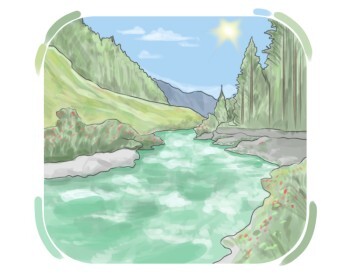
a small, natural watercourse or stream; typically characterized by a gentle and continuous flow
riachuelo, arroyo
Los niños jugaban junto al arroyo, saltando piedras sobre el agua.
a slight wave or series of waves on the water's surface caused by a breeze or a disturbance
una ondulación, un rizo
Los patos nadaban por el agua, dejando ondulaciones a su paso.
a small, slow flow of liquid
hilo, goteo
Había un hilo de sudor que corría por su frente.
a narrow body of water between islands or leading inland from a larger body of water, often serving as a passageway or channel
ensenada, entrada
Una ensenada proporcionaba un puerto natural para el pueblo costero.
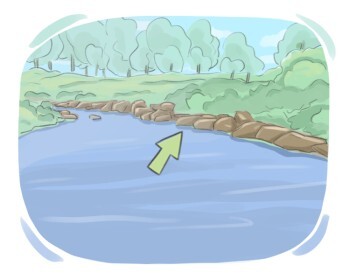
land along the sides of a river, canal, etc.
orilla
the gentle, rhythmic movement and sound of water as it washes up onto the shore or against objects
el chapoteo, el murmullo de las olas
Sentados en la orilla, escuchaban el continuo chasquido de la marea entrante.
the excess liquid, typically water, that exceeds the capacity of an area to contain or absorb it
escorrentía, desbordamiento
Las regulaciones ambientales tienen como objetivo controlar la escorrentía para prevenir la contaminación de los cuerpos de agua cercanos.
a shallow body of water separated from a larger body of water, often by a barrier island, coral reef, or sandbar
laguna, lagoa
La Laguna Colorada en Bolivia es una laguna de gran altitud conocida por su color rojizo, causado por algas pigmentadas y minerales.
an area of land that is covered with water or is always very wet
pantano
El ecosistema del pantano desempeñó un papel crucial en la filtración del agua y en proporcionar hábitat para numerosas especies de aves y anfibios.
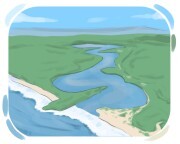
the part of a river that is wide and where it meets the sea
estuario, ría
El delta se formó en la desembocadura del río donde fluye hacia el estuario.
a narrow channel or ravine formed by the erosion of soil, especially by running water during rainfall or storms
barranco, cauce
La erosión del barranco amenazaba la estabilidad de los edificios cercanos.
a stagnant or slow-moving channel or inlet, often connected to a larger body of water, such as a marsh, swamp, or backwater
un brazo muerto, una ciénaga
Los pescadores preferían el pantano por sus aguas tranquilas y su abundante población de peces.
the scattered droplets or particles of water or liquid that result from something being struck or dispersed forcefully
salpicadura, rociada
El perro se sacudió para secarse después del baño, dejando un salpicadura de agua en los azulejos del baño.
a steep, deep, and narrow sea inlet surrounded by tall cliffs, created by a glacier
fiordo, ensenada glaciar
Milford Sound en Nueva Zelanda, un conocido fiordo, cautiva a los visitantes con sus majestuosas cascadas y sus empinadas caras de roca.
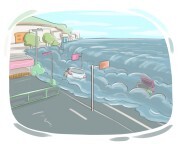
a very high wave or series of waves caused by an undersea earthquake or volcanic eruption
tsunami
Las olas del tsunami alcanzaron alturas de más de 30 metros en algunas áreas, causando una destrucción generalizada.
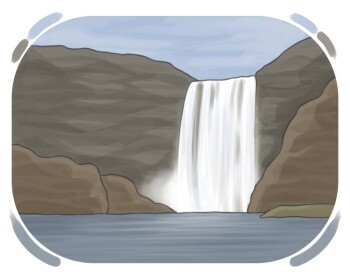
a small steep waterfall, usually one of several others
cascada
El guía turístico señaló varias cascadas a lo largo del sendero del río.
