
Trabaho at Pera - Kahirapan at Mga Isyung Pinansyal
Tuklasin ang mga English idiom na may kaugnayan sa kahirapan at mga isyu sa pananalapi, kasama ang "feel the pinch" at "the breadline".
Repasuhin
Flashcards
Pagsusulit


to face problems and difficulties, particularly financial ones

matamaan sa pera, magkaproblema sa pera
Nang bumagsak ang housing market, maraming investor ang natamaan sa pera.

to suffer ruin, failure, or defeat, due to financial difficulties, and without the possibility of recovery or rescue
malugi nang tuluyan, tuluyang bumagsak
Maraming maliliit na negosyo ang tuluyang nalugi noong recession.

to lose a big sum of money, often due to a risky bet or investment
maubos ang pera, malugi nang malaki
Naubos ang pera niya sa pagtaya sa karera ng kabayo.
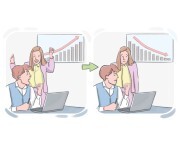
in debt due to spending more than one's earnings
nasa pula, baon sa utang
Matapos ang ilang buwang labis na paggastos, napunta sa pula ang kumpanya.

in an extremely bad financial condition
kapos na kapos sa pera, walang-wala
Matapos mawalan ng trabaho, kapos na kapos siya sa pera nang ilang buwan.

to survive with only the bare minimum resources, often with no savings or financial security
isang kahig, sakto lang ang panggastos
Matapos mawalan ng trabaho, ilang buwan siyang namuhay na isang kahig, isang tuka.
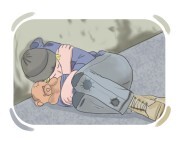
severely lacking money
dukhang-dukha, walang-wala
Noong una siyang lumipat sa lungsod, dukhang-dukha siya.

extremely lacking money
dukhang-dukha, walang-wala
Pagdating niya sa lungsod, dukhang-dukha siya.

to not have any money
walang kapera-pera, walang-wala
Pagkatapos ng biyahe, wala na akong kapera-pera.

(of people) without any home or shelter, therefore constantly moving from one location to another
walang tirahan, palipat-lipat
Matapos masunog ang bahay nila, ilang linggong walang tirahan ang pamilya.
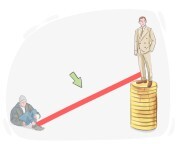
an informal threshold of income that marks the level at which a person or household is regarded as very poor or barely able to afford basic necessities
antas ng kahirapan, hangganan ng pagkakaraos
Maraming pamilya ang nabubuhay sa ibaba ng antas ng kahirapan.

used to refer to someone who does not have enough money and is considered poor by the society's standards
gusgusin, kapos sa buhay
Matapos ang maraming taon ng malas, mukha siyang gusgusin.

to face financial difficulties, particularly due to not having the same income as before
makaramdam ng gipit sa pera, magipit sa pera
Nang bawasan ang oras niya sa trabaho, talagang naramdaman niyang gipit siya sa pera.

used to say that an amount of money was lost due to a transaction
{halaga} na lugi, nalugi ng {halaga}
Pagkabenta ng kotse, 500 dolyar ang lugi niya.

a period that is lacking productivity, profit, success, etc.
panahong matumal, panahong mahina
Dumaan sa panahong matumal ang kumpanya bago tuluyang tumaas ang benta.

affected by poverty to an extreme degree
dukhang-dukha, hirap na hirap
Lumaki siyang dukhang-dukha sa isang maliit na nayon.

to forgive and forget someone's debt, enabling them to start fresh without any financial obligations
burahin ang utang, bigyan ng bagong simula
Pumayag ang bangko na burahin ang utang at kanselahin ang natitirang halaga.

to cease to exist as a functional company or business due to financial challenges or difficulties
magsara ang negosyo, malugi at magsara
Nagsara ang bookstore matapos ang maraming taon ng pagbagsak ng benta.

with a minimal amount of financial resources
sa napakaliit na budget, sa maliit na puhunan
Sinimulan nila ang negosyo sa napakaliit na budget.

lacking any money or financial resources
walang-wala, walang kapera-pera
Pagkabayad ng upa, wala na akong kapera-pera.

very little or no money
walang-wala, walang kapera-pera
Magsalita siya parang mayaman, pero wala naman siyang kapera-pera.
