
Vocabulaire Essentiel pour le GRE - La Société
Ici, vous apprendrez quelques mots anglais sur la société, tels que "strate", "ethnicité", "caste", etc., nécessaires pour l'examen GRE.
Réviser
Flashcards
Orthographe
Quiz


a group of people with similar social standing, education, or income

classe, strate
Elle appartenait à un stratum avec un niveau d'éducation élevé.
the process of cultural exchange and adaptation when individuals or groups from different cultures come into contact, leading to changes in their respective cultural patterns
acculturation
Acculturation se produit souvent dans des environnements urbains multiculturels, où des communautés diverses interagissent et s'influencent mutuellement.
a system where people are treated differently or separated based on their race, ethnicity, or other characteristics
apartheid
Elle a étudié l'impact de l'apartheid sur l'économie de la nation.

people in the highest class of society who have a lot of power and wealth and usually high ranks and titles
aristocratie
Aristocratie a détenu un pouvoir politique significatif tout au long de l'histoire.
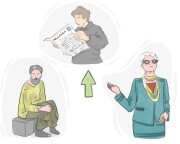
the society's middle class
bourgeoisie
La critique du capitalisme par Marx était centrée sur la bourgeoisie et sa relation avec le prolétariat.
fully aware of the ranking system that distinguishes the general public
conscient des classes, sensibilisé aux hiérarchies sociales
Vivant dans une société consciente des classes, il ressentait une pression à se conformer aux normes sociales.
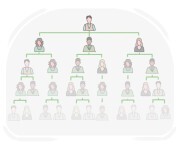
relating to a system that is organized based on social ranking or levels of authority
hiérarchique
Dans une société hiérarchique, le statut social détermine souvent l'accès aux ressources et aux opportunités.
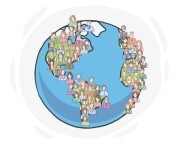
the statistical characteristics of a population, such as age, gender, and ethnicity
segment démographique
Les chercheurs étudient les habitudes de dépenses de cette démographie particulière.
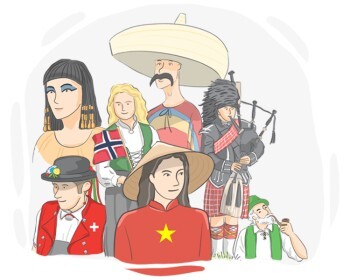
the state of belonging to a certain ethnic group
origine ethnique, appartenance ethnique
Elle est fière de son ethnicité et adore partager ses traditions culturelles.
a situation in which one has just enough money or food to survive
strict minimum
Beaucoup de gens dans les zones rurales dépendent de la pêche pour leur subsistance.
someone who is in a position of power, especially in the past
grand patron
Le roi était considéré comme le suzerain de tout le royaume.
the specific form or system of government of a society or institution
polity, système de gouvernement
Le régime politique de la nation est passé de la monarchie à la république.
to employ a system that sorts out people in the society based on their race or religion
ségréger, séparer
Dans le passé, certaines écoles de la région ségrégeaient les élèves en fonction de leur race.
a system that divides the people of a society into different social classes based on their wealth, privilage, or profession
caste, classe sociale
La discrimination de caste reste un problème majeur dans de nombreuses parties du monde, entraînant des inégalités et des injustices sociales.
someone who believes that a particular group of people, especially one determined by sex, religion, or race, is better than other groups and should dominate them
partisan de l'idéologie de la suprématie raciale
Les croyances du suprémaciste étaient profondément enracinées dans l'intolérance raciale.
the protection that a country grants to someone who has fled their home country because of political reasons
asile politique
Sa demande d'asile politique a été approuvée après un examen approfondi.
a person who gives money or support to help others
bienfaiteur, bienfaitrice
Elle était reconnaissante envers le bienfaiteur qui a financé sa bourse.
the conflict of interests between different social classes in a society, as mentioned in Marxist ideology
lutte des classes
La théorie marxiste se concentre sur la dynamique de la lutte des classes et son impact sur le changement social.
the expulsion of a non-citizen or foreigner from a country, often for being undesirable or violating laws
expulsion
Expulsion a suivi des violations répétées des règlements sur les visas.
the unfair treatment of a person or group based on characteristics such as race, sex, age, or religion
discrimination
to make someone leave their home by force, particularly because of an unpleasant event
déplacer
Les catastrophes naturelles telles que les ouragans et les inondations ont le pouvoir de déplacer des communautés entières.
a small group considered the most powerful, successful, skilled, or privileged within a society or organization
élite
hatred, antipathy, or prejudice toward homosexuals
homophobie
Elle s'est prononcée contre l'homophobie qu'elle a vécue au travail.
to take away a person or a country's riches to the point of poverty
appauvrir
Les mauvaises politiques peuvent appauvrir un pays en épuisant ses ressources.
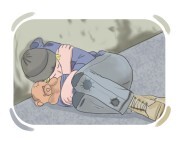
extremely poor or in need
indigent
La famille indigente vivait dans un abri fourni par une œuvre caritative locale.
related to the social categories such as gender, race, sexuality, or age and the way they can extend over the experiences of an individual belonging to an oppressed population
intersectionnel
La politique visait à prendre en compte des facteurs intersectionnels dans son approche de la justice sociale.

to treat a person, group, or concept as insignificant or of secondary or minor importance
marginaliser
Les personnes de couleur sont souvent marginalisées dans les médias grand public, ce qui conduit à une sous-représentation et à des stéréotypes.
to grant citizenship to a foreigner
naturaliser
Le gouvernement a décidé de naturaliser plusieurs réfugiés qui vivaient dans le pays depuis plus de cinq ans.
a state in which two or more things are equal
parité, égalité
L'accord financier cherche à établir une parité entre les deux organisations partenaires.
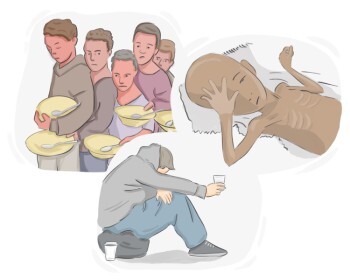
a state of being exceedingly poor and in need
extrême pauvreté, misère
Le roman dépeint la dure réalité de la vie dans la pénurie.
the act of enhancing different opportunities for the people who have been treated as inferior due to belonging to a specific social category like race, sex, and etc. in a society
discrimination positive, action positive
Elle a soutenu la discrimination positive comme un moyen de corriger les biais systémiques.
a system that allows a limited number of immigrants to officially enter a country annually
système de quotas
Le nouveau système de quotas a limité le nombre annuel de visas délivrés.
an owner of a house of land in a location where people are exceedingly poor and have really bad living conditions, who demands rents more than one can afford
propriétaire de taudis, marchand de sommeil
Malgré de nombreuses plaintes des résidents, le propriétaire véreux a refusé de faire les réparations nécessaires à l'immeuble délabré.
an awareness of other people's pain and problems who have a bad condition in the society and feeling a sense of duty to take care of them
conscience sociale, sens social
Il ressentait une conscience sociale profonde, ce qui le poussait à défendre les droits des travailleurs.
the fact of having or expressing strong, irrational views and disliking other people with different views or a different way of life
sectarisme, intolérance
Elle s'est prononcée contre l'intolérance qui affectait l'environnement de travail.
a political situation in which there is anger among the people and protests are likely
agitation, troubles
Les difficultés économiques ont conduit à une augmentation des troubles parmi la population.
