
pattern

Essential Vocabulary for the GRE - Café Society

Here you will learn some English words about society, such as "stratum", "ethnicity", "caste", etc. that are needed for the GRE exam.

Review

Flashcards

Spelling

Quiz

Start learning
Essential Words Needed for the GRE
stratum
stratum
[noun]

a group of people with similar social standing, education, or income

Ex: The study focused on the middle-income stratum of society. 
Close
Sign in
acculturation

the process of cultural exchange and adaptation when individuals or groups from different cultures come into contact, leading to changes in their respective cultural patterns

Ex: The immigrant community experienced acculturation as they integrated aspects of the host country's culture into their own traditions. 
Close
Sign in
apartheid
apartheid
[noun]

a system where people are treated differently or separated based on their race, ethnicity, or other characteristics

Ex: Activists fought tirelessly to end apartheid and achieve equality. 
Close
Sign in
aristocracy

people in the highest class of society who have a lot of power and wealth and usually high ranks and titles
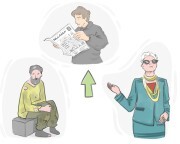
Ex: The event was attended by members of the aristocracy in elegant attire. 
Close
Sign in
bourgeoisie

the society's middle class

Ex: The bourgeoisie in the 19th century played a significant role in shaping economic and social structures. 
Close
Sign in
class-conscious
class-conscious
[Adjective]

fully aware of the ranking system that distinguishes the general public
Ex: The students were very class-conscious, often discussing social status. 
Close
Sign in
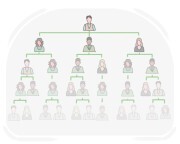
hierarchical
hierarchical
[Adjective]

relating to a system that is organized based on social ranking or levels of authority
Ex: The hierarchical structure of the organization ensures clear lines of authority and responsibility. 
Close
Sign in
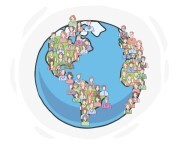
demographic

the statistical characteristics of a population, such as age, gender, and ethnicity
Ex: The new marketing strategy aims to target a younger demographic. 
Close
Sign in
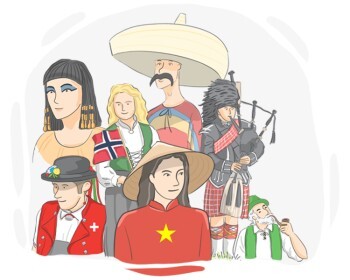
ethnicity
ethnicity
[noun]

the state of belonging to a certain ethnic group

Ex: The census form asked respondents to indicate their ethnicity. 
Close
Sign in
subsistence

a situation in which one has just enough money or food to survive

Ex: The workers earned barely enough for subsisten 
Close
Sign in
overlord
overlord
[noun]

someone who is in a position of power, especially in the past

Ex: The medieval lord acted as an overlord over the neighboring villages. 
Close
Sign in
polity
polity
[noun]

the specific form or system of government of a society or institution

Ex: The church adopted a new polity emphasizing local autonomy. 
Close
Sign in
to segregate

to employ a system that sorts out people in the society based on their race or religion

Ex: The organization's membership criteria segregate individuals based on their religious beliefs. 
Close
Sign in
caste
caste
[noun]

a system that divides the people of a society into different social classes based on their wealth, privilage, or profession

Ex: The caste system in India historically divided society into hierarchical groups based on birth, occupation, and social status. 
Close
Sign in
supremacist

someone who believes that a particular group of people, especially one determined by sex, religion, or race, is better than other groups and should dominate them

Ex: Authorities arrested a supremacist who was spreading hate speech online. 
Close
Sign in
political asylum

the protection that a country grants to someone who has fled their home country because of political reasons

Ex: She sought political asylum after facing persecution in her home country. 
Close
Sign in
benefactor

a person who gives money or support to help others

Ex: The charity thanked its generous benefactor at the annual gala. 
Close
Sign in
class struggle

the conflict of interests between different social classes in a society, as mentioned in Marxist ideology

Ex: The novel explores themes of class struggle in a rapidly industrializing society. 
Close
Sign in
deportation

the expulsion of a non-citizen or foreigner from a country, often for being undesirable or violating laws

Ex: The authorities ordered the deportation of illegal immigrants. 
Close
Sign in
discrimination

the practice of treating a person or different categories of people less fairly than others

Ex: The company faced a lawsuit for discrimination against female employees. 
Close
Sign in
to displace

to make someone leave their home by force, particularly because of an unpleasant event

Ex: The conflict in the region has continued to displace thousands of families. 
Close
Sign in
elite
elite
[noun]

a small group of people in a society who enjoy a lot of advantages because of their economic, intellectual, etc. superiority

Ex: The elite gathered at the exclusive club for their annual meeting. 
Close
Sign in
homophobia

hatred, antipathy, or prejudice toward homosexuals

Ex: The campaign aims to raise awareness about the effects of homophobia. 
Close
Sign in
to impoverish

to take away a person or a country's riches to the point of poverty
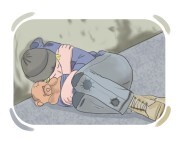
Ex: The economic crisis began to impoverish many families in the region. 
Close
Sign in
indigent
indigent
[Adjective]

extremely poor or in need

Ex: The indigent population relied on government assistance for survival. 
Close
Sign in
intersectional
intersectional
[Adjective]

related to the social categories such as gender, race, sexuality, or age and the way they can extend over the experiences of an individual belonging to an oppressed population

Ex: Her research focused on intersectional issues affecting women of color. 
Close
Sign in
to marginalize

to treat a person, group, or concept as insignificant or of secondary or minor importance

Ex: Historically, indigenous communities have been marginalized and deprived of their land rights. 
Close
Sign in
to naturalize

to grant citizenship to a foreigner

Ex: He was naturalized after passing the citizenship exam. 
Close
Sign in
parity
parity
[noun]

a state in which two or more things are equal
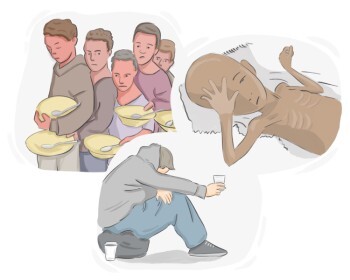
Ex: The company aims to achieve parity in salaries between male and female employees. 
Close
Sign in
penury
penury
[noun]

a state of being exceedingly poor and in need

Ex: He grew up in penury, struggling to meet basic needs. 
Close
Sign in
positive discrimination

the act of enhancing different opportunities for the people who have been treated as inferior due to belonging to a specific social category like race, sex, and etc. in a society

Ex: The company implemented positive discrimination to improve diversity in hiring. 
Close
Sign in
quota system

a system that allows a limited number of immigrants to officially enter a country annually

Ex: The government implemented a quota system to control immigration numbers. 
Close
Sign in
slumlord
slumlord
[noun]

an owner of a house of land in a location where people are exceedingly poor and have really bad living conditions, who demands rents more than one can afford

Ex: The city cracked down on slumlords who neglected their properties, leaving tenants living in squalor. 
Close
Sign in
social conscience

an awareness of other people's pain and problems who have a bad condition in the society and feeling a sense of duty to take care of them

Ex: Her social conscience led her to volunteer at the homeless shelter. 
Close
Sign in
bigotry
bigotry
[noun]

the fact of having or expressing strong, irrational views and disliking other people with different views or a different way of life

Ex: The community was shocked by the bigotry expressed in the hateful speech. 
Close
Sign in
unrest
unrest
[noun]

a political situation in which there is anger among the people and protests are likely

Ex: The government’s decision sparked widespread unrest across the country. 
Close
Sign in
LanGeek
Download LanGeek app
