pattern

Vocabulaire pour IELTS (Académique) - Loi

Ici, vous apprendrez quelques mots anglais sur la loi, tels que "juge", "accusation", "judiciaire", etc., qui sont nécessaires pour l'examen IELTS.

Réviser

Flashcards

formes

Orthographe

Quiz

Commencer à apprendre
Words for Academic IELTS
barrister

a legal professional qualified and licensed to advocate on behalf of clients in both lower and higher courts

avocat, plaidant, plaidante

avocat, plaidant, plaidante

Ex: The defense barrister passionately defended their client, using persuasive arguments to sway the jury's opinion. 

L'avocat de la défense a défendu avec passion son client, en utilisant des arguments persuasifs pour influencer l'opinion du jury.

to break
to break
[verbe]

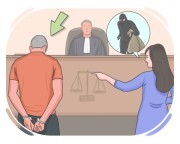
to fail to obey the law

transgresser, violer, ne pas respecter
transgresser, violer, ne pas respecter

Ex: The company will face consequences if they break environmental regulations. 

L'entreprise subira des conséquences si elle enfreint les réglementations environnementales.

defendant

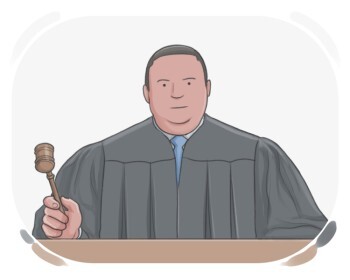
a person in a law court who is sued by someone else or is accused of committing a crime

défendeur, défenderesse, accusé, accusée
défendeur, défenderesse, accusé, accusée

Ex: The courtroom was packed with spectators eager to hear the defendant's testimony. 

La salle d'audience était bondée de spectateurs impatients d'entendre le témoignage du défendeur.

to judge
to judge
[verbe]

to decide whether or not a person is innocent in a court of law

juger

juger

Ex: It is his duty to impartially judge the facts of the case. 

C'est son devoir de juger impartialement les faits de l'affaire.

jury
jury
[nom]

a group of twelve citizens, who listen to the details of a case in the court of law in order to decide the guiltiness or innocence of a defendant

jury

jury

Ex: During the trial, the jury listened carefully to testimonies from both sides. 

Pendant le procès, le jury a écouté attentivement les témoignages des deux parties.

law-abiding
law-abiding
[Adjectif]

being obedient to the law

respectueux des lois

respectueux des lois

offender

a person who commits a crime

délinquant, délinquante

délinquant, délinquante

Ex: Offenders who complete rehabilitation programs are less likely to reoffend. 

Les délinquants qui terminent des programmes de réadaptation sont moins susceptibles de récidiver.

solicitor

(in the UK) a lawyer who is entitled to give legal advice, prepare legal documents for contracts and defend people in lower courts of law

notaire

notaire

Ex: The solicitor prepared the legal documents for the case. 

Le solicitor a préparé les documents juridiques pour l'affaire.

to prosecute

to try to charge someone officially with a crime in a court as the lawyer of the accuser

intenter une action

intenter une action

Ex: She was asked to prosecute the case, bringing the defendant to trial for fraud. 

On lui a demandé de poursuivre l'affaire, amenant le défendeur à être jugé pour fraude.
to charge
to charge
[verbe]

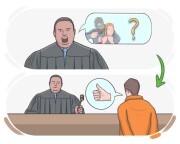
to officially accuse someone of an offense

inculper
inculper

Ex: Law enforcement officers may charge individuals with trespassing if they enter restricted areas. 

Les agents de la loi peuvent accuser des individus d'intrusion s'ils pénètrent dans des zones restreintes.

trial
trial
[nom]

a legal process where a judge and jury examine evidence in court to decide if the accused is guilty

procès

procès

Ex: She was nervous about her upcoming trial and hoped the jury would believe her innocence. 

Elle était nerveuse à propos de son prochain procès et espérait que le jury croirait à son innocence.

court
court
[nom]

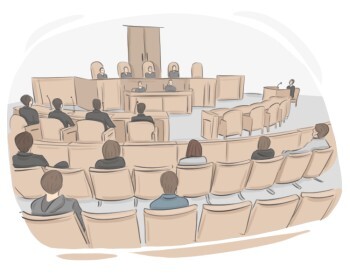
the group of people in a court including the judge and the jury

tribunal, cour
tribunal, cour

Ex: The judge asked the court to maintain order during the proceedings. 

Le juge a demandé à la cour de maintenir l'ordre pendant les procédures.

to plead
to plead
[verbe]

to state in a court of law, in front of the judge and the jury, whether someone is guilty or not guilty of a crime

plaider, implorer

plaider, implorer

Ex: The lawyer advised his client to plead guilty to the lesser offense to avoid a harsher sentence. 

L'avocat a conseillé à son client de plaider coupable pour l'infraction mineure afin d'éviter une peine plus sévère.

to acquit
to acquit
[verbe]

to officially decide and declare in a law court that someone is not guilty of a crime

acquitter

acquitter

Ex: The jury unanimously decided to acquit the defendant due to lack of evidence. 

Le jury a décidé à l'unanimité d'acquitter l'accusé en raison d'un manque de preuves.

parole
parole
[nom]

(law) the permission for a prisoner to leave prison before the end of their imprisonment sentence, on the condition of good conduct

liberté conditionnelle

liberté conditionnelle

Ex: The parole board reviews each case individually to determine if an inmate meets the criteria for early release. 

La commission de liberté conditionnelle examine chaque cas individuellement pour déterminer si un détenu remplit les critères pour une libération anticipée.

to sentence

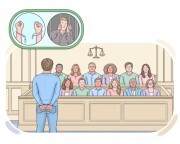
to officially state the punishment of someone found guilty in a court of law

condamner
condamner

Ex: The court will sentence the individual convicted of fraud next week. 

Le tribunal condamnera l'individu reconnu coupable de fraude la semaine prochaine.

verdict
verdict
[nom]

an official decision made by the jury in a court after the legal proceedings

verdict

verdict

Ex: The judge read the verdict aloud in the packed courtroom. 

Le juge a lu le verdict à haute voix dans la salle d'audience bondée.

to rehabilitate

to help someone to restore to a healthy and independent state after a period of imprisonment, addiction, illness, etc.

réinsérer, désintoxiquer, rééduquer

réinsérer, désintoxiquer, rééduquer

Ex: After serving time in prison, the goal was to rehabilitate the offender and reintegrate them into society. 

Après avoir purgé une peine de prison, l'objectif était de réhabiliter le délinquant et de le réintégrer dans la société.

misdeed
misdeed
[nom]

a wrongful or immoral act

méfait

méfait

Ex: The judge sentenced him for his misdeeds against the community. 

Le juge l'a condamné pour ses méfaits contre la communauté.

retribution

correction imposed as repayment for wrongdoing

châtiment

châtiment

Ex: He accepted the punishment as fair retribution for his crimes. 

Il a accepté la punition comme une rétribution juste pour ses crimes.

custodial
custodial
[Adjectif]

having custody of someone or connected with the legal right to look after them

(parent) gardien
(parent) gardien

to fine
to fine
[verbe]

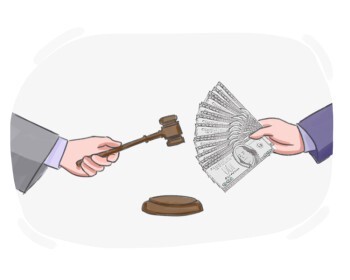
to make someone pay a sum of money as punishment for violation of the law

donner une amende à, donner une contravention à

donner une amende à, donner une contravention à

Ex: The city council decided to fine residents who fail to properly sort their recycling. 

Le conseil municipal a décidé de condamner à une amende les résidents qui ne trient pas correctement leurs déchets recyclables.

community service

unpaid work done either as a form of punishment by a criminal or as a voluntary service by a citizen

travaux d’intérêt général, TIG

travaux d’intérêt général, TIG

Ex: She decided to dedicate her weekends to community service by volunteering at the local animal shelter. 

Elle a décidé de consacrer ses week-ends au service communautaire en faisant du bénévolat au refuge animalier local.

corporal punishment

the physical punishment of people, especially of children or convicts

châtiment corporel

châtiment corporel

Ex: Many countries have banned the use of corporal punishment in schools due to concerns about its effectiveness and potential harm. 

De nombreux pays ont interdit l'utilisation des châtiments corporels dans les écoles en raison des inquiétudes concernant leur efficacité et leurs dommages potentiels.

capital punishment

the killing of a criminal as punishment

peine capitale

peine capitale

Ex: The state abolished capital punishment decades ago, opting for life imprisonment instead. 

L'État a aboli la peine capitale il y a des décennies, optant plutôt pour la prison à vie.

deterrent

a thing that reduces the chances of someone doing something because it makes them aware of its difficulties or consequences

moyen de dissuasion, dissuasif, dissuasive

moyen de dissuasion, dissuasif, dissuasive

Ex: The lengthy prison sentences are intended to be a deterrent against serious crimes. 

Les longues peines de prison sont destinées à être un désincitatif contre les crimes graves.
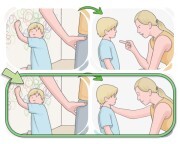
lenient
lenient
[Adjectif]

(of a person) tolerant, flexible, or relaxed in enforcing rules or standards, often forgiving and understanding toward others

indulgent

indulgent

Ex: The lenient parent often overlooked minor misbehavior and preferred to guide their child with patience rather than harsh punishment. 

Le parent indulgent passait souvent outre les petits écarts de conduite et préférait guider son enfant avec patience plutôt que de recourir à des punitions sévères.

conviction

a formal declaration by which someone is found guilty of a crime in a court of law

condamnation

condamnation

Ex: After the conviction, he was sentenced to ten years in prison. 

Après la condamnation, il a été condamné à dix ans de prison.

judicial
judicial
[Adjectif]

belonging or appropriate for a court, a judge, or the administration of justice

judiciaire

judiciaire

Ex: Judicial review is a process by which courts examine the constitutionality of laws and governmental actions. 

Le contrôle judiciaire est un processus par lequel les tribunaux examinent la constitutionnalité des lois et des actions gouvernementales.

legislation

a formal rule or collection of rules enacted by a governing authority

législation

législation

Ex: Parliament passed legislation to improve access to mental health services. 

Le Parlement a adopté une législation pour améliorer l'accès aux services de santé mentale.

LanGeek
Télécharger l'application LanGeek