pattern

Vocabulary for IELTS (Academic) - The Law

Here you will learn some English words about the law, such as "judge", "charge", "judicial", etc. that are needed for the IELTS exam.

Review

Flashcards

Forms

Spelling

Quiz

Start learning
Words for Academic IELTS
barrister
barrister
[noun]

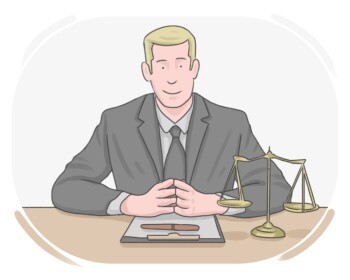
a legal professional qualified and licensed to advocate on behalf of clients in both lower and higher courts

Ex: The barrister specialized in family law, providing guidance and representation in divorce and custody cases. 
Close
Sign in
to break
to break
[Verb]

to fail to obey the law

Ex: She was caught breaking the contract by sharing confidential information. 
Close
Sign in
defendant
defendant
[noun]

a person in a law court who is sued by someone else or is accused of committing a crime
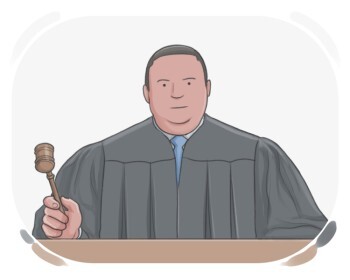
Ex: The defendant pleaded not guilty to the charges of theft and fraud. 
Close
Sign in
to judge
to judge
[Verb]

to decide whether or not a person is innocent in a court of law
Ex: The jury will judge the defendant based on the evidence presented during the trial. 
Close
Sign in
jury
jury
[noun]

a group of twelve citizens, who listen to the details of a case in the court of law in order to decide the guiltiness or innocence of a defendant

Ex: The jury deliberated for several hours before reaching a unanimous verdict. 
Close
Sign in
law-abiding
law-abiding
[Adjective]

being obedient to the law

Close
Sign in
offender
offender
[noun]

a person who commits a crime

Ex: The police apprehended the offender and took him into custody. 
Close
Sign in
solicitor
solicitor
[noun]

(in the UK) a lawyer who is entitled to give legal advice, prepare legal documents for contracts and defend people in lower courts of law
Ex: She consulted a solicitor for advice on buying a house. 
Close
Sign in
to prosecute

to try to charge someone officially with a crime in a court as the lawyer of the accuser
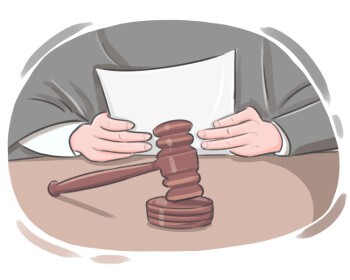
Ex: The lawyer was hired to prosecute the case on behalf of the victim’s family. 
Close
Sign in
to charge
to charge
[Verb]

to officially accuse someone of an offense
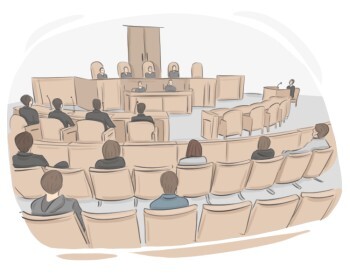
Ex: The prosecutor decided to charge the suspect with theft based on the evidence. 
Close
Sign in
trial
trial
[noun]

a legal process where a judge and jury examine evidence in court to decide if the accused is guilty

Ex: The trial lasted for several weeks as witnesses testified and evidence was presented. 
Close
Sign in
court
court
[noun]

the group of people in a court including the judge and the jury
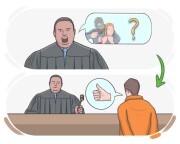
Ex: The court listened carefully to the witness's testimony. 
Close
Sign in
to plead
to plead
[Verb]

to state in a court of law, in front of the judge and the jury, whether someone is guilty or not guilty of a crime
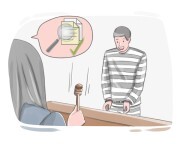
Ex: The defendant pleaded not guilty to the charges of robbery and assault. 
Close
Sign in
to acquit
to acquit
[Verb]

to officially decide and declare in a law court that someone is not guilty of a crime

Ex: The company was accused of wrongdoing, but after a thorough investigation, they were acquitted of any illegal activities. 
Close
Sign in
parole
parole
[noun]

(law) the permission for a prisoner to leave prison before the end of their imprisonment sentence, on the condition of good conduct

Ex: After serving half of his sentence in prison, the inmate was eligible for parole, subject to certain conditions and supervision. 
Close
Sign in
to sentence

to officially state the punishment of someone found guilty in a court of law

Ex: The judge will sentence the convicted criminal to five years in prison. 
Close
Sign in
verdict
verdict
[noun]

an official decision made by the jury in a court after the legal proceedings
Ex: The jury reached an unanimous verdict of guilty after deliberating for several hours. 
Close
Sign in
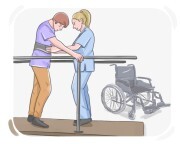
to rehabilitate

to help someone to restore to a healthy and independent state after a period of imprisonment, addiction, illness, etc.

Ex: The program aimed to rehabilitate individuals with substance abuse issues, providing support for a drug-free life. 
Close
Sign in
misdeed
misdeed
[noun]

a wrongful or immoral act

Ex: A simple misdeed can sometimes lead to serious consequences. 
Close
Sign in
retribution

correction imposed as repayment for wrongdoing
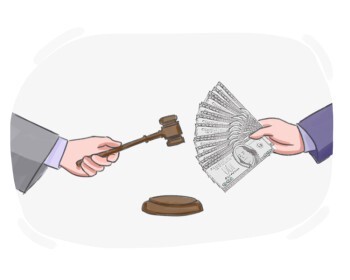
Ex: The community sought retribution through justice, not violence. 
Close
Sign in
custodial
custodial
[Adjective]

having custody of someone or connected with the legal right to look after them

Close
Sign in
to fine
to fine
[Verb]

to make someone pay a sum of money as punishment for violation of the law
Ex: The police officer fined the driver for speeding in a school zone. 
Close
Sign in
community service

unpaid work done either as a form of punishment by a criminal or as a voluntary service by a citizen

Ex: After being convicted of vandalism, he was sentenced to 100 hours of community service. 
Close
Sign in
corporal punishment

the physical punishment of people, especially of children or convicts

Ex: Corporal punishment, such as spanking or paddling, is a controversial method of disciplining children. 
Close
Sign in
capital punishment

the killing of a criminal as punishment

Ex: The debate over capital punishment continues to be a contentious issue in many countries. 
Close
Sign in
deterrent
deterrent
[noun]

a thing that reduces the chances of someone doing something because it makes them aware of its difficulties or consequences

Ex: Increased security measures serve as a deterrent to potential thieves. 
Close
Sign in
lenient
lenient
[Adjective]

(of a person) tolerant, flexible, or relaxed in enforcing rules or standards, often forgiving and understanding toward others

Ex: The lenient teacher allowed students extra time to complete assignments if they had valid reasons for delays. 
Close
Sign in
conviction

a formal declaration by which someone is found guilty of a crime in a court of law
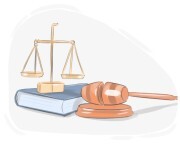
Ex: The defendant's conviction was based on solid evidence presented during the trial. 
Close
Sign in
judicial
judicial
[Adjective]

belonging or appropriate for a court, a judge, or the administration of justice

Ex: The judicial branch of government oversees the interpretation and application of laws through courts and judges. 
Close
Sign in
legislation

a formal rule or collection of rules enacted by a governing authority

Ex: The new environmental legislation limits carbon emissions from factories. 
Close
Sign in
LanGeek
Download LanGeek app