pattern

Vocabulario para IELTS (Académico) - La Ley

Aquí aprenderás algunas palabras en inglés sobre la ley, como "judge", "charge", "judicial", etc. que se necesitan para el examen IELTS.

Revisión

Tarjetas de memoria

formas

Ortografía

Cuestionario

Empezar a aprender
Words for Academic IELTS
barrister
barrister
[Sustantivo]

a legal professional qualified and licensed to advocate on behalf of clients in both lower and higher courts

abogado

abogado

Ex: As a barrister, he is known for his sharp legal mind and eloquent courtroom presentations .

Como abogado, es conocido por su aguda mente legal y sus elocuentes presentaciones en el tribunal.

to break
to break
[Verbo]

to fail to obey the law

violar

violar

Ex: Breaking copyright laws can lead to legal action against content creators .

Infringir las leyes de derechos de autor puede llevar a acciones legales contra los creadores de contenido.

defendant
defendant
[Sustantivo]

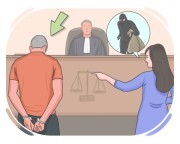
a person in a law court who is sued by someone else or is accused of committing a crime

acusado
acusado

Ex: The defendant remained composed throughout the trial , maintaining innocence despite the prosecution 's strong arguments .

El acusado permaneció sereno durante todo el juicio, manteniendo su inocencia a pesar de los fuertes argumentos de la fiscalía.

to judge
to judge
[Verbo]

to decide whether or not a person is innocent in a court of law

juzgar

juzgar

Ex: Lawyers presented their arguments to convince the court to judge in their favor .

Los abogados presentaron sus argumentos para convencer al tribunal de juzgar a su favor.

jury
jury
[Sustantivo]

a group of twelve citizens, who listen to the details of a case in the court of law in order to decide the guiltiness or innocence of a defendant

jurado

jurado

Ex: The jury was composed of individuals from various professions and backgrounds .

El jurado estaba compuesto por individuos de diversas profesiones y orígenes.

law-abiding
law-abiding
[Adjetivo]

being obedient to the law

obediente de las leyes

obediente de las leyes

offender
offender
[Sustantivo]

a person who commits a crime

delincuente

delincuente

Ex: Community service can be a constructive way for offenders to make amends for their actions and contribute positively to society .

El servicio comunitario puede ser una forma constructiva para que los infractores reparen sus acciones y contribuyan positivamente a la sociedad.

solicitor
solicitor
[Sustantivo]

(in the UK) a lawyer who is entitled to give legal advice, prepare legal documents for contracts and defend people in lower courts of law

abogado

abogado

Ex: The solicitor explained the terms of the contract clearly .

El solicitor explicó claramente los términos del contrato.

to prosecute

to try to charge someone officially with a crime in a court as the lawyer of the accuser

procesar

procesar

Ex: He hired an expert to help prosecute the case , ensuring every legal angle was covered .

Contrató a un experto para ayudar a procesar el caso, asegurándose de que todos los ángulos legales estuvieran cubiertos.

to charge
to charge
[Verbo]

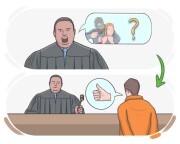
to officially accuse someone of an offense

acusar
acusar

Ex: Right now , the legal team is charging individuals involved in the corruption scandal .

En este momento, el equipo legal acusa a los individuos involucrados en el escándalo de corrupción.

trial
trial
[Sustantivo]

a legal process where a judge and jury examine evidence in court to decide if the accused is guilty

juicio

juicio

Ex: The lawyer prepared extensively for the trial, gathering all necessary documents and witness statements .

El abogado se preparó extensamente para el juicio, reuniendo todos los documentos necesarios y los testimonios de los testigos.

court
court
[Sustantivo]

the group of people in a court including the judge and the jury

tribunal
tribunal

Ex: The court deliberated for hours before reaching a verdict .

El tribunal deliberó durante horas antes de llegar a un veredicto.

to plead
to plead
[Verbo]

to state in a court of law, in front of the judge and the jury, whether someone is guilty or not guilty of a crime

defender

defender

Ex: Despite the evidence against him , the defendant chose to plead not guilty by reason of insanity .

A pesar de las pruebas en su contra, el acusado optó por declararse no culpable por razones de locura.

to acquit
to acquit
[Verbo]

to officially decide and declare in a law court that someone is not guilty of a crime

absolver

absolver

Ex: The exoneration process ultimately led to the court 's decision to acquit the defendant of all charges .

El proceso de exoneración finalmente llevó a la decisión del tribunal de absolver al acusado de todos los cargos.

parole
parole
[Sustantivo]

(law) the permission for a prisoner to leave prison before the end of their imprisonment sentence, on the condition of good conduct

libertad condicional, libertad bajo palabra

libertad condicional, libertad bajo palabra

Ex: Parole offers offenders the opportunity for rehabilitation and reintegration into society under supervision, with the goal of reducing recidivism.

La libertad condicional ofrece a los delincuentes la oportunidad de rehabilitación y reintegración en la sociedad bajo supervisión, con el objetivo de reducir la reincidencia.

to sentence

to officially state the punishment of someone found guilty in a court of law

sentenciar
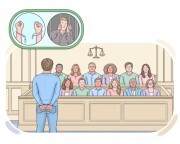
sentenciar

Ex: After the trial , the judge carefully sentenced the convicted murderer .

Después del juicio, el juez sentenció cuidadosamente al asesino convicto.

verdict
verdict
[Sustantivo]

an official decision made by the jury in a court after the legal proceedings

veredicto

veredicto

Ex: The media reported on the landmark verdict that set a new precedent in criminal law .

Los medios informaron sobre el veredicto histórico que sentó un nuevo precedente en el derecho penal.

to rehabilitate

to help someone to restore to a healthy and independent state after a period of imprisonment, addiction, illness, etc.

rehabilitar

rehabilitar

Ex: The program successfully rehabilitated many individuals who had struggled with substance abuse .

El programa rehabilitó con éxito a muchas personas que habían luchado contra el abuso de sustancias.

misdeed
misdeed
[Sustantivo]

a wrongful or immoral act

fechoría

fechoría

Ex: The company fired him for his repeated misdeeds.

La empresa lo despidió por sus repetidos malfechorías.

retribution
retribution
[Sustantivo]

correction imposed as repayment for wrongdoing

castigo

castigo

Ex: The trial provided a form of retribution for the victims ' families .

El juicio proporcionó una forma de retribución para las familias de las víctimas.

custodial
custodial
[Adjetivo]

having custody of someone or connected with the legal right to look after them

con la custodia

con la custodia

to fine
to fine
[Verbo]

to make someone pay a sum of money as punishment for violation of the law

multar

multar

Ex: He was fined for littering in a public area .

Fue multado por tirar basura en un área pública.

community service
community service
[Sustantivo]

unpaid work done either as a form of punishment by a criminal or as a voluntary service by a citizen

servicio social

servicio social

Ex: He found fulfillment in community service, knowing that his efforts were making a positive impact on those in need .

Encontró satisfacción en el servicio comunitario, sabiendo que sus esfuerzos estaban teniendo un impacto positivo en los necesitados.

corporal punishment

the physical punishment of people, especially of children or convicts

castigo físico

castigo físico

Ex: The debate over corporal punishment often centers on the balance between parental rights and the well-being of children .

El debate sobre los castigos corporales a menudo se centra en el equilibrio entre los derechos de los padres y el bienestar de los niños.

capital punishment
capital punishment
[Sustantivo]

the killing of a criminal as punishment

pena capital

pena capital

Ex: Capital punishment is reserved for crimes deemed most severe under the law , such as murder .

La pena capital está reservada para los crímenes considerados más graves bajo la ley, como el asesinato.

deterrent
deterrent
[Sustantivo]

a thing that reduces the chances of someone doing something because it makes them aware of its difficulties or consequences

elemento de disuasión

elemento de disuasión

Ex: The complex application process proved to be a deterrent for many applicants .

El complejo proceso de solicitud resultó ser un disuasivo para muchos solicitantes.

lenient
lenient
[Adjetivo]

(of a person) tolerant, flexible, or relaxed in enforcing rules or standards, often forgiving and understanding toward others

benévolo, indulgente

benévolo, indulgente

Ex: In contrast to his strict predecessor , the new manager took a lenient approach to employee tardiness , focusing more on productivity than punctuality .

A diferencia de su estricto predecesor, el nuevo gerente adoptó un enfoque indulgente hacia la tardanza de los empleados, centrándose más en la productividad que en la puntualidad.

conviction
conviction
[Sustantivo]

a formal declaration by which someone is found guilty of a crime in a court of law

condena

condena

Ex: She was shocked by his conviction, as he had always maintained his innocence .

Ella quedó impactada por su condena, ya que siempre había mantenido su inocencia.

judicial
judicial
[Adjetivo]

belonging or appropriate for a court, a judge, or the administration of justice

judicial

judicial

Ex: Lawyers play a crucial role in presenting arguments and evidence before the judicial authorities .

Los abogados desempeñan un papel crucial al presentar argumentos y pruebas ante las autoridades judiciales.

legislation
legislation
[Sustantivo]

a formal rule or collection of rules enacted by a governing authority

legislación

legislación

Ex: The legislation banning single-use plastics will take effect next year .

La legislación que prohíbe los plásticos de un solo uso entrará en vigor el próximo año.

LanGeek
Descargar la aplicación LanGeek