
Geavanceerde Woordenschat voor de TOEFL - Geschiedenis
Hier leer je enkele Engelse woorden over geschiedenis, zoals "prehistorie", "jura", "kroniek", enz., die nodig zijn voor het TOEFL-examen.
Herzien
Flashcards
Spelling
Quiz

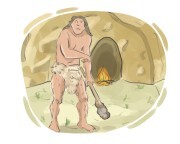
the early period of human history when people used things such as stone, horn, bone, etc. to make tools

stenentijd, steentijdperk
Tijdens het stenentijdperk begonnen mensen dieren te domesticeren en gewassen te verbouwen, wat het begin van de landbouw markeerde.

the era in human history from which we have no written record
prehistorie, oertijd
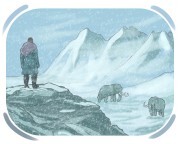
one of the periods in history when ice covered large parts of the world
ijstijd, glaciaal
Wetenschappers bestuderen ijskernen om de klimaatveranderingen te begrijpen die plaatsvonden tijdens de ijstijd.
the historical period before the Middle Ages, especially before the sixth century when Greeks and Romans were the most prosperous
de Oudheid, de antieke periode
De kunst en architectuur van de oudheid, zoals het Parthenon in Athene en het Colosseum in Rome, blijven vandaag de dag nog steeds ontzag en bewondering inspireren.
the era in European history commenced at the end of the Roman Empire in AD 476 and lasted until AD 1000
de donkere eeuwen, de vroege middeleeuwen
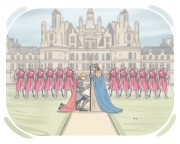
an era in European history, between about AD 1000 and AD 1500, when the authority of kings, people of high rank, and the Christian Church was unquestionable
de Middeleeuwen, de middeleeuwse periode
De Middeleeuwen zagen de verspreiding van de gotische architectuur, duidelijk in de grote kathedralen die in deze tijd werden gebouwd.
the period that began about 1100 BC when people used iron tools for the first time
IJzertijd, Tijdperk van ijzer
De ontdekking van ijzersmelttechnieken stelde culturen uit de IJzertijd in staat om sterkere en efficiëntere gereedschappen te produceren.
the period when iron was not discovered and people used bronze to make tools
Bronstijd, Tijdperk van brons
Archeologen hebben een begraafplaats uit de Bronstijd blootgelegd, waarop ingewikkelde sieraden en wapens van brons te zien zijn.
the period that began with Christ's birth
christelijke era, christelijke tijdperk
the branch of science that studies fossils
paleontologie
De universiteit biedt een cursus paleontologie aan die de studie van fossielen, evolutionaire biologie en oude ecosystemen omvat.
relating to the period between around 208 to 146 million years ago, when the largest known dinosaurs lived
jurassisch, uit het Jura
relating to the period between approximately 146 and 65 million years ago, when dinosaurs lived (until their extinction)
krijtachtig
relating to Greek history, language, and culture, especially the era from the death of Alexander the Great to the defeat of Cleopatra and Mark Antony in 31 BC, during which Greek culture thrived considerably
hellenistisch
a philosophical movement in the late 17th and 18th centuries that emphasized reason and science were of more importance than tradition and religion
de Verlichting, de Eeuw van de Verlichting
De Verlichting baande de weg voor wetenschappelijke vooruitgang en het in vraag stellen van religieuze dogma's.
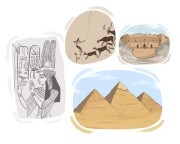
dating back to the ancient past
archaïsch, antiek
Haar onderzoek richt zich op archaïsche kunstvormen uit de vroege Mesopotamische tijd.
a person belonging to a people or group regarded as uncivilized, foreign, or outside the dominant culture
barbaar, wilde
De nomadische barbaren staken de vlaktes over in grote groepen.
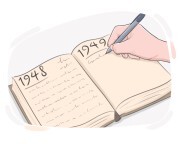
to record a series of historical events in a detailed way by a chronological order
kronieken, vastleggen
De documentairemaker chronicleert de evolutie van jazzmuziek in Amerika.
something occurring at a time when it could not have existed or happened
anachronisme, chronologische fout
De kennis van het personage over toekomstige gebeurtenissen creëerde opzettelijke anachronismen.
the study of civilizations of the past and historical periods by the excavation of sites and the analysis of artifacts and other physical remains
archeologie, studie van oude beschavingen
Veldwerk is een cruciaal aspect van archeologie, waarbij zorgvuldige opgravingen en documentatie van artefacten en structuren betrokken zijn.
any territory under the full or partial control of another more powerful nation, often occupied by settlers from that nation
kolonie, gebied onder controle
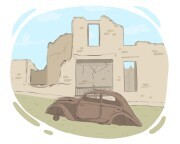
(plural) the remains of something such as a building after it has been seriously damaged or destroyed
ruïnes, puinhopen
De archeologen werkten aan het behoud van de historische ruïnes.
used typically before a date to show that it is not exact
rond, circa
Het gebouw werd circa 1850 gemaakt.
the king or emperor of Russia prior to 1917
tsaar, czar
Peter de Grote, ook bekend als Peter de Grote, wordt gecrediteerd met het moderniseren van Rusland en het uitbreiden van zijn territoria tijdens zijn regeerperiode als tsaar.
the political structure during a period in the history of the UK between 1649 and 1660, called the interregnum, during which the country was ruled without a king or queen
Gemenebest, Republiek
Het Gemenebest-secretariaat, met hoofdkantoor in Londen, fungeert als de centrale organisatie die verantwoordelijk is voor het coördineren van activiteiten en initiatieven binnen het Gemenebest.
