pattern

Avancerat Ordförråd för TOEFL - History

Här kommer du att lära dig några engelska ord om historia, såsom "förhistoria", "jura", "krönika" etc., som behövs för TOEFL-provet.

Recension

Flashcards

former

Stavning

Quiz

Starta lärandet
Advanced Words Needed for TOEFL
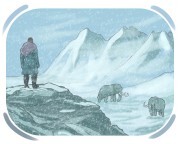
Stone age
Stone age
[Substantiv]

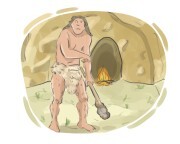
the early period of human history when people used things such as stone, horn, bone, etc. to make tools

stenåldern, stenperioden

stenåldern, stenperioden

Ex: The transition from the Stone Age to the Bronze Age marked a significant technological and cultural shift in human history.

Övergången från stenåldern till bronsåldern markerade en betydande teknologisk och kulturell förändring i människans historia.

Stäng
Logga in
prehistory
prehistory
[Substantiv]

the era in human history from which we have no written record

förhistoria, förhistorisk tid

förhistoria, förhistorisk tid

Stäng
Logga in
ice age
ice age
[Substantiv]

one of the periods in history when ice covered large parts of the world

istid, glacialperiod

istid, glacialperiod

Ex: Geological evidence suggests that the ice age shaped many of the Earth 's current landscapes and ecosystems .

Geologiska bevis tyder på att istiden formade många av jordens nuvarande landskap och ekosystem.

Stäng
Logga in
antiquity
antiquity
[Substantiv]

the historical period before the Middle Ages, especially before the sixth century when Greeks and Romans were the most prosperous

antiken, den antika perioden

antiken, den antika perioden

Ex: The decline of the Roman Empire marked the end of antiquity and the beginning of the Middle Ages , as Europe entered a period of political fragmentation and cultural change .

Romerska rikets fall markerade slutet på antiken och början av medeltiden, när Europa gick in i en period av politisk splittring och kulturell förändring.

Stäng
Logga in
dark ages
dark ages
[Substantiv]

the era in European history commenced at the end of the Roman Empire in AD 476 and lasted until AD 1000

mörkertiden, tidig medeltid

mörkertiden, tidig medeltid

Stäng
Logga in
the Middle Ages
the Middle Ages
[Substantiv]

an era in European history, between about AD 1000 and AD 1500, when the authority of kings, people of high rank, and the Christian Church was unquestionable

medeltiden, den medeltida perioden

medeltiden, den medeltida perioden

Ex: The Black Death was a devastating pandemic that struck Europe in the late Middle Ages, killing millions.

Digerdöden var en förödande pandemi som drabbade Europa under senare delen av medeltiden och dödade miljontals människor.

Stäng
Logga in
Iron Age
Iron Age
[Substantiv]

the period that began about 1100 BC when people used iron tools for the first time

Järnåldern, Järnperioden

Järnåldern, Järnperioden

Ex: The Iron Age brought about changes in social structures and trade , as iron became a valuable and widely-used resource .

Järnåldern medförde förändringar i sociala strukturer och handel, eftersom järn blev en värdefull och allmänt använd resurs.

Stäng
Logga in
Bronze Age
Bronze Age
[Substantiv]

the period when iron was not discovered and people used bronze to make tools

Bronsåldern, Bronsperioden

Bronsåldern, Bronsperioden

Ex: Trade flourished during the Bronze Age, as cultures exchanged bronze goods , ideas , and innovations across vast distances .

Handeln blomstrade under bronsåldern, när kulturer utbytte bronsvaror, idéer och innovationer över stora avstånd.

Stäng
Logga in
christian era
christian era
[Substantiv]

the period that began with Christ's birth

kristen era, kristen tidsålder

kristen era, kristen tidsålder

Stäng
Logga in
paleontology
paleontology
[Substantiv]

the branch of science that studies fossils

paleontologi

paleontologi

Ex: Through paleontology, researchers have gained insights into the mass extinction events that have shaped the history of life on our planet .

Genom paleontologi har forskare fått insikter om de massutdöende händelser som har format livets historia på vår planet.

Stäng
Logga in
jurassic
jurassic
[adjektiv]

relating to the period between around 208 to 146 million years ago, when the largest known dinosaurs lived

jurassisk, från juraperioden

jurassisk, från juraperioden

Stäng
Logga in
cretaceous
cretaceous
[adjektiv]

relating to the period between approximately 146 and 65 million years ago, when dinosaurs lived (until their extinction)

krita

krita

Stäng
Logga in
hellenistic
hellenistic
[adjektiv]

relating to Greek history, language, and culture, especially the era from the death of Alexander the Great to the defeat of Cleopatra and Mark Antony in 31 BC, during which Greek culture thrived considerably

hellenistisk

hellenistisk

Stäng
Logga in
Enlightenment
Enlightenment
[Substantiv]

a philosophical movement in the late 17th and 18th centuries that emphasized reason and science were of more importance than tradition and religion

Upplysningen, Upplysningstiden

Upplysningen, Upplysningstiden

Ex: The Enlightenment had a profound impact on political thought, influencing the ideas of democracy and individual rights.

Upplysningen hade en djupgående inverkan på den politiska tanken och påverkade idéer om demokrati och individuella rättigheter.

Stäng
Logga in
archaic
archaic
[adjektiv]

dating back to the ancient past

arkaisk, antik

arkaisk, antik

Ex: Scholars study archaic symbols found in prehistoric cave paintings .

Forskare studerar arkaiska symboler som finns i förhistoriska grottmålningar.

Stäng
Logga in
barbarian
barbarian
[Substantiv]

a person belonging to a people or group regarded as uncivilized, foreign, or outside the dominant culture

barbar, vilde

barbar, vilde

Ex: Tribes once labeled as barbarians developed their own rich cultures .

Stammar som en gång kallades barbarer utvecklade sina egna rika kulturer.

Stäng
Logga in
to chronicle

to record a series of historical events in a detailed way by a chronological order

krönika, registrera

krönika, registrera

Ex: The journalist chronicles the political upheavals of the past century in her investigative report .

Journalisten krönikor de politiska omvälvningarna under det förra seklet i sin undersökande rapport.

Stäng
Logga in
anachronism
anachronism
[Substantiv]

something occurring at a time when it could not have existed or happened

anakronism, kronologiskt fel

anakronism, kronologiskt fel

Ex: The play's dialogue included slang that was anachronistic for its setting.

Pjäsens dialog inkluderade slang som var anakronistisk för dess miljö.

Stäng
Logga in
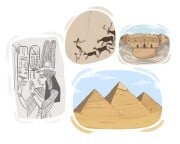
archeology
archeology
[Substantiv]

the study of civilizations of the past and historical periods by the excavation of sites and the analysis of artifacts and other physical remains

arkeologi, studie av antika civilisationer

arkeologi, studie av antika civilisationer

Ex: The field of archaeology includes various sub-disciplines such as maritime archaeology, historical archaeology, and bioarchaeology.

Fältet för arkeologi inkluderar olika underdiscipliner som marin arkeologi, historisk arkeologi och bioarkeologi.

Stäng
Logga in
colony
colony
[Substantiv]

any territory under the full or partial control of another more powerful nation, often occupied by settlers from that nation

koloni, territorium under kontroll

koloni, territorium under kontroll

Stäng
Logga in
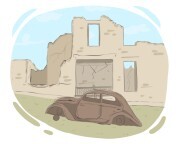
ruin
ruin
[Substantiv]

(plural) the remains of something such as a building after it has been seriously damaged or destroyed

ruiner, lämningar

ruiner, lämningar

Ex: The archaeological team discovered the ruins of an ancient city .

Det arkeologiska teamet upptäckte ruinerna av en antik stad.

Stäng
Logga in
circa
circa
[Preposition]

used typically before a date to show that it is not exact

omkring,  cirka

omkring, cirka

Ex: The painting was created circa the 18th century.

Målningen skapades omkring 1700-talet.

Stäng
Logga in
tsar
tsar
[Substantiv]

the king or emperor of Russia prior to 1917

tsar, czar

tsar, czar

Ex: The term "tsar" is derived from the Latin word " Caesar " and is equivalent to the title of " emperor " in other European monarchies .

Termen "tsar" härstammar från det latinska ordet "Caesar" och motsvarar titeln "kejsare" i andra europeiska monarkier.

Stäng
Logga in
the Commonwealth
the Commonwealth
[Substantiv]

the political structure during a period in the history of the UK between 1649 and 1660, called the interregnum, during which the country was ruled without a king or queen

Samväldet, Republik

Samväldet, Republik

Ex: The Commonwealth Heads of Government Meeting (CHOGM) is held every two years, providing leaders of member states with the opportunity to discuss and address issues of common concern.

Mötet mellan Samväldets regeringschefer (CHOGM) hålls vartannat år och ger medlemsstaternas ledare möjlighet att diskutera och ta itu med frågor av gemensamt intresse.

Stäng
Logga in
LanGeek
Ladda ner LanGeek app