
Doğa Bilimleri SAT - Astronomi ve Havacılık Bilimi
Burada, SAT'larınızda başarılı olmak için ihtiyacınız olacak "kuyruklu yıldız", "alev", "yörünge" gibi astronomi ve uzay bilimi ile ilgili bazı İngilizce kelimeler öğreneceksiniz.
Gözden Geçir
Flash kartlar
Yazım
Quiz

a scientist who studies or observes planets, stars, and other happenings in the universe

gök bilimci, astronom
Astronomun araştırması, kara delikler ve onların yerçekimi etkileri hakkındaki anlayışımıza katkıda bulundu.

a scientist who studies the physical properties and phenomena of celestial objects and the universe as a whole
astrofizikçi
Araştırmacılar, uzak gezegenleri keşfeden uzay görevlerinden gelen verileri yorumlamak için astrofizikçiler ile işbirliği yapıyor.
a device that simulates the motion and appearance of celestial objects such as planets, stars, and galaxies, typically using projectors and optical systems to depict the solar system and universe
planeteryum, astronomik projeksiyon salonu
Araştırmacılar, astronotların uzay görevlerinde eğitim almaları ve gezinmeleri için bir sanal gerçeklik planetarium geliştirdi.
a building where scientists observe stars, meteors, the weather, etc. using equipment such as telescope
gözlemevi
related to or occurring in the sky or outer space
gökyüzü ile ilgili
Kuyruklu yıldızlar ve meteor yağmurları gibi göksel cisimler teleskoplar ve dürbünlerle gözlemlenebilir.
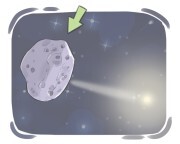
any of the rocky bodies orbiting the sun, ranging greatly in diameter, also found in large numbers between Jupiter and Mars
asteroit
NASA'nın Bennu asteroidini inceleme görevi, Dünya'yı gelecekteki asteroid çarpmalarından korumaya yardımcı olabilecek veriler toplamayı amaçlıyor.
a piece of rock or metal from space that has hit the surface of the earth
göktaşı
Koleksiyoncular, koleksiyonları için nadir ve değerli meteoritler aramak için dünyayı dolaşır.
an exploding star that as a result is emitting a very large amount of light, more than the sun
süpernova
Astronomlar, yıldız evrimini ve galaksilerin dinamiklerini anlamak için süpernovaları inceler.

a specific group of stars that form a pattern and have a name related to their shape
takım yıldız, burç
Gökbilimciler, takımyıldızları yakınında bulunan uzak galaksileri incelemek için teleskoplar kullanır.

an object in space that is a mass of ice and dust and when it nears the sun it starts illuminating in the shape of a tail
kuyruklu yıldız
Astronomlar, erken güneş sistemi ve bileşimi hakkında bilgi edinmek için kuyruklu yıldızları inceler.
a small, dense, and faint stellar remnant that is left after a medium-sized star exhausts the nuclear fuel in its core and undergoes gravitational collapse
beyaz cüce, beyaz cüce yıldız
Bir yıldızın çöküşü sırasında ortaya çıkan yoğun ısı, beyaz cücenin artık termal enerji ile parlamasına neden olur.
a planet that is outside the solar system
güneş sisteminin dışındaki gezegen
Proxima b, Güneş'e en yakın yıldız olan Proxima Centauri'nin yörüngesinde dönen bir ötegezegendir.
a region in the solar system located between the orbits of Mars and Jupiter, populated by numerous small celestial bodies called asteroids
asteroit kuşağı, asteroit kemeri
Jüpiter'in yerçekimi etkisi, asteroit kuşağındaki asteroitlerin tek bir gezegene birleşmesini engeller.
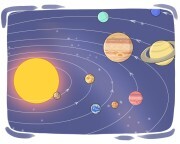
to move around a star, planet, or a large object in space
yörüngede dönmek
Kuyruklu yıldız, güneşin etrafında oldukça eliptik bir yörüngede döner, onu güneş sisteminin dış bölgelerine kadar götürür.
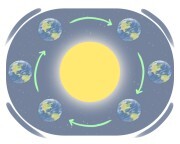
the orbital movement of a planet, moon, or satellite around another body
devir, dönüş
the process by which the surface of an object, such as a comet or an asteroid, erodes or vaporizes due to the effects of solar radiation and other environmental factors
ablasyon, ablasyonla aşınma
the outer layer of the Sun's atmosphere, observable as a plasma halo during a solar eclipse
ışık halesi
Bir tutulma sırasında koronanın görünümü, amatör astronomlara bu göksel olayı gözlemleme ve fotoğraflama fırsatı sunar.
a sudden, brief burst of increased brightness observed from the sun's surface, usually accompanied by a burst of energy and radiation
güneş patlaması
related to or characteristic of planets or the solar system
gezegenlere ait
Gezegensel atmosferler, farklı gök cisimleri arasında bileşim ve yapı bakımından büyük farklılıklar gösterir.
a depression on the surface of a celestial body, formed by the impact of cosmic debris such as meteoroids or asteroids
krater, çöküntü
NASA'nın Ay Keşif Uydusu gibi uzay görevleri, ay kraterlerini detaylı bir şekilde haritalandırdı ve inceledi.
a unit of mass used in astronomy, defined as the mass of the Sun
güneş kütlesi, güneş kütle birimi
relating to or originating from outside the Earth or its atmosphere
dünya dışı
Meteoritlerin incelenmesi, dünya dışı malzemeler hakkında bilgi sağlar.
the visible surface of a star, including the Sun, where energy is emitted as light and other forms of electromagnetic radiation
fotosfer, bir yıldızın görünen yüzeyi
Güneş patlamaları ve güneş lekeleri genellikle Güneş'in fotosferindeki rahatsızlıklardan kaynaklanır.
to overshadow another astrological body
tutulmasına neden olmak
Ayın kısmi tutulması, yavaş yavaş ay yüzeyini örtmeye başladıkça dramatik bir etki yarattı.
a type of solar eclipse where the moon, passing between the earth and the sun, appears smaller than the sun, creating a ring of sunlight around the darkened moon
halkalı güneş tutulması, yüzük şeklinde güneş tutulması
Gökbilimciler, Güneş'e doğrudan bakmanın göz hasarına neden olabileceğinden, güvenli bir şekilde halkalı güneş tutulması gözlemlemek için özel filtreler veya ekipmanlar kullanır.
situated or occurring between stars or within the space that exists between stars
yıldızlar arası
Yıldızlararası gaz bulutları, yeni yıldızların ve gezegen sistemlerinin doğum yerleridir.
a glowing cloud of gas and dust in outer space, often the result of a star explosion or formation
nebula
Kedi Gözü Bulutsusu, gezegenimsi bir bulutsunun karmaşık ve renkli bir örneğidir.
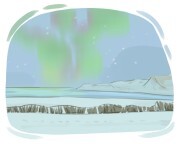
a natural light display in the Earth's polar regions, caused by the collision of charged particles from the sun with atoms in the Earth's atmosphere
kutup Işıkları
Auroraların bilimsel çalışması, güneş rüzgarlarının Dünya'nın manyetik alanıyla etkileşimini anlamayı içerir.
a celestial body that orbits the Sun and has sufficient mass for its gravity to pull it into a nearly spherical shape
cüce gezegen, cüce gök cismi
a small, natural glassy object formed from terrestrial debris ejected during meteorite impacts, known for its smooth texture and found in strewn fields across the Earth's surface
tektit, meteor camı
Bazı tektitler, çarpma bölgelerinden çıkış sırasında yüksek hızlı oluşumu gösteren aerodinamik şekiller sergiler.
a model of the celestial sphere, historically used to depict and study the positions of celestial objects, consisting of a series of hoops representing important circles in the sky
halkalı küre, armillary küre
Tarihi metinlerde, bilginler genellikle halkalı küreyi gök navigasyonu için temel bir araç olarak anarlar.
the science and practice of designing, building, and operating aircraft, including airplanes and spacecraft
havacılık, aeronotik bilim
Aeronotik, aerodinamik, tahrik sistemleri ve uçuş mekaniği çalışmalarını kapsar.
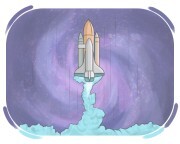
a vehicle designed to travel in space
uzay aracı
Uzay aracı, kozmik radyasyonu ölçmek ve gezegen bileşimlerini analiz etmek için çeşitli araçlar ve sensörler içeriyordu.

to send an object, such as a satellite, missile, etc., into space
uzaya fırlatmak
a designated area at a spaceport or rocket launch site where rockets or spacecraft are positioned and prepared for liftoff
fırlatma rampası, fırlatma alanı
Başarılı bir roket fırlatması için fırlatma rampasında hava koşulları elverişli olmalıdır.
an unmanned spacecraft sent into space to collect scientific information and transmit it back
araştırma roketi
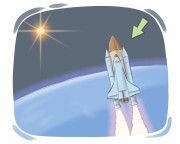
a vehicle designed and used to go to space and return multiple times
uzay mekiği
Uzay mekikleri, astronotları ve kargoyu alçak Dünya yörüngesine taşımak için tasarlanmış yeniden kullanılabilir uzay araçlarıydı.
