
pattern

Essential Vocabulary for the GRE - Behind the Scenes

Here you will learn some English words about drama, such as "soliloquy", "revival", "balcony", etc. that are needed for the GRE exam.

Review

Flashcards

Forms

Spelling

Quiz

Start learning
Essential Words Needed for the GRE
community theater

the activity of acting in or producing a play in a theater as a hobby and not a profession

Ex: The community theater group put on a production of Shakespeare's "A Midsummer Night's Dream" at the local high school auditorium. 
Close
Sign in
ad lib
ad lib
[noun]

a line that is recited in a speech or performance without prior preparation

Ex: The actor's quick wit saved the scene when he forgot his line, delivering a perfectly timed ad lib that had the audience roaring with laughter. 
Close
Sign in
comedy of manners

a comic play, movie, book, etc. that portrays the behaviors of a particular social class, satirizing them

Ex: "Emma" by Jane Austen explores matchmaking in Regency England, a classic comedy of manners. 
Close
Sign in
montage
montage
[noun]

a technique or process of selecting, editing, and pasting separate footage in order to create a motion picture

Ex: The filmmaker used a montage to depict the protagonist's journey through different cities. 
Close
Sign in
premiere
premiere
[noun]

the first public screening or performance of a movie or play
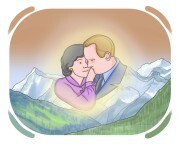
Ex: The red carpet was rolled out for the premiere of the highly anticipated blockbuster movie. 
Close
Sign in
melodrama
melodrama
[noun]

a dramatic genre characterized by exaggerated emotions, intense conflicts, etc., often trying to create strong emotional reactions in the audience

Ex: The movie descended into melodrama in the final act, with characters delivering over-the-top speeches and indulging in exaggerated emotional outbursts. 
Close
Sign in
matinee
matinee
[noun]

a musical or dramatic performance that takes place in daytime, especially in the afternoon

Ex: Editors use matinee to refine pacing and maintain audience engagement throughout the movie. 
Close
Sign in
curtain call

the time after a play or show has just ended when the performers come to the stage to receive the applause of the audience

Ex: As the final notes of the musical faded away, the audience erupted into applause, signaling the start of the eagerly anticipated curtain call. 
Close
Sign in
to dramatize

to turn a book, story, or an event into a movie or play

Ex: Historical accounts of great leaders are often dramatized in biographical films to engage modern audiences. 
Close
Sign in
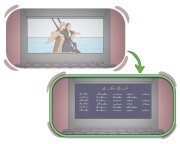
surtitle
surtitle
[noun]

translated words projected above or next to the stage on a screen in an opera or play

Ex: The surtitles displayed translations of the dialogue for non-native speakers in the audience. 
Close
Sign in
soliloquy
soliloquy
[noun]

a speech that a character in a dramatic play gives in the form of a monologue as a series of inner reflections spoken out loud

Ex: The actor delivered the soliloquy with intensity, allowing the audience to glimpse the character's innermost thoughts and emotions. 
Close
Sign in
stage direction

a text in the script of a play, giving an instruction regarding the movement, position, etc. of actors

Ex: The stage direction called for a prop to be placed center stage before the next scene. 
Close
Sign in
revival
revival
[noun]

a new performance of something old that has not been performed for a long time, such as a play

Ex: Critics praised the production's authenticity in the revival of the ancient Greek tragedy "Medea." 
Close
Sign in
to prompt
to prompt
[Verb]

to assist someone by suggesting the next words or actions they may have forgotten or not fully learned
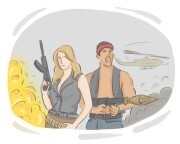
Ex: During the play rehearsal, the director prompted the actor who had momentarily forgotten their lines. 
Close
Sign in
to enact
to enact
[Verb]

to act a role in a motion picture or perform a play on stage

Ex: She will enact the lead role in the upcoming romantic comedy. 
Close
Sign in
interpretation

a representation that an actor or a performer gives of an artistic or musical piece that shows their understanding and feeling toward it

Ex: His interpretation of the character brought new depth and complexity to the stage production, earning him critical acclaim. 
Close
Sign in
to overact

to act a role in an exaggerated way that is not natural

Ex: He tends to overact by emphasizing every line with dramatic gestures. 
Close
Sign in
to miscast

to assign the roles of a play, motion picture, etc. to unsuitable actors

Ex: By the time they realized it, they had already miscast the key role. 
Close
Sign in
read-through

a preparatory session during which actors read the words of a play before beginning to practice it on the stage

Ex: The cast gathered around a table for the read-through, eagerly flipping through their scripts and preparing to bring their characters to life. 
Close
Sign in
to put on
to put on
[Verb]

to stage a play, a show, etc. for an audience

Ex: The school decided to put on a play about environmental awareness. 
Close
Sign in
rehearsal
rehearsal
[noun]

a session of practice in which performers prepare themselves for a public performance of a concert, play, etc.
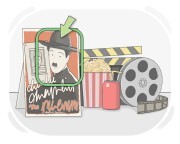
Ex: The actors gathered for their final rehearsal before the opening night of the play. 
Close
Sign in
to portray

to play the role of a character in a movie, play, etc.
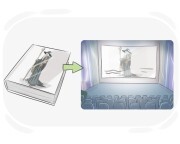
Ex: She portrayed the protagonist in the critically acclaimed film, earning praise for her nuanced performance. 
Close
Sign in
adaptation

a movie, TV program, etc. that is based on a book or play

Ex: The film adaptation of the bestselling novel stayed true to the book's plot and characters. 
Close
Sign in
art director

someone who is in charge of the artistic features, such as props and costumes of a movie or play
Ex: The art director oversees the visual elements of a film, ensuring consistency and creativity in every scene. 
Close
Sign in
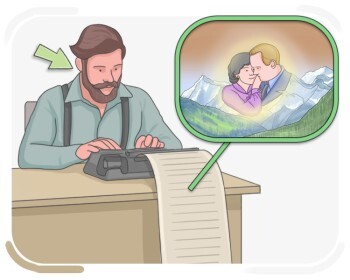
dramatist
dramatist
[noun]

someone who writes plays for the TV, radio, or theater

Ex: The theater company invited a talented dramatist to write an original script for their upcoming production. 
Close
Sign in
balcony
balcony
[noun]

an upper floor in a theater or cinema where there are seats for the audience

Ex: The best seats in the theater were in the balcony, offering a clear view of the stage. 
Close
Sign in
offstage
offstage
[Adjective]

situated out of sight of the audience, typically in the wings or backstage

Ex: Offstage whispers hinted at the upcoming plot twist. 
Close
Sign in
set piece
set piece
[noun]

a set of scenes in a motion picture, novel, etc. that could be regarded independently and are very elaborate or complex

Ex: The grand ballroom set piece towered over the stage, adorned with crystal chandeliers and opulent furnishings, transporting the audience to a lavish 19th-century soiree. 
Close
Sign in
blockbuster

a thing that achieves great widespread popularity or financial success, particularly a movie, book, or other product

Ex: The new superhero movie became a blockbuster, earning over $1 billion at the box office. 
Close
Sign in
cinematography

the art and methods of film-making, especially the photographic aspect and camerawork
Ex: The cinematography in the action sequence was dynamic and visually captivating. 
Close
Sign in
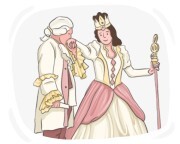
costume drama

a motion picture or theatrical production with a historical setting in which the actors wear the costume appropriate to that time period
Ex: The costume drama depicted the court intrigue of medieval Europe with stunning accuracy. 
Close
Sign in
credit
credit
[noun]

(plural) a list of names at the start or end of a TV program or movie acknowledging the people involved in its production

Ex: The credits rolled as the audience applauded the cast and crew. 
Close
Sign in
to fictionalize

to turn real events or situations into a tale or story, often by changing or adding to the details

Ex: The author fictionalized her childhood experiences in her bestselling novel. 
Close
Sign in
film noir
film noir
[noun]

a type of movie involving crime including shadowy footage and dark background music that depicted cynical characters caught in dangerous situations

Ex: "Double Indemnity" is a classic film noir that follows an insurance salesman who becomes involved in a murder plot with a femme fatale, leading to betrayal and deception. 
Close
Sign in
fourth wall

an imaginary barrier that separates the mise en scene and the fictional characters from the audience, especially in a theatrical performance

Ex: Breaking the fourth wall, the character addressed the audience directly, inviting them into the inner workings of the play and blurring the line between fiction and reality. 
Close
Sign in
intermission

a short pause between parts of a play, movie, etc.

Ex: The orchestra performed a lively piece during the intermission to entertain the audience. 
Close
Sign in
interlude
interlude
[noun]

a short interval between parts of a play, movie, etc.

Ex: During the interlude, the stage was rearranged for the second act. 
Close
Sign in
epilogue
epilogue
[noun]

a short address to the audience by an actor at the conclusion of a play, frequently in verse

Ex: The actor delivered a humorous epilogue to lighten the mood after the tragedy. 
Close
Sign in
understudy

an actor who practices the lines of another actor in order to replace them if necessary

Ex: The understudy stepped into the lead role at the last minute when the main actor fell ill. 
Close
Sign in
telefilm
telefilm
[noun]

a movie that is intended to be broadcast on TV, rather than being projected on the screen

Ex: She starred in a romantic telefilm that aired last weekend on a popular channel. 
Close
Sign in
LanGeek
Download LanGeek app
