Vocabulary for IELTS Academic (Band 6-7) - Punishment

Here, you will learn some English words related to Punishment that are necessary for the Academic IELTS exam.

review-disable

review

flashcard-disable

flashcard

spelling-disable

spelling

quiz-disable

quiz

start-learning
Vocabulary for IELTS Academic (Band 6-7)
inmate [noun]

a person who is held in a prison or correctional facility

Ex: Inmates often face challenges reintegrating into society after serving their sentences .

the temporary removal or barring of an individual from a position, privilege, or institution as a disciplinary measure
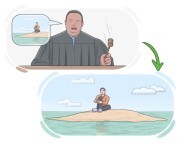
to exile [verb]

to force someone to live away from their native country, usually due to political reasons or as a punishment

Ex: The dictator decided to exile his political opponents to maintain control .

the killing of a criminal as punishment
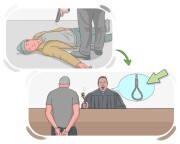
Ex: The court sentenced the convicted murderer to capital punishment by lethal injection .

the punishment of killing a criminal, which is officially ordered by a court

Ex: Many countries have abolished the death penalty .

a device used for carrying out capital punishment by electrocution

Ex: Witnesses gathered outside the prison to protest the use of the electric chair as a form of capital punishment .
whipping [noun]

the act of striking a person with a flexible instrument designed for inflicting pain as a form of punishment or discipline
Ex: In some cultures , whipping was used as a means of discipline for disobedient children .

unpaid work done either as a form of punishment by a criminal or as a voluntary service by a citizen

Ex: As part of their high school curriculum , students are required to complete a certain number of hours of community service .

the act of putting or keeping someone in captivity
Ex: Many activists are pushing for alternatives to incarceration for non-violent offenders .

to severely criticize or scold someone for their actions or behaviors
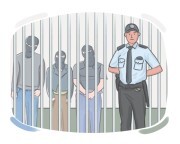
Ex: The CEO was reprimanded by the board for financial irregularities .

to officially hold someone in a place, such as a jail, and not let them go

Ex: During the investigation , law enforcement has the power to detain individuals suspected of a crime .

to force someone to leave a country, often as a form of punishment or to keep them away
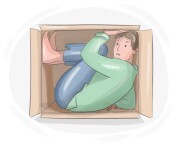
Ex: The ruler banished his political opponents to remote islands to prevent rebellion .

to keep someone or something within limits of different types, such as subject, activity, area, etc.

Ex:
to chain [verb]

to secure or attach something or someone using a series of connected links
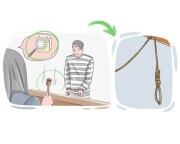
Ex: The prisoner will be chained to prevent any attempt to escape .

to kill someone, especially as a legal penalty

Ex: The controversial practice of executing prisoners by firing squad has been abolished in many places due to ethical concerns .

to execute a criminal by using electricity
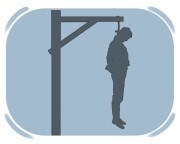
Ex: The state planned to electrocute the convicted criminal as part of his sentence .
to hang [verb]

to kill a person by holding them in the air with a rope tied around their neck

Ex: The executioner 's job was to hang the condemned prisoner at dawn .

to force a foreigner to leave a country, usually because they have broken the law

Ex: Border patrol agents are currently deporting a group of migrants apprehended near the southern border .
Vocabulary for IELTS Academic (Band 6-7)
Size and Scale Dimensions Weight and Steadiness Increase in Amount
Decrease in Amount Intensity Time and Duration Space and Area
Shapes Speed Significance Insignificance
Strength and Influence Uniqueness Commonness Complexity
High Quality Low Quality Value Challenges
Wealth and Success Poverty and Failure Age and Appearance Body Shape
Wellness Intellectual Capability Intellectual Incapabilities Positive Human Traits
Negative Human Traits Moral Traits Financial Behaviours Social Behaviours
Short-tempered Traits Positive Emotional Responses Negative Emotional Responses Positive Emotional States
Negative Emotional States Tastes and Smells Sounds Textures
Temperature Probability Attempt and Prevention Opinions
Thoughts and Decisions Encouragement and Discouragement Knowledge and Information Request and Suggestion
Respect and Approval Regret and Sadness Relational Actions Physical Actions and Reactions
Body Language and Gestures Postures and Positions Movements Engaging in Verbal Communication
Understanding and Learning Perceiving The Senses Commanding and Giving Permissions Predicting
Touching and Holding Changing and Forming Creating and Producing Organising and Collecting
Preparing Food Eating and Drinking Science Education
Research Astronomy Physics Biology
Chemistry Geology Philosophy Psychology
Maths and Graphs Geometry Environment Landscape and Geography
Engineering Technology Internet and Computer Manufacture and Industry
History Religion Culture and Custom Language and Grammar
Arts Music Film and Theatre Literature
Architecture Marketing Finance Management
Medicine Sickness and Symptoms Law Energy and Power
Crime Punishment Government Politics
Measurement War Positive Emotions Negative Emotions
Travel and Tourism Migration Food and Drinks Materials
Pollution Disasters Weather Animals
Adverbs of Manner Adverbs of Degree Adverbs of Comment and Certainty Adverbs of Time and Frequency
Adverbs of Purpose and Emphasis Conjunctive Adverbs