
Vocabulary for IELTS General Training (Band 6-7) - Disasters

Here, you will learn some English words related to Disasters that are necessary for the General Training IELTS exam.

review-disable

review

flashcard-disable

flashcard

spelling-disable

spelling

quiz-disable

quiz

start-learning
Vocabulary for IELTS General Training (Band 6-7)
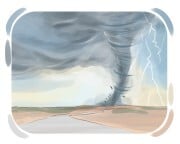
tornado [noun]

a strong and dangerous type of wind, which is formed like a turning cone, usually causing damage

Ex: The tornado damaged the power lines , causing a blackout in the area .
cyclone [noun]

a violent storm with winds moving in circles

Ex: The city was hit by a devastating cyclone that left thousands homeless .
typhoon [noun]

a tropical storm with violent winds moving in a circle that form over the western Pacific Ocean

Ex: Typhoon season in the Philippines typically runs from June to November , with several storms affecting the region .
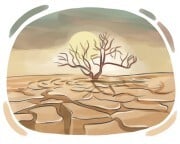
drought [noun]

a long period of time when there is not much raining

Ex: The farmers prayed for rain as the drought continued .

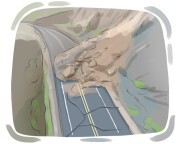
a sudden fall of a large mass of dirt or rock down a mountainside or cliff

Ex: A massive landslide occurred after the earthquake , causing widespread destruction .

a horrible event that causes much suffering and damage

Ex:
inferno [noun]

a large, intensely hot, and uncontrollable fire

Ex: The forest fire turned into an inferno , spreading rapidly and threatening nearby communities .

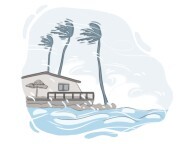
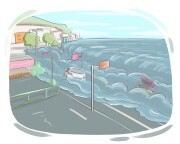
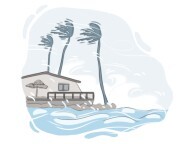
a sudden rise of seawater onto the shore driven primarily by strong onshore winds, often compounding the normal tidal cycle

Ex: Coastal trees snapped as a wind-driven tidal wave surged through the picnic area .
vortex [noun]

a swirling mass of fluid with a rotating motion, often forming a funnel shape

Ex: The scientist observed the miniature vortex in the laboratory , studying its properties to better understand fluid behavior .

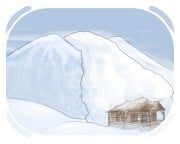
large amounts of snow falling from mountains

Ex: The avalanche was caused by a heavy snowfall the previous night .
mudslide [noun]

a large amount of mud and other materials that quickly moves down a hill, usually triggered by heavy rain or earthquake

the number of individuals who die as a result of an accident, war, etc.

Ex: The death toll in the war-torn country continues to climb despite peace talks .
eye [noun]

the calm area at the center of a storm, hurricane, or tornado

an individual, such as a paramedic, police officer, or firefighter, trained to provide immediate assistance and care in emergencies or crisis situations

seaquake [noun]

a tremor or earthquake that occurs beneath the ocean floor

Ex: The seaquake generated a series of powerful waves that traveled across the open ocean .

the action of transferring people or being transferred to somewhere else to be safe from a dangerous situation

Ex: The fire department coordinated the evacuation of the building after a gas leak was detected .
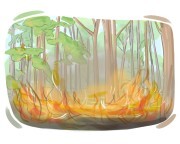
wildfire [noun]

a large fire that spreads fast and causes much destruction

Ex: Climate change has intensified wildfire seasons , leading to more frequent and severe fires .
blizzard [noun]

a storm with heavy snowfall and strong winds

Ex: The ski resort was closed because of the blizzard .

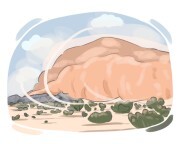
a strong wind, mostly in a desert, that lifts particles of sand and blows them around

tsunami [noun]

a very high wave or series of waves caused by an undersea earthquake or volcanic eruption

Ex: The tsunami waves reached heights of over 30 meters in some areas , causing widespread destruction .
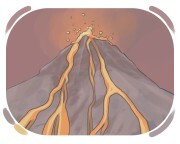
eruption [noun]

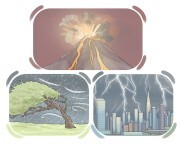
the sudden outburst of lava and steam from a volcanic mountain

Ex: The eruption of Mount Vesuvius in 79 AD buried the city of Pompeii under ash .
Vocabulary for IELTS General Training (Band 6-7)
Size and Scale Dimensions Weight and Steadiness Increase in Amount
Decrease in Amount Intensity Time and Duration Space and Area
Shapes Speed Significance Insignificance
Strength and Influence Uniqueness Commonness Complexity
High Quality Low Quality Value Challenges
Wealth and Success Poverty and Failure Age and Appearance Body Shape
Wellness Intellectual Capability Intellectual Incapability Positive Human Traits
Negative Human Traits Moral Traits Financial Behaviours Social Behaviours
Short-tempered Traits Positive Emotional Responses Negative Emotional Responses Positive Emotional States
Negative Emotional States Tastes and Smells Textures Sounds
Temperature Probability Attempt and Prevention Opinions
Thoughts and Decisions Encouragement and Discouragement Knowledge and Information Request and Suggestion
Respect and Approval Regret and Sadness Relational Actions Physical Actions and Reactions
Body Language and Gestures Postures and Positions Movements Commanding and Giving Permissions
Engaging in Verbal Communication Understanding and Learning Perceiving The Senses Predicting
Touching and Holding Eating and Drinking Preparing Food Changing and Forming
Creating and Producing Organising and Collecting Hobbies and Routines Shopping
Finance and Currency Workplace Office Life Specialised Careers
Manual Labour Careers Service and Support Careers Creative and Artistic Careers House
Human Body Health Sports Sports Competitions
Transportation Society Social Events Animals
City Parts Food and Drinks Friendship and Enmity Gender and Sexuality
Family Relationship Styles Romantic Relationships Positive Emotions
Negative Emotions Travel and Tourism Migration Materials
Pollution Disasters Adverbs of Comment and Certainty Adverbs of Manner
Weather Adverbs of Degree Adverbs of Time and Frequency Adverbs of Purpose and Emphasis
Conjunctive Adverbs