Vocabulary for IELTS General Training (Band 6-7) - Transportation

Here, you will learn some English words related to Transportation that are necessary for the General Training IELTS exam.

review-disable

review

flashcard-disable

flashcard

spelling-disable

spelling

quiz-disable

quiz

start-learning
Vocabulary for IELTS General Training (Band 6-7)
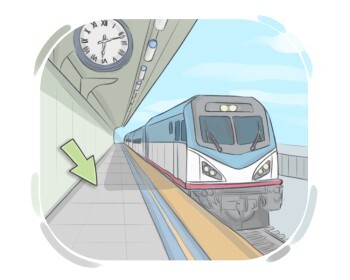
platform [noun]

the raised surface in a station next to a railroad track where people can get on and off a train
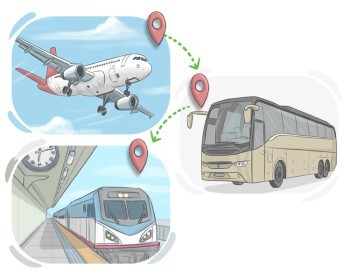
Ex: The announcement indicated that the train to Berlin would arrive at platform 3 .
route [noun]

a fixed way between two places, along which a bus, plane, ship, etc. regularly travels
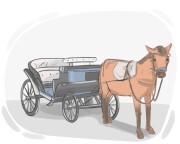
Ex: The bus followed its usual route despite the heavy snow .
carriage [noun]

a vehicle with usually four wheels, pulled by one or more horses
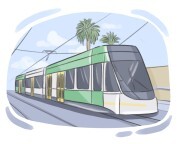
Ex: The carriage driver skillfully navigated through the crowded marketplace .
tram [noun]

a vehicle that is powered by electricity and moves on rails in a street, used for transporting passengers
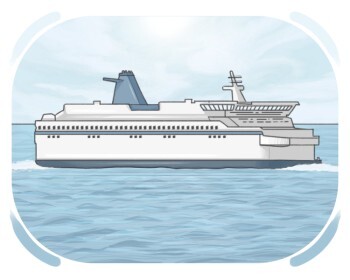
Ex: The city 's new tram system reduced traffic congestion by providing a reliable alternative to cars and buses .
ferry [noun]

a boat or ship used to transport passengers and sometimes vehicles, usually across a body of water
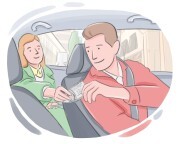
Ex: Cars and pedestrians boarded the ferry for the trip to the mainland .
fare [noun]

the amount of money we pay to travel with a bus, taxi, plane, etc.
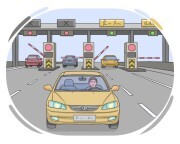
Ex: The airline offers lower fares for early morning flights .
toll [noun]

a charge collected for the use of a road, bridge, or tunnel

Ex: Tolls fund maintenance of major roads .
fork [noun]

one of the branches formed when a river, road, or path splits into two or more parts
Ex:
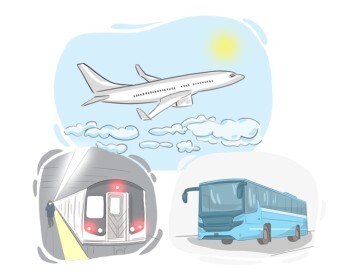
transit [noun]

the system of public transportation such as bus, train, taxi, etc.

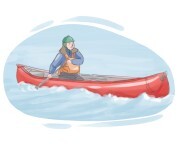
canoe [noun]

a narrow boat that is light and has pointed ends, which can be moved using paddles

Ex: Canoes are commonly used for recreational activities such as fishing , camping , and exploring remote waterways .

the tallest building at an airport from which aircraft's movements are controlled
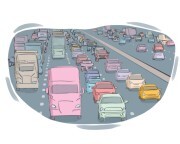
a time of day at which traffic is the heaviest because people are leaving for work or home

Ex: The local news reported on the construction project affecting rush hour traffic patterns .

(of a train or bus) to leave a station with passengers on board
Ex: Everyone was seated and the express train pulled out , heading to its next destination .

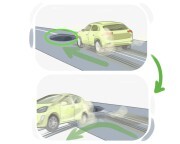
to change direction suddenly, often to avoid something or someone in the way
Ex: The quick-thinking skateboarder had to swerve to avoid colliding with a pedestrian .
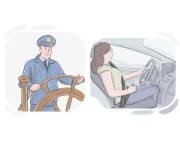
to steer [verb]

to control the direction of a moving object, such as a car, ship, etc.
Ex: In adverse weather conditions , the captain faced the challenge of steering the sailboat safely back to harbor .
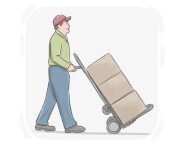
to wheel [verb]

to move or push something on wheels

Ex: The hospital staff wheeled the patient to the operating room for surgery .

to replenish the fuel supply of a vehicle or machine

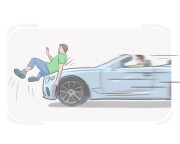
to hit and pass over something or someone with a vehicle, causing damage

Ex:

to maintain, repair, or prepare something so that it is fit for use
Ex:
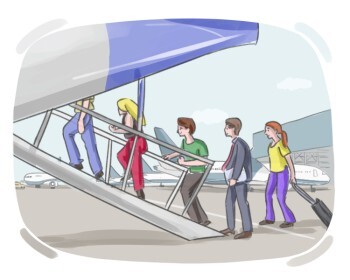
to board [verb]

to get on a means of transportation such as a train, bus, aircraft, ship, etc.

Ex: The cruise ship 's staff guided passengers on how to board the vessel safely .

to drive a vehicle temporarily, usually to assess its performance and suitability before purchasing
to dock [verb]

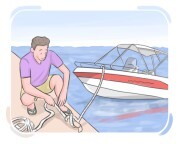
to secure a boat or ship to a wharf or pier

Ex: The yacht owner hired a professional captain to dock the luxury yacht at the marina .
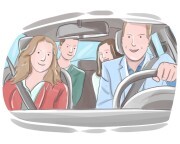
carpool [noun]

a group of people sharing a car where each person takes turns to be the driver

Vocabulary for IELTS General Training (Band 6-7)
Size and Scale Dimensions Weight and Steadiness Increase in Amount
Decrease in Amount Intensity Time and Duration Space and Area
Shapes Speed Significance Insignificance
Strength and Influence Uniqueness Commonness Complexity
High Quality Low Quality Value Challenges
Wealth and Success Poverty and Failure Age and Appearance Body Shape
Wellness Intellectual Capability Intellectual Incapability Positive Human Traits
Negative Human Traits Moral Traits Financial Behaviours Social Behaviours
Short-tempered Traits Positive Emotional Responses Negative Emotional Responses Positive Emotional States
Negative Emotional States Tastes and Smells Textures Sounds
Temperature Probability Attempt and Prevention Opinions
Thoughts and Decisions Encouragement and Discouragement Knowledge and Information Request and Suggestion
Respect and Approval Regret and Sadness Relational Actions Physical Actions and Reactions
Body Language and Gestures Postures and Positions Movements Commanding and Giving Permissions
Engaging in Verbal Communication Understanding and Learning Perceiving The Senses Predicting
Touching and Holding Eating and Drinking Preparing Food Changing and Forming
Creating and Producing Organising and Collecting Hobbies and Routines Shopping
Finance and Currency Workplace Office Life Specialised Careers
Manual Labour Careers Service and Support Careers Creative and Artistic Careers House
Human Body Health Sports Sports Competitions
Transportation Society Social Events Animals
City Parts Food and Drinks Friendship and Enmity Gender and Sexuality
Family Relationship Styles Romantic Relationships Positive Emotions
Negative Emotions Travel and Tourism Migration Materials
Pollution Disasters Adverbs of Comment and Certainty Adverbs of Manner
Weather Adverbs of Degree Adverbs of Time and Frequency Adverbs of Purpose and Emphasis
Conjunctive Adverbs