pattern

ACT Math and Assessment - Process of Actions

Here you will learn some English words related to the process of actions, such as "awakening", "recurrent", "corollary", etc. that will help you ace your ACTs.

Review

Flashcards

Forms

Spelling

Quiz

Start learning
ACT Vocabulary for Math and Assessment
onset
onset
[noun]

the beginning point or stage of something, especially unpleasant

Ex: The onset of winter brought heavy snowfall and freezing temperatures. 
Close
Sign in
awakening
awakening
[noun]

the start or realization of something new

Ex: The environmental movement experienced an awakening in the 1970s. 
Close
Sign in
outset
outset
[noun]

the beginning of something

Ex: At the outset of the project, we established clear goals and objectives. 
Close
Sign in
inception
inception
[noun]

the starting point of an activity or event

Ex: The project faced challenges from its inception, requiring constant adaptation. 
Close
Sign in
infancy
infancy
[noun]

the initial period in which an idea, project, technology, or organization is just beginning to develop
Ex: The company's project to develop a new AI system is still in its infancy, with many features yet to be finalized. 
Close
Sign in
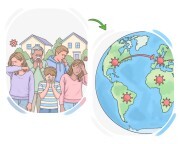
outbreak
outbreak
[noun]

the unexpected start of something terrible, such as a disease

Ex: The sudden outbreak of the flu caused widespread panic in the city. 
Close
Sign in
crescendo
crescendo
[noun]

the peak or climax of a process, activity, or sequence of events

Ex: Tensions between the two countries reached a crescendo when diplomatic relations broke down. 
Close
Sign in
interruption

an abrupt event that stops or disrupts something in progress

Ex: The power outage caused an interruption in the middle of her online meeting. 
Close
Sign in
termination

the action of putting an end to something

Close
Sign in
tactic
tactic
[noun]

a carefully planned action or strategy to achieve a specific goal

Ex: She used a clever tactic to negotiate a better deal. 
Close
Sign in
technique
technique
[noun]

a specific method of carrying out an activity that requires special skills

Ex: The chef's knife skills and cooking techniques impressed the guests at the restaurant. 
Close
Sign in
byproduct
byproduct
[noun]

an additional result or consequence that occurs alongside the main outcome, often unexpectedly

Ex: Pollution is a common byproduct of industrial processes. 
Close
Sign in
mechanism
mechanism
[noun]

a system of separate parts acting together in order to perform a task

Close
Sign in
algorithm
algorithm
[noun]

a finite sequence of well-defined, mathematical instructions for completing a specific task or solving a problem

Ex: The Euclidean algorithm is used to find the greatest common divisor of two integers. 
Close
Sign in
output
output
[noun]

the tangible or measurable results, products, or goods produced by a process or system

Ex: The output of the factory was carefully inspected before shipment. 
Close
Sign in
occurrence

an event or incident that happens or takes place, often referring to specific instances observed or recorded

Ex: The occurrence of thunderstorms disrupted the outdoor concert. 
Close
Sign in
incidence
incidence
[noun]

the rate or frequency at which something happens or occurs

Ex: Schools in the region reported a lower incidence of bullying after implementing new programs. 
Close
Sign in
consequence

a phenomenon or event that follows from and is caused by a previous action or occurrence

Ex: Flooding was a consequence of the heavy rains. 
Close
Sign in
ramification

an unexpected event that makes a situation more complex

Ex: Changing the schedule had unforeseen ramifications, causing confusion among team members. 
Close
Sign in
implication

a possible consequence that something can bring about

Ex: His decision to cut costs has serious implications for employee morale. 
Close
Sign in
corollary
corollary
[noun]

a thing that is the direct or natural result of another

Ex: The rise in crime rates was a corollary of the economic downturn. 
Close
Sign in
to glitch
to glitch
[Verb]

(of a machine or system) to suffer a sudden malfunction or fault that stops something from working correctly

Close
Sign in
perpetuation

the action of maintaining or continuing something, typically a practice, belief, or state

Ex: The perpetuation of cultural heritage ensures its survival for future generations. 
Close
Sign in
payoff
payoff
[noun]

a reward or consequence received as a result of actions, whether positive or negative

Ex: His hard work finally paid off when he received a promotion. 
Close
Sign in
remnant
remnant
[noun]

a tiny fragment or piece that survives after the larger part has been used, removed, or destroyed

Ex: The crumbling walls were the only remnants of the ancient fortress. 
Close
Sign in
remains
remains
[noun]

the leftover parts or fragments of something that has been used, consumed, or destroyed

Ex: The archaeologists discovered ancient remains buried beneath the ruins. 
Close
Sign in
vestige
vestige
[noun]

a minor remaining part or trace of something that is no longer present in full

Ex: Archaeologists studied the vestiges of pottery and tools to learn about ancient civilizations. 
Close
Sign in
interplay
interplay
[noun]

the mutual action and reaction between two or more elements, often influencing each other
Ex: The interplay of light and shadow in the photograph created a dramatic effect. 
Close
Sign in
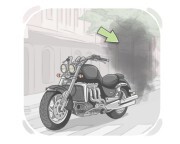
exhaust
exhaust
[noun]

the waste gases or air expelled from an engine, furnace, or other machinery

Ex: The cyclist pedaled behind the bus, trying to avoid inhaling the exhaust fumes in heavy traffic. 
Close
Sign in
to fare
to fare
[Verb]

to perform or manage oneself in a particular way, especially in response to a situation or condition

Ex: Despite the challenges, he fared admirably in his first year of college. 
Close
Sign in
to culminate

to end by coming to a climactic point

Ex: Their efforts culminate in a successful outcome. 
Close
Sign in
to reverse

to change something such as a process, situation, etc. to be the opposite of what it was before

Ex: The new administration decided to reverse the previous government's policy on environmental regulations. 
Close
Sign in
to stall
to stall
[Verb]

to cease to make progress or move forward

Ex: The project stalled when the team ran out of resources. 
Close
Sign in
to retard
to retard
[Verb]

to experience a delay or slow progress in a process or activity

Ex: The project began to retard when key resources were unavailable. 
Close
Sign in
to halt
to halt
[Verb]

to stop or bring an activity, process, or operation to an end

Ex: The company decided to halt the production of the outdated model. 
Close
Sign in
to cease
to cease
[Verb]

to bring an action, activity, or process to an end

Ex: They decided to cease production due to low demand. 
Close
Sign in
to truncate

to cut something short in length or duration

Close
Sign in
to revert
to revert
[Verb]

to go back to a previous state, condition, or behavior
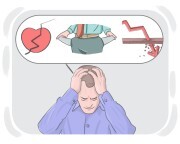
Ex: After the updates caused issues, they decided to revert to the previous version of the software. 
Close
Sign in
to undergo

to experience or endure a process, change, or event

Ex: The patient had to undergo surgery to address the medical condition. 
Close
Sign in
to unfold
to unfold
[Verb]

to develop or progress in a way that shows promise or potential

Ex: As the project continued, new opportunities began to unfold. 
Close
Sign in
to commence

to start happening or being

Ex: The ceremony will commence at 10 AM sharp. 
Close
Sign in
to abort
to abort
[Verb]

to stop and end a process before it finishes

Ex: The mission had to be aborted halfway through due to unfavorable weather conditions. 
Close
Sign in
to reciprocate

to respond in kind to a gesture or action

Ex: Teams that reciprocate effort and commitment tend to achieve shared goals more effectively. 
Close
Sign in
interactive
interactive
[Adjective]

involving mutual action or influence between two or more entities

Ex: The interactive exhibit allowed visitors to manipulate virtual simulations. 
Close
Sign in
proactive
proactive
[Adjective]

characterized by taking initiative to control or influence a situation rather than merely reacting to events

Ex: The manager was proactive in addressing potential conflicts before they escalated. 
Close
Sign in
nascent
nascent
[Adjective]

newly started or formed, and expected to further develop and grow

Ex: The startup is in its nascent stage but shows great potential for growth. 
Close
Sign in
inaugural
inaugural
[Adjective]

marking the beginning or initiation of something, often an event, series, or period

Ex: The inaugural address of the president set the tone for his administration. 
Close
Sign in
seamless
seamless
[Adjective]

without any interruptions, mistakes, or visible imperfections
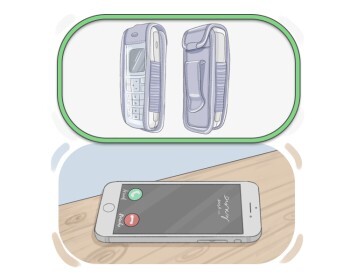
Ex: Her speech was seamless, captivating the audience without a single stumble. 
Close
Sign in
longstanding
longstanding
[Adjective]

having persisted or existed for a significant amount of time

Ex: Their longstanding friendship began in elementary school and has endured through all the ups and downs of life. 
Close
Sign in
interminable
interminable
[Adjective]

feeling endlessly long and tedious

Ex: The interminable meeting stretched on for hours without any decisive outcome. 
Close
Sign in
recurrent
recurrent
[Adjective]

repeatedly happening or reappearing, often at regular intervals

Ex: Patients suffering from recurrent bouts of depression often need long-term medication and therapy. 
Close
Sign in
underway
underway
[Adjective]

currently happening

Ex: The construction of the new bridge is underway and expected to be completed next year. 
Close
Sign in
inexorable
inexorable
[Adjective]

refusing to be moved by argument or emotion

Ex: She remained inexorable, refusing to reconsider her decision. 
Close
Sign in
firsthand
firsthand
[Adverb]

in a manner directly from the original source or from personal experience

Ex: She learned about the incident firsthand from a witness at the scene. 
Close
Sign in
formative
formative
[Adjective]

influencing the development or growth of something else, particularly during a crucial period

Ex: Her experiences during childhood were formative in shaping her personality. 
Close
Sign in
concerted
concerted
[Adjective]

carried out jointly by multiple individuals or groups
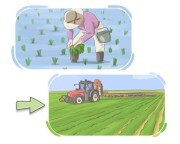
Ex: The team made concerted efforts to meet the project deadline, working together to overcome challenges. 
Close
Sign in
mechanically
mechanically
[Adverb]

in an automatic manner as if by using an engine, opposed to human effort alone
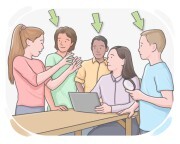
Ex: The car door opened mechanically with the press of a button. 
Close
Sign in
passively
passively
[Adverb]

without taking action or showing opposition
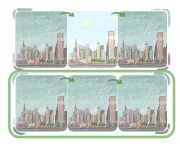
Ex: She listened passively as the manager criticized her performance. 
Close
Sign in
continuously
continuously
[Adverb]

without any pause or interruption

Ex: The conveyor belt moved continuously, transporting goods from one end of the factory to the other. 
Close
Sign in
inversely
inversely
[Adverb]

in a manner where one thing is opposite or contrary to another
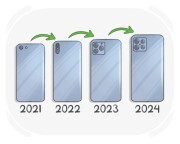
Ex: The temperature dropped, and inversely, the demand for heating increased. 
Close
Sign in
progressively

in a manner that advances or develops gradually over time
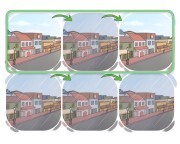
Ex: The student's understanding of the subject improved progressively throughout the semester. 
Close
Sign in
intermittently

at irregular intervals, with breaks or pauses in between
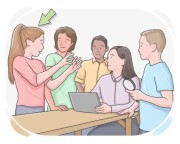
Ex: The rain fell intermittently throughout the day, with occasional breaks of sunshine. 
Close
Sign in
actively
actively
[Adverb]

in a way that involves effort and participation rather than being passive

Ex: The company is actively hiring new staff in all departments. 
Close
Sign in
LanGeek
Download LanGeek app