pattern

C1 Level Wordlist - News and Network

Here you will learn some English words about the news and network, such as "anchor", "antenna", "censor", etc. prepared for C1 learners.

Review

Flashcards

Forms

Spelling

Quiz

Start learning
CEFR C1 Vocabulary
anchor
anchor
[noun]

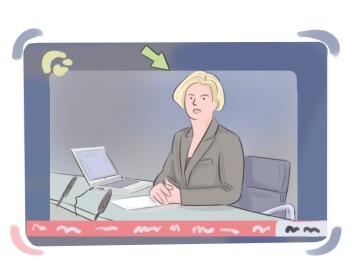
someone who introduces news on a live TV or radio program by other broadcasters

Ex: After decades in the industry , he retired as one of the most respected anchors in broadcast journalism .
Close
Sign in
weathergirl

a woman on TV or radio who tells people about the weather and describes it

Ex: As a seasoned meteorologist , the weathergirl delivers weather updates with confidence and expertise .
Close
Sign in
contributor

someone who writes a piece to be published in a newspaper or magazine

Ex: The magazine features a column written by a celebrity contributor each month .
Close
Sign in
correspondent

someone employed by a TV or radio station or a newspaper to report news from a particular country or on a particular matter

Ex: The radio station 's sports correspondent delivers live commentary from major sporting events .
Close
Sign in
couch potato

someone who sits around and watches TV a lot

Ex: After dinner , Dad becomes a couch potato in front of the TV .
Close
Sign in
paparazzi
paparazzi
[noun]

freelance photographers who aggressively pursue and take pictures of celebrities, often in invasive or intrusive ways

Ex: The actress hired security to shield her from the paparazzi while attending the movie premiere .
Close
Sign in
subscriber

someone who pays, at given intervals, to receive a publication or service
Ex: New subscribers receive a welcome gift upon signing up for the service .
Close
Sign in
antenna
antenna
[noun]

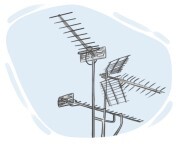
a device that is used to send and receive signals
Ex: The cellphone tower has multiple antennas to transmit and receive signals from mobile devices .
Close
Sign in
frequency
frequency
[noun]

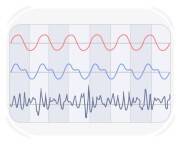
the specific number of waves that pass a point every second

Ex: Higher frequencies of light , such as ultraviolet and X-rays , have shorter wavelengths .
Close
Sign in
wavelength

the distance between a point on a wave of energy and a similar point on the next wave

Ex: The wavelength of sound waves affects the pitch of the sound , with shorter wavelengths producing higher pitches .
Close
Sign in
to censor
to censor
[Verb]

to remove parts of something such as a book, movie, etc. and prevent the public from accessing them for political, moral, or religious purposes

Ex: During wartime , newspapers were often censored to prevent the release of sensitive information .
Close
Sign in
to receive

to pick up broadcast signals

Ex: The GPS receiver in the handheld device receives signals from satellites to determine its precise location .
Close
Sign in
to televise

to broadcast or show something on TV

Ex: The network will televise the special documentary on endangered species .
Close
Sign in
to tune in

to watch a TV program or listen to a radio show
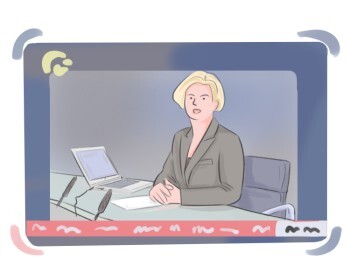
Ex: People from around the world can tune in online to watch the live stream of the concert .
Close
Sign in
bulletin
bulletin
[noun]

a brief news program that is broadcast on the radio or television

Ex: The company 's CEO addressed employees in a bulletin regarding the upcoming changes to the organization .
Close
Sign in
commentary

a spoken description of an event while it is taking place, particularly on TV or radio

Ex: The nature documentary was enhanced by the engaging commentary of the narrator .
Close
Sign in
lead story

an item of news that is given the most prominence in a news broadcast, magazine, or newspaper

Ex: The magazine 's lead story on health and wellness sparked a national conversation .
Close
Sign in
newsroom
newsroom
[noun]

a place in radio or television stations or a newspaper office where news is reviewed and put together to be broadcast or published

Ex: The newsroom was equipped with state-of-the-art technology to facilitate the production of high-quality content .
Close
Sign in
prime time

the time at which the largest number of people are watching TV or listening to the radio

Ex: The news anchor delivers the evening broadcast during prime time, reaching millions of viewers .
Close
Sign in
circulation

the total number of copies of a newspaper or magazine distributed, including both sales and delivery to readers

Ex: The report compared the circulation figures of two dailies .
Close
Sign in
clipping
clipping
[noun]

a story or article cut from a newspaper or magazine to be kept

Ex: As a journalist , I often save clippings of my published articles as a record of my work and accomplishments .
Close
Sign in
newsgathering

the act of collecting news item for broadcast or publication

Ex: Effective newsgathering requires journalists to adhere to ethical guidelines and verify information to maintain credibility with their audience .
Close
Sign in
newssheet
newssheet
[noun]

a small and simple form of newspaper with only few pages

Ex: The organization publishes a monthly newssheet featuring stories about their humanitarian efforts around the world .
Close
Sign in
issue
issue
[noun]

one of a series of publications produced regularly

Ex: The newspaper 's investigative report in last week 's issue sparked a public debate on government transparency .
Close
Sign in
photojournalism

the act or profession of reporting news articles in newspapers or magazines mainly through photographs

Ex: With the rise of social media , amateur photojournalism has become more prevalent , allowing ordinary individuals to document and share news events in real-time .
Close
Sign in
photo op
photo op
[noun]

an occasion arranged by a politician or other famous people to be photographed while doing something that they think will popularize them

Ex: The museum curator arranged a photo op with a famous artist to promote an upcoming exhibition .
Close
Sign in
periodical

a publication, especially about a technical subject, that is produced regularly

Ex: The editor-in-chief oversees the production schedule for the periodical, ensuring timely publication of each edition.
Close
Sign in
quarterly
quarterly
[noun]

a publication produced four times a year

Ex: As a member of the historical society, I enjoy reading the quarterly, which delves into local history and preservation efforts.
Close
Sign in
tabloid
tabloid
[noun]

a newspaper with smaller pages and many pictures, covering stories about famous people and not much serious news

Ex: Tabloids often rely on anonymous sources and speculative reporting to attract readers with sensational stories .
Close
Sign in
readership

the number of people who read a particular magazine, newspaper, or book on a regular basis

Ex: The editors strive to cater to their readership's interests by featuring a variety of content in each issue .
Close
Sign in
citizen journalism

the coverage of news by ordinary people, which is then shared on the Internet

Ex: While citizen journalism offers fresh perspectives , it also raises concerns about the accuracy and verification of information shared by non-professional reporters .
Close
Sign in
anonymous
anonymous
[Adjective]

(of a person) not known by name

Ex: The journalist received an anonymous tip that led to the uncovering of a major corruption scandal .
Close
Sign in
high-profile
high-profile
[Adjective]

drawing a lot of public attention or interest
Ex: The scandal involving a high-profile public figure dominated headlines for weeks , sparking intense public interest and debate .
Close
Sign in
nationwide
nationwide
[Adjective]

existing or occurring across a country

Ex: The nationwide ban on smoking in public places improved air quality and public health .
Close
Sign in
frequency modulation

one of the main methods of radio broadcasting with a high sound quality
Ex: Understanding frequency modulation is essential for anyone studying electronics and communication engineering .
Close
Sign in
ballot
ballot
[noun]

a document listing the options or candidates used in voting

Ex: Each ballot was checked for accuracy before distribution .
Close
Sign in
teletext
teletext
[noun]

a service delivering written news and information through television, currently replaced by other information services provided on a television network

Ex: Some countries still use teletext for public service announcements and emergency alerts on television channels .
Close
Sign in
LanGeek
Download LanGeek app