pattern

Law and Regulation - Criminal Law & Adjudication

Review

Flashcards

Forms

Spelling

Quiz

Start learning
Words Related to Law and Regulation
charge
charge
[noun]

an accusation against a person who is on trial

Ex: The defendant faced several charges, including theft and assault. 
Close
Sign in
to discharge

to free or release someone from legal or official confinement

Ex: The judge decided to discharge the defendant due to insufficient evidence, clearing them of all charges. 
Close
Sign in
to find
to find
[Verb]

(of a law court) to make an official decision

Ex: Did the court find the defendant guilty or not guilty? 
Close
Sign in
to find against

to declare someone guilty or make a decision against someone in a court case

Ex: The court found against the defendant. 
Close
Sign in
to find for

to declare someone right or innocent in a court of law case

Ex: The court found for the plaintiff. 
Close
Sign in
finding
finding
[noun]

a judgment or decision reached by a court regarding matters of fact or law
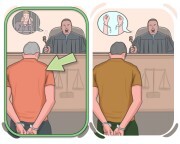
Ex: The court's finding favored the plaintiff. 
Close
Sign in
guilty
guilty
[Adjective]

responsible for an illegal act or wrongdoing
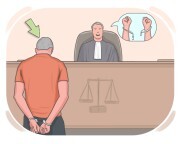
Ex: He pleaded guilty to the charges in court. 
Close
Sign in
wrongful
wrongful
[Adjective]

having no legal right or claim

Ex: He made a wrongful claim to the property. 
Close
Sign in
innocent
innocent
[Adjective]

not having committed a wrongdoing or offense
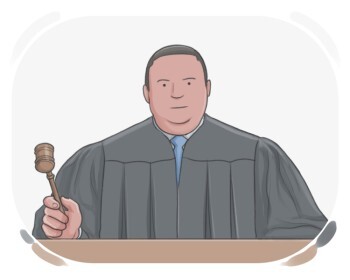
Ex: The evidence presented in court proved that he was innocent of the crime he was accused of. 
Close
Sign in
judge
judge
[noun]

the official in charge of a court who decides on legal matters

Ex: The judge listened to both sides of the case before making a ruling. 
Close
Sign in
judgment
judgment
[noun]

the decision of a judge or law court

Ex: The judgment was delivered after weeks of deliberation by the court. 
Close
Sign in
judicial
judicial
[Adjective]

belonging or appropriate for a court, a judge, or the administration of justice

Ex: The judicial branch of government oversees the interpretation and application of laws through courts and judges. 
Close
Sign in
jurisdiction

the power or authority of a court of law or an organization to make legal decisions and judgements

Ex: The court ruled that the case fell under federal jurisdiction due to its interstate nature. 
Close
Sign in
justiciary

the process of administering justice or carrying out legal judgments

Ex: The justiciary must be fair and impartial. 
Close
Sign in
majority verdict

(law) a decision supported or made by a jury that most of the people, but not all agree with

Ex: The jury reached a majority verdict after hours of deliberation. 
Close
Sign in
to pardon
to pardon
[Verb]

to discharge a criminal from the legal consequences of a conviction or violation

Ex: The governor decided to pardon the prisoner after reviewing his case. 
Close
Sign in
to prosecute

to try to charge someone officially with a crime in a court as the lawyer of the accuser

Ex: The lawyer was hired to prosecute the case on behalf of the victim’s family. 
Close
Sign in
prosecution

the process of bringing someone to court in an attempt to prove their guilt

Ex: The lengthy prosecution involved several months of court hearings. 
Close
Sign in
to rule
to rule
[Verb]

to officially declare or state something as true, especially in a legal or authoritative manner

Ex: The judge ruled that the defendant was guilty of all charges. 
Close
Sign in
ruling
ruling
[noun]

a decision made by someone with official power, particularly a judge

Ex: The Supreme Court's ruling on the case set a precedent for future privacy rights. 
Close
Sign in
to try
to try
[Verb]

to put a person on trial or investigate a case in a trial
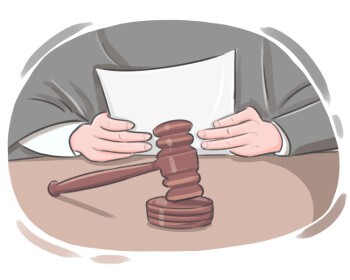
Ex: He was tried for theft and sentenced to two years in prison. 
Close
Sign in
verdict
verdict
[noun]

an official decision made by the jury in a court after the legal proceedings

Ex: The jury reached an unanimous verdict of guilty after deliberating for several hours. 
Close
Sign in
bail
bail
[noun]

an amount of money that must be paid in order for someone who is accused of a crime to be released until their trial
Ex: The judge set bail at $10,000 for the defendant's release from jail before the trial. 
Close
Sign in
to bail out

to pay money to the court to release someone from custody until their trial

Ex: We're trying to find ways to bail out the community leader arrested during the demonstration. 
Close
Sign in
cross-examination

the questioning of a witness by the opposing lawyer in court

Ex: The lawyer began the cross-examination. 
Close
Sign in
to cross examine

to question a witness in court by the opposing lawyer to test their testimony

Ex: The lawyer will cross-examine the witness tomorrow. 
Close
Sign in
to defend
to defend
[Verb]

to represent a person who is on trial

Ex: The attorney was hired to defend the accused in the high-profile case. 
Close
Sign in
defense
defense
[noun]

the person on trial and their legal team representing them in court
Ex: The defense argued that the evidence was insufficient. 
Close
Sign in
to convict

to announce officially that someone is guilty of a crime in a court of law

Ex: The jury deliberated and decided to convict the defendant of murder. 
Close
Sign in
conviction

a formal declaration by which someone is found guilty of a crime in a court of law

Ex: The defendant's conviction was based on solid evidence presented during the trial. 
Close
Sign in
parole
parole
[noun]

(law) the permission for a prisoner to leave prison before the end of their imprisonment sentence, on the condition of good conduct

Ex: After serving half of his sentence in prison, the inmate was eligible for parole, subject to certain conditions and supervision. 
Close
Sign in
legal action

a process in court where one person or group sues or takes a case against another

Ex: The company took legal action against the contractor. 
Close
Sign in
to deport
to deport
[Verb]

to force a foreigner to leave a country, usually because they have broken the law

Ex: The immigration officers deport undocumented immigrants who are found living in the country illegally. 
Close
Sign in
to uphold
to uphold
[Verb]

(particularly of a law court) to state that a previous decision is correct

Ex: The Supreme Court decided to uphold the lower court's ruling, affirming the original verdict. 
Close
Sign in
LanGeek
Download LanGeek app