
Interakcje - Wrogość
Poznaj angielskie idiomy dotyczące wrogości na przykładach takich jak "duke it out" i "have a bone to pick with".
Przegląd
Fiszki
Test
![to [hold|bear|have] a grudge](https://cdn.langeek.co/photo/44618/thumb/350?type=jpeg "to [hold|bear|have] a grudge")
to hold negative feelings toward a person who has done one wrong in the past

chować urazę, mieć do kogoś żal
Wiem, że jesteś zraniony, ale chowanie urazy nie zmieni tego, co się stało.
![to [have] it in for {sb}](https://cdn.langeek.co/photo/44614/thumb/350?type=jpeg "to [have] it in for {sb}")
to deliberately keep causing problems for someone or criticizing them
uwziąć się na kogoś, mieć kogoś na celowniku
Nauczycielka się na ciebie nie uwzięła; po prostu oczekuje lepszej pracy.

an attitude that shows one is angry or resentful because of an unfair behavior that they have experienced
poczucie krzywdy, stara uraza
Ludzie brali to za poczucie krzywdy, ale on był tylko zmęczony tym, że go ignorowano.
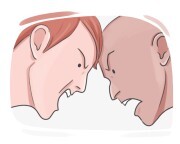
a strong feeling of bitterness or hatred toward someone because of a past dispute or disagreement
stare urazy, dawna niechęć
Kłótnia zostawiła stare urazy, które trwały latami.
![to [get|start] off on the wrong foot](https://cdn.langeek.co/photo/40189/thumb/350?type=jpeg "to [get|start] off on the wrong foot")
to have an unsuccessful or unpleasant beginning in a relationship or activity
zacząć od złej strony, źle zacząć
Tym razem nie zaczynajmy źle.
![to [give] {sb} the bird](https://cdn.langeek.co/photo/44652/thumb/350?type=jpeg "to [give] {sb} the bird")
to intentionally and rudely display an offensive hand gesture, involving raising the middle finger while extending the others downward, as a sign of strong disapproval, annoyance, or disrespect toward someone
pokazać komuś środkowy palec, wykonać obraźliwy gest
Pokazanie komuś środkowego palca może chwilowo dać satysfakcję, ale może pogorszyć sprawę.
![to [hate] {one's} guts](https://cdn.langeek.co/photo/44632/thumb/350?type=jpeg "to [hate] {one's} guts")
to hate someone to an extreme degree
nienawidzić kogoś z całego serca, nie móc kogoś znieść
Mój brat wciąż nienawidzi mojej byłej z całego serca za to, jak mnie traktowała.
![to [be] out to get {sb}](/assets/img/no-pic-700w.png "to [be] out to get {sb}")
to be determined to harm, punish, or cause trouble for someone
![to [have] a bone to pick with {sb}](https://cdn.langeek.co/photo/44634/thumb/350?type=jpeg "to [have] a bone to pick with {sb}")
to have a problem with someone or be annoyed with them and want to tell them all about it
mieć coś komuś do zarzucenia, mieć do kogoś pretensje
Miał coś do zarzucenia sąsiadowi z powodu głośnych imprez.
![to [put|stick] the knife (in|into) {sb}](https://cdn.langeek.co/photo/42670/thumb/350?type=jpeg "to [put|stick] the knife (in|into) {sb}")
to emotionally harm someone through a significant act of betrayal or hurtful actions
wbić komuś nóż w plecy, boleśnie zdradzić
Po tym, jak udawali, że go popierają, wbili mu nóż w plecy podczas głosowania.
![to [clear] the air](https://cdn.langeek.co/photo/40011/thumb/350?type=jpeg "to [clear] the air")
to have an open conversation with someone to resolve the negative feelings with them that are caused by disagreements or misunderstandings
oczyścić atmosferę, szczerze sobie wszystko wyjaśnić
Spotkanie pomogło oczyścić atmosferę między dwoma zespołami.
![to [bury] the hatchet](https://cdn.langeek.co/photo/44628/thumb/350?type=jpeg "to [bury] the hatchet")
to build a good relationship with each other again after having disagreements about something
zakopać topór wojenny, pogodzić się
Dawni rywale zakopali topór wojenny podczas wydarzenia charytatywnego.
![to [duke] it out](https://cdn.langeek.co/photo/44630/thumb/350?type=jpeg "to [duke] it out")
to argue or fight until a disagreement is resolved
rozstrzygnąć to w starciu, kłócić się aż do rozstrzygnięcia
Jeśli nie dojdą tu do porozumienia, mogą rozstrzygnąć to w sądzie.
