ACT Science - Chemistry
Learn ACT science vocabulary for chemistry, including atoms, elements, reactions, properties, measurements, and other concepts used in chemical experiments and passages.
Review
Flashcards
Spelling
Quiz

a large molecule composed of repeating structural units, or monomers, covalently bonded together in a chain-like structure
each of two or more forms of the same element that contain equal numbers of protons but different numbers of neutrons in their nuclei, leading to variation in atomic mass
having a tendency to undergo chemical reactions
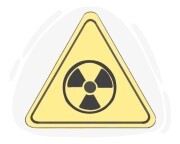
containing or relating to a dangerous form of energy produced by nuclear reactions
a chemical bond where atoms share electrons to form a stable molecule
a type of chemical bond between two atoms involving the sharing of two pairs of electrons, resulting in a stronger and more stable connection than a single bond
defining substances or surfaces that have a strong attraction to water molecules, allowing them to easily absorb or interact with water
characterized by substances or surfaces that repel water molecules, showing little or no affinity for water
(chemistry) a reaction that gives off energy, usually as heat or light, to its surroundings
a chemical process that absorbs heat energy from its surroundings, often resulting in a temperature decrease
the weighted average mass of an atom of an element, taking into account the masses of all its naturally occurring isotopes
the total number of protons and neutrons in the nucleus of an atom
a fundamental unit in chemistry that represents the amount of substance containing as many entities (atoms, molecules) as there are in 12 grams of carbon-12
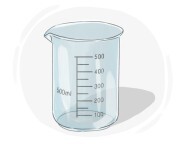
a flat-bottomed glass or plastic container used in laboratory experiments
a laboratory tool used to measure and transfer small volumes of liquid
a device that spins samples to separate components based on density
a special paper treated with chemicals that change color in response to certain conditions, used to test for the presence of specific substances or measure pH levels
a tabular arrangement of chemical elements organized based on their atomic number, electron configuration, and recurring chemical properties
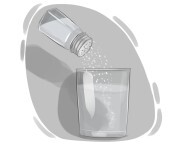
to become incorporated into a liquid and form a solution
the process of dispersing or dissolving a substance into a solvent to form a homogeneous solution
the arrangement, composition, and characteristics of a material at a microscopic level
denoting substances with a highly organized molecular structure, akin to crystals
the measure of how much of a substance is present in a certain volume of solution
a device used to analyze the chemical composition of small samples at a microscopic scale
a substance capable of absorbing and retaining a large amount of liquid relative to its own mass
a type of metallic material composed of three or more elements mixed together in varying proportions
a tiny, tube-shaped structure made of carbon atoms, with remarkable strength and electrical properties
heated to a liquid state due to high temperatures
a group of atoms bonded together that behaves as a single unit within a molecule
a phase is a distinct form of matter with uniform chemical and physical properties, separated from other forms by boundaries
the process where calcium or calcium salts accumulate in a tissue, making it hard and rigid
the process by which microorganisms convert carbohydrates into alcohol, acids, or gases
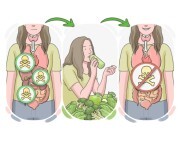
to eliminate or neutralize harmful substances
to analyze or test a substance, typically in a laboratory setting, to determine its components or qualities
a scientist who studies the structure and properties of crystals
a scientist who studies the chemical composition and processes of celestial bodies to understand the formation and evolution of the universe
a laboratory technique used to separate and analyze mixtures of substances based on their differential affinities for a stationary phase and a mobile phase
a type of radioactive decay where a nucleus emits a beta particle (electron or positron) to transform a neutron into a proton or vice versa
not having an electrical charge
a laboratory method used to determine the concentration of a substance in a solution by gradually adding a reagent of known concentration until a reaction is completed
a state in a chemical reaction where the forward and reverse reactions occur at the same rate, resulting in no net change in the concentrations of reactants and products
a device that turns vapor into liquid by cooling it
weak attractive forces between molecules or atoms, arising from temporary or induced dipoles
a scientist or engineer who specializes in the study and production of metals and alloys, including their properties, processing methods, and applications
the process by which molecules of a substance adhere to the surface of a solid or liquid, forming a thin film or layer
a renewable, alternative fuel made from organic materials such as vegetable oils, animal fats, or recycled cooking grease
(chemistry) the process of separating a liquid or solution into its parts by passing electricity through it
to disperse small particles throughout a liquid or gas so that they remain floating within it
a specific composition of a mixture of substances, typically metals or alloys, where the melting point is at its lowest possible temperature under atmospheric pressure