Cambridge IELTS 19 - Academic - Test 3 - Reading - Passage 1 (3)

Here you can find the vocabulary from Test 3 - Reading - Passage 1 (3) in the Cambridge IELTS 19 - Academic coursebook, to help you prepare for your IELTS exam.

review-disable

review

flashcard-disable

flashcard

spelling-disable

spelling

quiz-disable

quiz

start-learning
Cambridge IELTS 19 - Academic
to see [verb]

to be the setting or time of an event
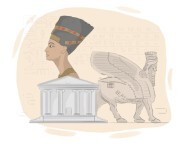
Ex: The club has seen many talented players come and go over the years .
historic [adjective]

relating to a person or event that is a part of the past and is documented in historical records, often preserved for educational or cultural purposes

Ex: The museum houses many historic artifacts from ancient civilizations .
trade [noun]

a particular type of business or industry that deals with buying and selling goods or services
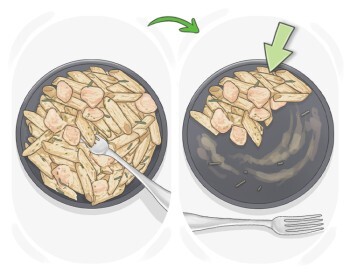
Ex: He works in the fashion trade , selling clothing to stores .
rest [noun]

a part of something that is left

Ex: She used some of the money to pay bills and saved the rest for a vacation .

to occur at a specific time or location

Ex: The debate competition took place at the school auditorium .
arrival [noun]

the act of arriving at a place from somewhere else
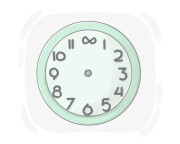
Ex: She eagerly awaited the arrival of her friends at the airport .
ever [adverb]

at any point in time

Ex: Do n't ever speak to me like that again .
surrounding [adjective]

existing or situated all around something or someone

Ex:
practice [noun]

a habitual or customary way of doing something; a repeated or regular action or behavior
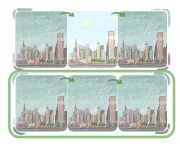
Ex: The doctor 's office has a practice of calling patients the day before their appointments .

without any pause or interruption

Ex: The rain fell continuously for hours , causing flooding .
finding [noun]

a piece of information discovered as a result of a research

Ex: His finding on the chemical reaction led to a breakthrough in the experiment .
naturally [adverb]

according to nature; by natural means; without artificial help

to have a similar appearance or characteristic to someone or something else
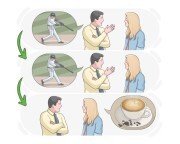
Ex: The painting resembled a famous masterpiece , but with slight differences in color .

to change from one thing, such as a task, major, conversation topic, job, etc. to a completely different one
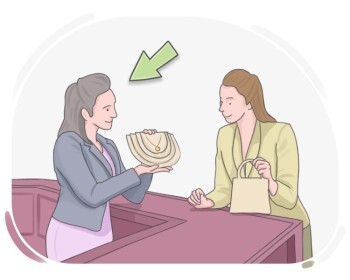
Ex: During the conversation , they decided to switch topics to something more lighthearted .
sale [noun]

the act of selling something

Ex: The sale of the old car gave him enough money to buy a new bike .

a kind of natural glass produced when molten lava cools very rapidly

material of a particular kind or constitution

obsidian [noun]

acid or granitic glass formed by the rapid cooling of lava without crystallization; usually dark, but transparent in thin pieces
particular [adjective]

distinctive among others that are of the same general classification
Ex: She is dedicated to a particular area of research within the medical field .
bead [noun]

one of a series of small balls of wood, glass, etc. with a hole in the middle that a string can go through to make a rosary or necklace, etc.

Ex: As she prayed , she slowly moved her fingers over each bead of the rosary , reciting the prayers with devotion .
find [noun]

a valuable or productive insight, idea, or piece of information

Ex: That observation was a key find in the investigation .
routinely [adverb]

in a regular or habitual manner, often following a fixed procedure or schedule

Ex: He routinely completes his tasks well before the deadline .

to leave a place, especially because it is difficult or dangerous to stay
Ex: The citizens had no choice but to abandon their city when it became a war zone .
resident [noun]

a person who lives in a particular place, usually on a long-term basis

Ex: Residents of the neighborhood formed a community watch program to improve safety .
match [noun]

something that corresponds to or harmonizes with another

Ex: The paint color was an exact match to the walls .

to direct one's interest or attention toward a specific subject or activity

Ex: As the discussion evolved , we turned to more pressing matters .
means [noun]

a way, system, object, etc. through which one can achieve a goal or accomplish a task

Ex: Public transportation provides a means for many people to commute to work .
survival [noun]

the state in which a person manages to stay alive or strong despite dangers or difficulties

Ex: Survival in the wilderness requires knowledge of basic shelter and food sources .
whatever [pronoun]

used to represent anything or everything as the subject or object of verb or preposition
Ex: Take whatever you want from the table .

the act of leaving, usually to begin a journey
Ex: The departure of the ship from the harbor marked the beginning of their cruise vacation .
to own [verb]

to have something as for ourselves

Ex: Last year , he successfully owned a vintage car that he had restored .
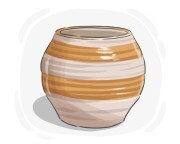
pottery [noun]

pots, dishes, etc. that are made of clay by hand and then baked in a kiln to be hardened

as well as [preposition]

used to introduce another item or person that is included in the same category or group as the previous one

Ex: She speaks English as well as French .
in view of [preposition]

considering a particular fact or circumstance
Ex: We have adjusted our plans in view of the weather forecast .
phase [noun]

a distinct period or stage in a sequence of events or development

Ex: The moon enters a different phase each month .

to live in a place that is either rented or owned

Ex: The indigenous people have occupied this land for generations , maintaining a deep connection to their ancestral home .
Cambridge IELTS 19 - Academic
Test 1 - Listening - Part 1 Test 1 - Listening - Part 2 Test 1 - Listening - Part 3 (1) Test 1 - Listening - Part 3 (2)
Test 1 - Listening - Part 4 (1) Test 1 - Listening - Part 4 (2) Test 1 - Reading - Passage 1 (1) Test 1 - Reading - Passage 1 (2)
Test 1 - Reading - Passage 2 (1) Test 1 - Reading - Passage 2 (2) Test 1 - Reading - Passage 2 (3) Test 1 - Reading - Passage 3 (1)
Test 1 - Reading - Passage 3 (2) Test 1 - Reading - Passage 3 (3) Test 2 - Listening - Part 1 Test 2 - Listening - Part 2 (1)
Test 2 - Listening - Part 2 (2) Test 2 - Listening - Part 3 (1) Test 2 - Listening - Part 3 (2) Test 2 - Listening - Part 4 (1)
Test 2 - Listening - Part 4 (2) Test 2 - Reading - Passage 1 (1) Test 2 - Reading - Passage 1 (2) Test 2 - Reading - Passage 1 (3)
Test 2 - Reading - Passage 2 (1) Test 2 - Reading - Passage 2 (2) Test 2 - Reading - Passage 2 (3) Test 2 - Reading - Passage 3 (1)
Test 2 - Reading - Passage 3 (2) Test 2 - Reading - Passage 3 (3) Test 3 - Listening - Part 1 Test 3 - Listening - Part 2 (1)
Test 3 - Listening - Part 2 (2) Test 3 - Listening - Part 3 (1) Test 3 - Listening - Part 3 (2) Test 3 - Listening - Part 4 (1)
Test 3 - Listening - Part 4 (2) Test 3 - Reading - Passage 1 (1) Test 3 - Reading - Passage 1 (2) Test 3 - Reading - Passage 1 (3)
Test 3 - Reading - Passage 2 (1) Test 3 - Reading - Passage 2 (2) Test 3 - Reading - Passage 2 (3) Test 3 - Reading - Passage 3 (1)
Test 3 - Reading - Passage 3 (2) Test 3 - Reading - Passage 3 (3) Test 3 - Reading - Passage 3 (4) Test 4 - Listening - Part 1 (1)
Test 4 - Listening - Part 1 (2) Test 4 - Listening - Part 2 (1) Test 4 - Listening - Part 2 (2) Test 4 - Listening - Part 3 (1)
Test 4 - Listening - Part 3 (2) Test 4 - Listening - Part 4 (1) Test 4 - Listening - Part 4 (2) Test 4 - Listening - Part 4 (3)
Test 4 - Reading - Passage 1 (1) Test 4 - Reading - Passage 1 (2) Test 4 - Reading - Passage 1 (3) Test 4 - Reading - Passage 2 (1)
Test 4 - Reading - Passage 2 (2) Test 4 - Reading - Passage 2 (3) Test 4 - Reading - Passage 2 (4) Test 4 - Reading - Passage 3 (1)
Test 4 - Reading - Passage 3 (2) Test 4 - Reading - Passage 3 (3) Test 4 - Reading - Passage 3 (4)