Cambridge IELTS 18 - Academic - Test 3 - Reading - Passage 1 (2)

Here you can find the vocabulary from Test 3 - Reading - Passage 1 (2) in the Cambridge IELTS 18 - Academic coursebook, to help you prepare for your IELTS exam.

review-disable

review

flashcard-disable

flashcard

spelling-disable

spelling

quiz-disable

quiz

start-learning
Cambridge IELTS 18 - Academic

to take into consideration, particularly in decision making
Ex: When evaluating job offers , do n't forget to factor in aspects like work-life balance and company culture .
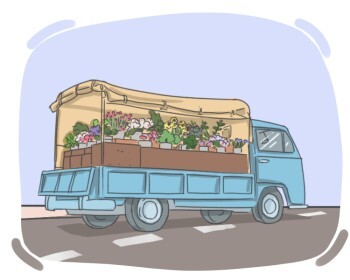
to ship [verb]

to send goods or individuals from one place to another using some form of transportation
Ex:

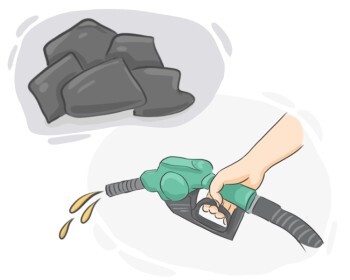
a fuel that is found in nature and obtained from the remains of plants and animals that died millions of years ago, such as coal and gas

Ex: Fossil fuels are a major source of global energy production .

to be understandable in a way that is reasonable

Ex: It does n't make sense to drive all the way there when we can just take the bus .

a specific manner of considering something

Ex: The artist 's paintings reflect his abstract perspective on nature and life .
promising [adjective]

indicating potential for success or positive outcomes
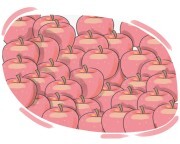
Ex:
abundant [adjective]

existing or available in large quantities

Ex: In the market , there was an abundant supply of fresh vegetables .

a method, product, way of doing something, etc. that is newly introduced

Ex: He introduced an innovation that reduced production costs significantly .

an organization focused on a specific field of study or training, offering programs and services related to science, technology, medicine, business, or the arts
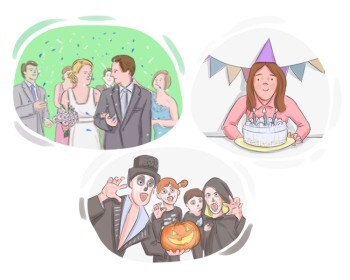
affair [noun]

a social gathering or event, often formal or noteworthy

Ex: The wedding was a lavish affair with hundreds of guests .

to come to a decision or judgment after considering evidence, arguments, or facts

Ex: After weighing the pros and cons , we reached a conclusion about which option was the most viable .
novel [adjective]

new and unlike anything else

Ex: The artist 's latest exhibition showcased a series of novel techniques and styles that captivated viewers .

to successfully overcome or manage a problem or a difficult situation

Ex: The company aims to break through market competition .
at present [adverb]

at the current moment or during the existing time

Ex: The website is experiencing technical issues at present ; please try again later .
cost-effective [adjective]

producing good results without costing too much

Ex: Using public transportation instead of owning a car is often more cost-effective for daily commuting .

a basic substance used in manufacturing or production that has not yet been processed or refined
Ex: Petroleum is a key raw material for the manufacturing of various products , including plastics and fuels .
shortage [noun]

a lack of something needed, such as supplies, resources, or people

Ex: A gas shortage led to long lines at petrol stations .

the act of opposing or refusing to accept something one disapproves of or disagrees with

Ex: His resistance to authority often caused conflict at work .

to consist of or include several different elements or parts
Ex: The orchestra contains musicians who play a variety of instruments .
potential [adjective]

having the possibility to develop or be developed into something particular in the future

Ex: The potential risks of the new investment strategy were carefully analyzed .

a mention or citation of something, often to provide context or support for an idea

Ex: The report contained a reference to the latest research in the field .
high-rise [adjective]

(of buildings) having many floors

Ex:

something that serves to show, suggest, or point to a fact, condition, or situation
Ex: The footprints were an indication that someone had passed by .
belief [noun]

something that we think is true or real

Ex: In some cultures , there are deeply held beliefs about the significance of certain symbols or rituals .

to think of someone or something in a particular way

Ex: She regards him as a talented artist.
prone [adjective]

having a tendency or inclination toward something

Ex: Athletes are often prone to injuries due to intense training .
to equal [verb]

to reach the same level or ability as someone or something else

Ex: The runner ’s speed equals the record set last year .
in terms of [preposition]

referring to or considering a specific aspect or factor

Ex: The project was successful in terms of meeting deadlines and objectives .

a Latin phrase (or its abbreviation) used to indicate that special attention should be paid to something
to think that something is true without having proof or evidence

Ex: Yesterday , he mistakenly assumed that the meeting was canceled .
to offer [verb]

to present goods or services for purchase to potential buyers

Ex: The farmer 's market offers organic fruits and vegetables grown locally .
comparable [adjective]

having similarities that justify making a comparison

Ex: The salaries offered by the two companies are comparable , but the benefits differ .
expense [noun]

the amount of money spent to do or have something

Ex: Rent and utilities are among the most common monthly expenses for homeowners and renters alike .
due to [preposition]

as a result of a specific cause or reason

Ex: He missed the meeting due to a family emergency .
to base [verb]

to situate or establish as a central location for operations, activities, or planning
Ex: The organization chose to base its research and development division in the innovation hub of the country .
including [preposition]

used to point out that something or someone is part of a set or group

Ex:

to place something in a container or place that can be securely fastened with a lock

Ex: The teacher locked away the exam papers in a secure cabinet to prevent cheating .
range [noun]

an area in which something acts, operates, or has influence or control

Ex: The missile has a range of 300 kilometers .
fly ash [noun]

fine solid particles of ash that are carried into the air when fuel is combusted

slag [noun]

the byproduct of smelting ore that forms a glass-like material, often found as a residue in mining and metalworking activities
Ex: As we explored deeper into the cave , we encountered walls coated with shiny slag , evidence of past mineral extraction .
iron ore [noun]

an ore from which iron can be extracted

a product made during the manufacture of something else

a large building in which electricity is made
Ex:

to include something as part of a larger whole or system

Ex: The recipe incorporates fresh herbs to enhance its flavor .

the ability of an object or material to withstand wear, pressure, or damage over time, without significant deterioration

Ex: The durability of the hiking boots made them ideal for rugged terrain .
smelting [noun]

the process of heating and melting rocks or ores to take out metals from them

Ex: Old smelting methods were slow and dangerous .

consolidating two or more things; union in (or into) one body

council [noun]

a group of elected people who govern a city, town, etc.

Ex:
to note [verb]

to mention something to make it stand out

Ex: The guide noted the historical significance of the building .

any materials unused and rejected as worthless or unwanted

content [noun]

the proportion of a substance in an alloy or mixture

Ex: The soil 's nitrogen content was measured .
overall [adverb]

with everything considered

Ex: The weather was a bit unpredictable , but overall , it was a good day for a picnic .

the process of thinking carefully about risks, outcomes, or effects before making a decision or taking action

Ex: She acted after a quick mental calculation of the risks .

the series of stages something goes through from the beginning to the end of its use or existence

Ex: They studied the life cycle of the software to plan updates .
conventional [adjective]

following established practices or standards that are widely accepted or commonly used

Ex: He followed a conventional career path , working his way up through the corporate ranks over several years .
Cambridge IELTS 18 - Academic
Test 1 - Listening - Part 1 Test 1 - Listening - Part 2 (1) Test 1 - Listening - Part 2 (2) Test 1 - Listening - Part 3 (1)
Test 1 - Listening - Part 3 (2) Test 1 - Listening - Part 4 (1) Test 1 - Listening - Part 4 (2) Test 1 - Reading - Passage 1 (1)
Test 1 - Reading - Passage 1 (2) Test 1 - Reading - Passage 2 (1) Test 1 - Reading - Passage 2 (2) Test 1 - Reading - Passage 3 (1)
Test 1 - Reading - Passage 3 (2) Test 2 - Listening - Part 1 Test 2 - Listening - Part 2 (1) Test 2 - Listening - Part 2 (2)
Test 2 - Listening - Part 3 (1) Test 2 - Listening - Part 3 (2) Test 2 - Listening - Part 4 Test 2 - Reading - Passage 1 (1)
Test 2 - Reading - Passage 1 (2) Test 2 - Reading - Passage 1 (3) Test 2 - Reading - Passage 2 (1) Test 2 - Reading - Passage 2 (2)
Test 2 - Reading - Passage 2 (3) Test 2 - Reading - Passage 3 (1) Test 2 - Reading - Passage 3 (2) Test 2 - Reading - Passage 3 (3)
Test 3 - Listening - Part 1 Test 3 - Listening - Part 2 Test 3 - Listening - Part 3 Test 3 - Listening - Part 4
Test 3 - Reading - Passage 1 (1) Test 3 - Reading - Passage 1 (2) Test 3 - Reading - Passage 2 (1) Test 3 - Reading - Passage 2 (2)
Test 3 - Reading - Passage 3 (1) Test 3 - Reading - Passage 3 (2) Test 4 - Listening - Part 1 Test 4 - Listening - Part 2
Test 4 - Listening - Part 3 Test 4 - Listening - Part 4 Test 4 - Reading - Passage 1 (1) Test 4 - Reading - Passage 1 (2)
Test 4 - Reading - Passage 2 (1) Test 4 - Reading - Passage 2 (2) Test 4 - Reading - Passage 3 (1) Test 4 - Reading - Passage 3 (2)