pattern

Cambridge IELTS 16 - Academic - Test 3 - Reading - Passage 1 (2)

Here you can find the vocabulary from Test 3 - Reading - Passage 1 (2) in the Cambridge IELTS 16 - Academic coursebook, to help you prepare for your IELTS exam.

Review

Flashcards

Forms

Spelling

Quiz
Start learning
Cambridge IELTS 16 - Academic
cargo
cargo
[noun]

goods on board an aircraft, ship, or vehicle, being transported
Close
Sign in
planking
planking
[noun]

the work of covering an area with planks

Close
Sign in
stability
stability
[noun]

the quality of being fixed or steady and unlikely to change

Ex: Political stability is essential for attracting investment, fostering economic growth, and ensuring the well-being of citizens. 
Close
Sign in
rudder
rudder
[noun]

(nautical) steering mechanism consisting of a hinged vertical plate mounted at the stern of a vessel

Close
Sign in
stern
stern
[noun]

the rear or aft part of a ship or boat

Ex: The passengers gathered at the stern to watch the sunset. 
Close
Sign in
tiller
tiller
[noun]

lever used to turn the rudder on a boat

Close
Sign in
bar
bar
[noun]

a solid, rigid piece of metal or wood, typically used for support, obstruction, fastening, or as a tool

Ex: The prison cell had iron bars across the windows for security. 
Close
Sign in
mast
mast
[noun]

a tall, vertical pole on a ship or boat that supports the sails and rigging

Ex: The sailor climbed the mast to adjust the sails. 
Close
Sign in
bow
bow
[noun]

the forward-most part of a ship, boat, or aircraft
Ex: The passengers stood at the bow to see the coastline. 
Close
Sign in
to coordinate

to control and organize the different parts of an activity and the group of people involved so that a good result is achieved

Ex: The event planner coordinated all aspects of the wedding, ensuring that vendors, guests, and the wedding party were synchronized for a seamless celebration. 
Close
Sign in
to assist
to assist
[Verb]

to help a person in performing a task, achieving a goal, or dealing with a problem

Ex: The teacher assisted the students in understanding the complex concept. 
Close
Sign in
to [keep] time
to keep time
[phrase]

to match or follow a steady beat or rhythm, usually in music, by moving or playing in the correct timing

Ex: The drummer keeps time for the whole band. 
Close
Sign in
raw
raw
[Adjective]

(of a material) having not undergone any processing or refinement

Ex: The artist preferred to work with raw clay before shaping it into sculptures. 
Close
Sign in
copper
copper
[noun]

a metallic chemical element that has a red-brown color, primarily used as a conductor in wiring

Ex: Copper is valued for its high electrical conductivity, which makes it ideal for wiring in electrical systems. 
Close
Sign in
marble
marble
[noun]

a type of hard smooth rock that is mostly white in color and has colored lines, which is used as building material or in making statues

Ex: The grand staircase in the mansion was adorned with marble steps, gleaming in the sunlight that streamed through the stained glass windows. 
Close
Sign in
granite
granite
[noun]

a durable and visually appealing natural rock used for countertops, flooring, and other architectural applications

Close
Sign in
agricultural
agricultural
[Adjective]

related to the practice or science of farming
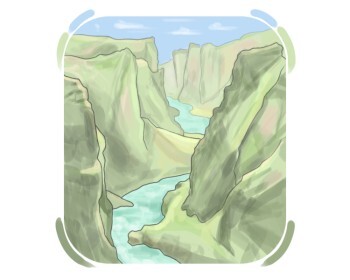
Ex: Agricultural practices involve the growing of crops and raising of livestock for food production. 
Close
Sign in
valley
valley
[noun]

a low area of land between mountains or hills, often with a river flowing through it

Ex: The sun set behind the hills, casting long shadows over the valley. 
Close
Sign in
empire
empire
[noun]

a territory governed by an emperor or empress, under imperial authority

Ex: The emperor expanded his empire across three continents. 
Close
Sign in
inhabitant

a person or animal that resides in a particular place

Ex: The city has over a million inhabitants, making it one of the largest in the country. 
Close
Sign in
port
port
[noun]

a place of shelter for ships

Ex: The fishermen tied their boats securely in the port before heading home. 
Close
Sign in
to situate

to place something in a particular position or setting

Ex: The architect decided to situate the building on the edge of the hill for a panoramic view. 
Close
Sign in
bay
bay
[noun]

a part of a shoreline that curves inward, larger than a cove but smaller than a gulf
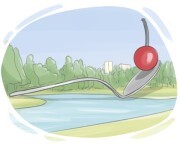
Ex: San Francisco Bay is known for its iconic Golden Gate Bridge. 
Close
Sign in
gigantic
gigantic
[Adjective]

extremely large in size or extent

Ex: The gigantic iceberg floated ominously in the frigid waters, dwarfing the nearby ships. 
Close
Sign in
to approach

to go close or closer to something or someone
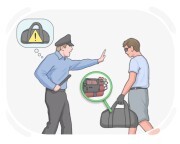
Ex: She approached the podium with confidence before giving her speech. 
Close
Sign in
to intercept

to stop or catch before reaching intended destination

Ex: The security team intercepted a suspicious package at the airport, preventing a potential threat. 
Close
Sign in
towboat
towboat
[noun]

a powerful small boat designed to pull or push larger ships

Close
Sign in
quay
quay
[noun]

a structure built along the edge of a body of water, such as a river or an ocean

Ex: The cargo ship pulled up to the quay, where workers swiftly began unloading crates of goods onto the dock. 
Close
Sign in
to vary
to vary
[Verb]

to differ or deviate from a standard or expected condition
Ex: The results of the experiment vary significantly from the predicted outcomes, indicating unexpected factors at play. 
Close
Sign in
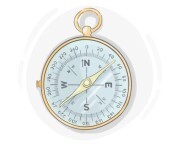
compass
compass
[noun]

a device with a needle that always points to the north, used to find direction

Ex: The hiker used a compass to navigate through the dense forest and stay on the right path. 
Close
Sign in
observation

the process or action of carefully watching a thing or person, often for learning something about them

Ex: The scientist recorded her findings during the observation. 
Close
Sign in
phenomenon

an observable fact, event, or situation, often unusual or not yet fully explained

Ex: Northern lights are a spectacular natural phenomenon. 
Close
Sign in
mainland
mainland
[noun]

the main part of a continent or country that is connected to a larger landmass, excluding surrounding islands or territories
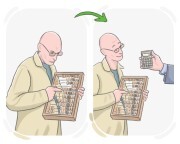
Ex: They took a ferry from the island to the mainland. 
Close
Sign in
to facilitate

to help something, such as a process or action, become possible or simpler
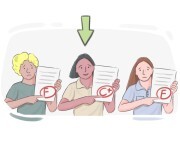
Ex: The government implemented policies to facilitate foreign investment and economic growth. 
Close
Sign in
relative
relative
[Adjective]

measured or judged in comparison to something else

Ex: The cost of living in this city is relative to one's income. 
Close
Sign in
succession

a group of people or things arranged or following in order

Close
Sign in
recognizable
recognizable
[Adjective]

able to be identified or distinguished from other things or people

Ex: Despite the actor's disguise, his voice was still recognizable to his fans. 
Close
Sign in
landmark
landmark
[noun]

something such as a building, tree, etc. that is easy to recognize, which we can use to know where we are

Ex: The Eiffel Tower in Paris is an iconic landmark that can be seen from various parts of the city. 
Close
Sign in
mariner
mariner
[noun]

a man who serves as a sailor

Close
Sign in
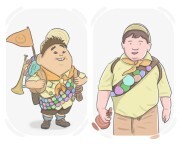
pole star
pole star
[noun]

the brightest star in Ursa Minor; at the end of the handle of the Little Dipper; the northern axis of the earth points toward it

Close
Sign in
swell
swell
[noun]

the undulating movement of the surface of the open sea

Close
Sign in
to resemble

to have a similar appearance or characteristic to someone or something else
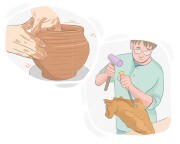
Ex: The two sisters closely resemble each other, sharing the same eyes and smile. 
Close
Sign in
craftsman
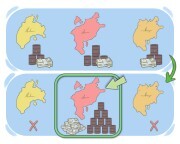
craftsman
[noun]

a skilled professional who creates items by hand, often using traditional methods and techniques
Close
Sign in
to dominate

to have the power to completely or partially control someone or something

Ex: In the competitive business world, companies strive to dominate their market. 
Close
Sign in
afloat
afloat
[Adjective]

aimlessly drifting

Close
Sign in
timber
timber
[noun]

a vertical wooden post or stake, often used for fencing, support, or markers
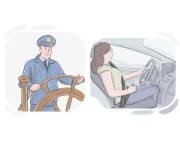
Ex: A timber was driven into the ground for the fence. 
Close
Sign in
to steer
to steer
[Verb]

to control the direction of a moving object, such as a car, ship, etc.
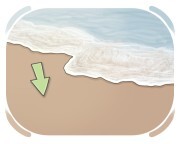
Ex: He expertly steered the car through the winding mountain roads. 
Close
Sign in
shore
shore
[noun]

the area of land where the land meets a body of water such as an ocean, sea, lake, or river

Ex: The waves gently lapped against the shore, creating a soothing sound. 
Close
Sign in
seaman
seaman
[noun]

a person who works on a ship, especially one who helps operate or take care of the ship but is not an officer
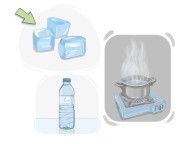
Ex: The seaman helped tie the ship to the dock. 
Close
Sign in
solid
solid
[Adjective]

firm and stable in form, not like a gas or liquid

Ex: The ice had formed into a solid block after being left in the freezer overnight. 
Close
Sign in
interior
interior
[noun]

the internal part of a building, car, etc.

Ex: The house’s interior features original woodwork and high ceilings. 
Close
Sign in
LanGeek
Download LanGeek app