pattern

Cambridge IELTS 16 - Academic - Test 4 - Reading - Passage 2 (1)

Here you can find the vocabulary from Test 4 - Reading - Passage 2 (1) in the Cambridge IELTS 16 - Academic coursebook, to help you prepare for your IELTS exam.

Review

Flashcards

Forms

Spelling

Quiz

Start learning
Cambridge IELTS 16 - Academic
implication

a possible consequence that something can bring about

Ex: His decision to cut costs has serious implications for employee morale. 
Close
Sign in
pacifier
pacifier
[noun]

a rubber or silicone nipple-shaped device designed to be sucked on by infants
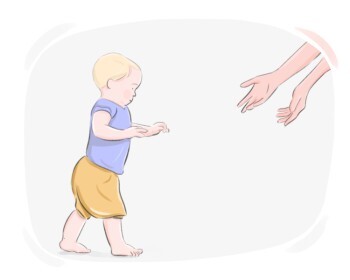
Ex: The baby was immediately calmed when given a pacifier. 
Close
Sign in
toddler
toddler
[noun]

a young child who is starting to learn how to walk

Ex: The toddler took his first steps, much to the delight of his parents. 
Close
Sign in
to hunch over

round one's back by bending forward and drawing the shoulders forward

Close
Sign in
to skim
to skim
[Verb]

to quickly read through a text, focusing on key information and main points rather than delving into details

Ex: With limited time before the exam, she decided to skim the textbook to grasp the essential concepts. 
Close
Sign in
feed
feed
[noun]

a personalized and constantly updated stream of content from accounts that a user follows, allowing them to view and engage with the latest posts, photos, and videos in a central place

Close
Sign in
unbeknown
unbeknown
[Adjective]

(usually used with `to') occurring or existing without the knowledge of

Close
Sign in
to link
to link
[Verb]

to establish a relationship or association between two things

Ex: The researcher aims to link genetic factors with susceptibility to certain diseases. 
Close
Sign in
neuronal
neuronal
[Adjective]

of or relating to neurons

Close
Sign in
to underlie

to serve as the foundation or primary cause for something
Ex: Cultural traditions underlie many of the festivals and celebrations we see around the world. 
Close
Sign in
subtly
subtly
[Adverb]

in a way that is faint, delicate, or so slight that it is hard to notice, explain, or define
Ex: The lighting subtly changes as the mood of the play evolves. 
Close
Sign in
neuroscience

the scientific study of the nervous system

Close
Sign in
to indicate

to show, point out, or suggest the existence, presence, or nature of something

Ex: The thermometer indicates that the temperature is rising. 
Close
Sign in
acquisition

the mental activity involved in learning or internalizing information

Ex: Researchers study the acquisition of memory in young children. 
Close
Sign in
literacy
literacy
[noun]

the capability to read and write

Ex: The school’s new program focuses on enhancing early childhood literacy. 
Close
Sign in
to necessitate

to make something required due to specific circumstances
Ex: The company's expansion necessitated hiring more staff to meet growing demand. 
Close
Sign in
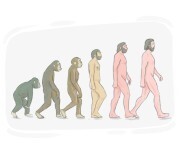
to evolve
to evolve
[Verb]

(biology) to change gradually and over generations into forms that are better adapted to the environment and fitter to survive

Ex: Over millions of years, horses have evolved from small, multi-toed ancestors to the single-toed, large-bodied animals we see today. 
Close
Sign in
to decode
to decode
[Verb]

to figure out or understand something that is confusing or difficult to understand
Ex: It took me a while to decode the complex scientific article, but eventually, I understood the key concepts. 
Close
Sign in
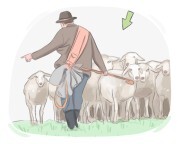
herd
herd
[noun]

a group of animals, such as cows, sheep, etc. that are from the same species, which move and feed together

Ex: The herd of cows grazed peacefully in the meadow. 
Close
Sign in
elaborated
elaborated
[Adjective]

made more detailed and comprehensive, often by adding additional information or complexity

Ex: The architect presented an elaborated design plan, including detailed blueprints and 3D models of the building. 
Close
Sign in
to depict
to depict
[Verb]

to describe a specific subject, scene, person, etc.
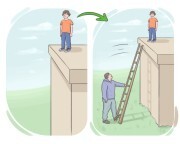
Ex: The artist’s work often depicts scenes from daily life in a vibrant style. 
Close
Sign in
to enable
to enable
[Verb]

to give someone or something the means or ability to do something

Ex: Technology enables us to communicate instantly across the globe. 
Close
Sign in
development

(biology) the natural process of an organism growing and changing from a simple form to a more complex one

Ex: The development of a butterfly from a caterpillar happens through several stages. 
Close
Sign in
intellectual
intellectual
[Adjective]

relating to or involving the use of reasoning and understanding capacity
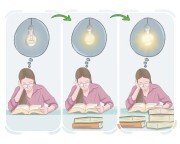
Ex: She enjoys engaging in intellectual debates with her colleagues. 
Close
Sign in
affective
affective
[Adjective]

characterized by emotion

Close
Sign in
to internalize

to incorporate or integrate information, beliefs, or values into one's own understanding or mindset

Ex: As part of the training program, employees were encouraged to internalize the company's core values to create a positive work environment. 
Close
Sign in
analogical
analogical
[Adjective]

expressing, composed of, or based on an analogy

Close
Sign in
reasoning
reasoning
[noun]

the act of rational and logical thinking about something

Ex: The scientist's reasoning behind the experiment was sound, leading to groundbreaking results. 
Close
Sign in
inference
inference
[noun]

a conclusion one reaches from the existing evidence or known facts

Ex: The detective made a crucial inference about the suspect's alibi based on the new evidence. 
Close
Sign in
perspective

a specific manner of considering something

Ex: From a historical perspective, the Renaissance marked a period of great cultural advancement. 
Close
Sign in
empathy
empathy
[noun]

the ability to understand and share the feelings of another person

Ex: She showed great empathy toward her friend during the difficult time. 
Close
Sign in
critical
critical
[Adjective]

providing knowledgeable judgments and opinions about the positive and negative aspects of something

Ex: The critical analysis of the data revealed important trends and patterns. 
Close
Sign in
generation

the process of causing something to exist or appear

Ex: The invention led to the generation of new opportunities. 
Close
Sign in
insight
insight
[noun]

a penetrating and profound understanding that goes beyond surface-level observations or knowledge

Ex: Years of study and contemplation yielded profound insights into the nature of existence. 
Close
Sign in
to surface

to become apparent or come into view, often after being hidden or unnoticed
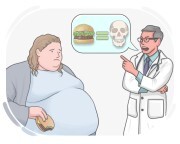
Ex: Despite trying to hide his feelings, a flicker of sadness surfaced in his eyes. 
Close
Sign in
to caution

to warn someone of something that could be difficult or dangerous

Ex: The doctor cautioned the patient about the potential side effects of the medication. 
Close
Sign in
based
based
[Adjective]

indicating the main part, material, or feature of something

Ex: The restaurant serves many rice-based dishes. 
Close
Sign in
mode
mode
[noun]

a particular method or way in which something is done or occurs

Ex: The system has a manual mode for advanced users. 
Close
Sign in
binary
binary
[Adjective]

pertaining to or involving of two distinct elements or parts

Ex: Binary thinking can oversimplify complex issues by reducing them to two opposing positions. 
Close
Sign in
print
print
[noun]

the text or type that appears in books, newspapers, or other printed material

Ex: The print in this edition is unusually small. 
Close
Sign in
versus
versus
[preposition]

used to compare or to show contrast between two choices, decisions, etc.

Ex: Cats versus dogs: which pet is more popular in the world? 
Close
Sign in
innovation

the act or process of introducing something new

Ex: The innovation of online banking changed how people manage money. 
Close
Sign in
scholar
scholar
[noun]

someone who has a lot of knowledge about a particular subject, especially in the humanities
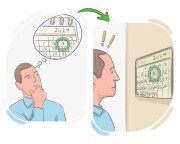
Ex: The conference featured a renowned scholar who spoke about ancient Greek philosophy. 
Close
Sign in
to err
to err
[Verb]

to be at fault or make mistakes, especially in one's thinking, judgment, or actions

Ex: While erring occasionally is forgivable, persistent or consequential erring may require accountability. 
Close
Sign in
to disrupt

to cause disorder or disturbance in something that was previously orderly or calm

Ex: The loud noise from the construction site disrupted their afternoon nap. 
Close
Sign in
to diminish

to lessen the perceived value, significance, or importance of someone or something

Ex: The company's unethical practices have diminished its reputation in the industry and among consumers. 
Close
Sign in
hinge
hinge
[noun]

an important or crucial factor that determines what happens next or how things will turn out
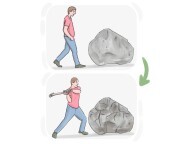
Ex: The story's plot hinges on a crucial event that changes everything for the protagonist. 
Close
Sign in
to confront

to face or deal with a problem or difficult situation directly

Ex: The manager decided to confront the team's productivity issues and implement new strategies. 
Close
Sign in
blueprint
blueprint
[noun]

a detailed plan or strategy designed to achieve a particular goal
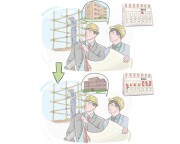
Ex: Her blueprint for success included daily goal-setting. 
Close
Sign in
to adapt
to adapt
[Verb]

to change something in a way that suits a new purpose or situation better
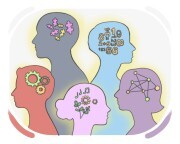
Ex: The company had to adapt its marketing strategy to reach a global audience. 
Close
Sign in
characteristic

a notable feature or quality that defines or describes something

Ex: Her kindness is a characteristic everyone notices. 
Close
Sign in
medium
medium
[noun]

a means that is used for the purpose of communicating or expressing something

Ex: Art is a powerful medium for expressing emotions. 
Close
Sign in
dominant
dominant
[Adjective]

having superiority in power, influence, or importance
Ex: The lion is the dominant predator in its ecosystem, ruling over other animals. 
Close
Sign in
to allocate

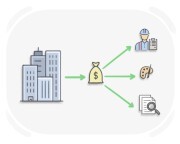
to distribute or assign resources, funds, or tasks for a particular purpose

Ex: The manager decided to allocate more budget to marketing for increased brand visibility. 
Close
Sign in
demanding
demanding
[Adjective]

(of a task) needing great effort, skill, etc.

Ex: His job as a project manager is demanding, requiring him to juggle multiple tasks and deadlines. 
Close
Sign in
deep
deep
[Adjective]

complex and challenging to fully comprehend
Ex: The philosopher's lecture was filled with deep concepts that left the audience pondering. 
Close
Sign in
educator
educator
[noun]

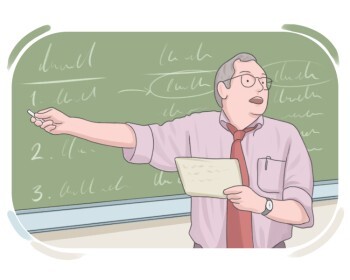
someone whose job is to teach people

Ex: As an educator, she believes in fostering creativity and critical thinking in her students. 
Close
Sign in
humanities

studies that deal with people and their behavior such as language, philosophy, history, etc.
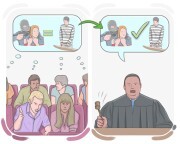
Ex: She decided to major in humanities to explore her interests in literature, history, and philosophy. 
Close
Sign in
to bear out

to confirm a statement or claim by providing evidence
Ex: The data bears out the validity of the hypothesis. 
Close
Sign in
actively
actively
[Adverb]

in a way that involves effort and participation rather than being passive

Ex: The company is actively hiring new staff in all departments. 
Close
Sign in
dense
dense
[Adjective]

(of a text) hard to understand due to complexity or being packed with ideas
Ex: The book was so dense that I had to read it twice. 
Close
Sign in
to concern

to cause someone to worry

Ex: The decline in his health concerned his family, prompting them to seek medical advice. 
Close
Sign in
cognitive
cognitive
[Adjective]

referring to mental processes involved in understanding, thinking, and remembering
Ex: Cognitive therapy helps individuals recognize and change negative thought patterns. 
Close
Sign in
inability
inability
[noun]

lack of ability (especially mental ability) to do something

Close
Sign in
sufficient
sufficient
[Adjective]

having enough of something to meet a particular need or requirement
Ex: He had saved a sufficient amount of money to purchase the new computer. 
Close
Sign in
complexity

the quality of being intricate and compounded

Close
Sign in
troubling
troubling
[Adjective]

making one feel worried, upset, or uneasy about something

Ex: The troubling news of the increase in crime rates alarmed the community. 
Close
Sign in
downstream
downstream
[Adjective]

happening later in a process or sequence, often with an impact on subsequent stages

Ex: The downstream effects of the policy were not immediately clear. 
Close
Sign in
comprehension

the capacity to understand something

Ex: His comprehension of the complex theory impressed the professor. 
Close
Sign in
material
material
[noun]

data and information that can be gathered to form a research

Ex: The scientist compiled all relevant material for her groundbreaking study. 
Close
Sign in
game-changing
game-changing
[Adjective]

having a big effect that changes the usual way something works or is done

Ex: The new drug is a game-changing treatment for the disease. 
Close
Sign in
flotilla
flotilla
[noun]

a large group or collection of things

Ex: She had a flotilla of shopping bags in her hands. 
Close
Sign in
oriented
oriented
[Adjective]

adjusted or located in relation to surroundings or circumstances; sometimes used in combination

Close
Sign in
circuit
circuit
[noun]

a pathway made of connected brain cells through which electrical and chemical signals move to help the brain do certain tasks

Ex: The brain's memory circuit helps store and recall information. 
Close
Sign in
LanGeek
Download LanGeek app