Cambridge IELTS 16 - Academic - Test 3 - Reading - Passage 2

Here you can find the vocabulary from Test 3 - Reading - Passage 2 in the Cambridge IELTS 16 - Academic coursebook, to help you prepare for your IELTS exam.

review-disable

review

flashcard-disable

flashcard

spelling-disable

spelling

quiz-disable

quiz

start-learning
Cambridge IELTS 16 - Academic
artifact [noun]

a man-made object, tool, weapon, etc. that was created in the past and holds historical or cultural significance
Ex: Each artifact in the exhibit told a story about the civilization that created it .
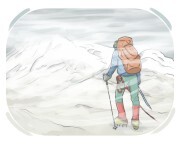
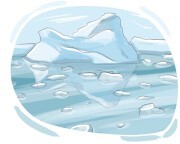
glacier [noun]

a large mass of ice that forms over long periods of time, especially in polar regions or high mountains
Ex: Mountaineers face numerous challenges when attempting to traverse icy crevasses on glaciers .

line marking the upper limit of tree growth in mountains or northern latitudes

to decrease in size or volume

Ex: As the temperature dropped , the lake 's surface began to freeze , causing the water level to shrink .

to completely stop existing or being found

Ex: Many ancient civilizations have vanished without a trace .
trader [noun]

someone whose job is selling or buying shares, goods, or currencies

Ex: She started her career as a bond trader before transitioning to equity trading .
insight [noun]

a penetrating and profound understanding that goes beyond surface-level observations or knowledge
Ex: Reflecting on past experiences provided valuable insight into behavior and motivations .
textile [noun]

any type of knitted, felted or woven cloth
Ex: He imported fine silk textiles from Asia .
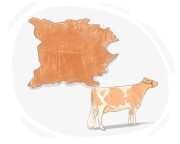
hide [noun]

the skin of an animal, especially a large animal, either raw or treated

relatively [adverb]

to a specific degree, particularly when compared to other similar things

Ex: The cost of living here is relatively low .

a tiny living organism that can only be seen under a microscope, including bacteria, viruses, fungi, and protozoa

Ex: Under the microscope , the microorganism appeared to be moving rapidly .
decay [noun]

the decomposition or rotting of organic matter
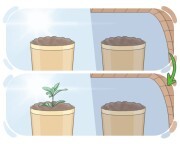
Ex: Leaves undergo decay on the forest floor .
to tend [verb]

to be likely to develop or occur in a certain way because that is the usual pattern
Ex: Historical patterns suggest that economic downturns tend to lead to increased unemployment .

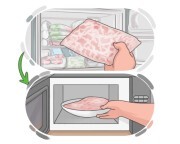
to gradually become unfrozen after being taken out of the freezer

Ex:

the process of something becoming worse, weaker, or damaged, especially in quality, condition, or value
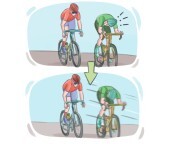
Ex: Air pollution leads to the degradation of buildings over time .
swiftly [adverb]

in a quick or immediate way

Ex: The wind blew swiftly through the tall grass .

to work as fast as possible to get something done within a very limited time
Ex: She will be racing against time to complete the marathon within the cutoff .
fragile [adjective]

easily damaged or broken

Ex: The fragile glass vase shattered when it fell to the ground .
windblown [adjective]

appearing untidy because of the wind

to reveal, uncover, or make visible something that was hidden or covered

Ex: The construction workers removed the old plaster to expose the original brickwork of the historic building .
approach [noun]

a way of doing something or dealing with a problem

Ex: His cautious approach to investing saved him from major losses .

to take a closer look at something, especially thoroughly in order to investigate
Ex:
patch [noun]

a small plot of land that is used for growing a particular type of crops or plants

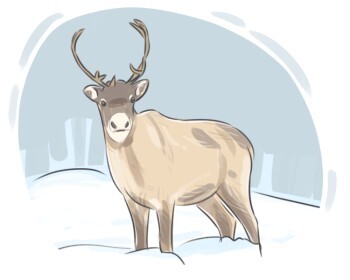
reindeer [noun]

a type of deer with large antlers in both sexes, mainly living in cold regions
Ex: In Lapland , reindeer herding is a traditional way of life , passed down through generations .

to come together in a group, often for a specific purpose or activity

Ex: The students will congregate in the auditorium for the assembly .

to navigate through a complex or narrow space by avoiding obstacles

Ex: The gymnast threaded through the balance beam routine .
pass [noun]

a natural route or gap through a mountain range, lower than the surrounding peaks, allowing easier travel

Ex: Traders used the high-altitude pass to reach distant markets .

an area where a group of families or people live together, often in a newly established community
Ex: This settlement has a rich history dating back to the 1800s .
stationary [adjective]

not moving or changing position

Ex: The floodwaters surrounded the stationary house , leaving it isolated .
amid [preposition]

in the middle of, surrounded by

Ex: The children played happily amid the colorful flowers in the garden .
weathered [adjective]

worn, eroded, or changed in appearance due to exposure to weather elements, such as wind, rain, or sun
Ex: The weathered paint on the old barn gave it a nostalgic appearance .
frost [noun]

a weather condition during which the temperature drops below the freezing point and thin layers of ice are formed on the surfaces

Ex: The frost caused the farmer to cover his crops to prevent damage .
boulder [noun]

a large rock, usually one that has been shaped by natural forces such as water or ice

Ex: Children scrambled over the boulder , pretending it was a castle wall in their imaginary kingdom .
bedrock [noun]

solid rock beneath surface materials, forming the Earth's crust foundation
Ex: The river 's erosion exposed the underlying bedrock , creating a scenic landscape of cliffs and rock formations .
rewarding [adjective]

(of an activity) making one feel satisfied by giving one a desirable outcome
Ex: Completing a challenging project can be rewarding , as it demonstrates one 's capabilities and skills .
warfare [noun]

involvement in war, particularly using certain methods or weapons

Ex: Guerrilla warfare tactics were employed by the resistance to effectively harass and undermine the occupying forces .
to run [verb]

to continue over a certain period of time

Ex:

a secular designation used to represent dates in the Gregorian calendar before the traditional reference point of the birth of Jesus Christ
to make a connection between someone or something and another in the mind
Ex: Some students associate the library with a quiet and focused environment for studying .

to move across or through in a specified direction

Ex: Navigating the bustling city , pedestrians often need to traverse crowded streets to reach their destinations .

a method used by scientists to determine the age of organic materials by measuring the amount of carbon-14 they contain
Ex: Radiocarbon dating confirmed the authenticity of the manuscript by dating the parchment it was written on .

to show, point out, or suggest the existence, presence, or nature of something

Ex: The arrow on the map indicates the next turn .
daunting [adjective]

intimidating, challenging, or overwhelming in a way that creates a sense of fear or unease

Ex:
terrain [noun]

an area of land, particularly in reference to its physical or natural features
Ex: Urban planners took into account the natural terrain features when designing the city 's infrastructure , incorporating green spaces and waterways into their plans .

to think that something is true without having proof or evidence

Ex: Yesterday , he mistakenly assumed that the meeting was canceled .

the height or distance of an object or geographical feature above a specified reference point, typically measured from sea level

Ex: The town 's elevation of 1,200 meters meant cooler temperatures and stunning views .
Common Era [adverb]

used with a date to refer to things happened or existed after the birth of Christ
Ex:

to undertake a risky or daring journey or course of action

Ex: He ventured across the country to start a new life in an unfamiliar city .
remarkably [adverb]

in a way that is unusually impressive, effective, or surprising

Ex: He handled the complex negotiations remarkably .

to lead one to believe or consider that something exists or is true
Ex: The empty parking spaces in front of the store suggested that it was closed for the day .

to improve something by adding something to it
Ex: He supplemented his income by taking on a part-time job .
harvest [noun]

the amount of produce gathered from crops during one growing season

Ex: The vineyard produced a rich harvest of grapes .
turn [noun]

an unforeseen development

to find or get back something that was lost or stolen
Ex: They managed to recover the missing documents from the office after a search .

to become something greater in quantity, importance, or size

Ex: With technological advancements , the capabilities of smartphones expanded .

an increase in the amount, size, importance, or degree of something

Ex: The organization announced plans for the expansion of its services to underserved communities .
export [noun]

commodities, goods, or services sold and sent to another country
Ex: The government encourages exports to boost the economy .
booming [adjective]

characterized by growth, expansion, or prosperity in an industry, economy, or market

Ex: Their booming sales in the last quarter exceeded all expectations .

to resist or defend against an attack or threat, whether physical or metaphorical
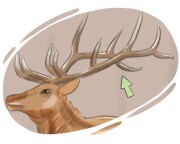
Ex: The brave soldier managed to fight off the enemy forces despite being outnumbered .
antler [noun]

any of the pair of branched horns that grow annually on the head of an adult animal, typically a male one, from the deer family

the era in human history from which we have no written record

remote [adjective]

(of a place) isolated and difficult to access
Ex: She enjoyed the quiet of a remote beach , where few tourists ever visited .
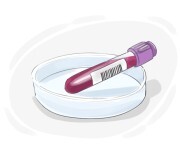
sample [noun]

a small amount of a substance taken from a larger amount used for scientific analysis or therapeutic experiment

Ex: The doctor requested a urine sample to check for signs of infection .
gap [noun]

a pause or break that interrupts something from continuing smoothly
Ex: Technical issues caused a gap in the broadcast , leaving viewers confused .

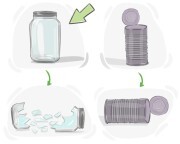
to break or lose structure and unity over time
Ex: Extreme heat can cause certain materials to disintegrate , especially under stress .

to take something out from something else, particularly when it is not easy to do

Ex: The archaeologists carefully excavated the site to extract ancient artifacts .

to move back or withdraw to a safer or more comfortable place, especially to avoid something unpleasant

Ex: Birds often retreat to their nests during heavy rain .

a journey carefully organized for a specific purpose, such as exploration or research

Ex: Equipment was loaded for the scientific expedition .
case [noun]

an example of a certain kind of situation

Ex: This is a rare case of a disease that usually affects children .
primarily [adverb]

in the first place

Ex: The event is primarily aimed at raising awareness about climate change .
reach [noun]

a long, unbroken area of land or water that goes far in one direction

Ex: The wide reach of the valley looked green after the rain .