
Certeza y Posibilidad - Increíble
Sumérgete en los modismos ingleses sobre lo increíble, como 'vivir para ver el día' y 'quedarse sin palabras'.
Revisión
Tarjetas de memoria
Cuestionario
![to {not} [believe] {one's} (eyes|ears)](https://cdn.langeek.co/photo/46165/thumb/350?type=jpeg "to {not} [believe] {one's} (eyes|ears)")
to find it difficult to believe what one has seen or heard

quedarse de piedra, quedarse boquiabierto
Me quedé de piedra al ver que la vieja casa se había convertido en un hotel de lujo.
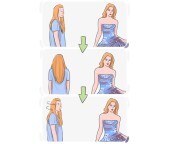
the act of quickly looking at something or someone twice, usually due to surprise, confusion, or disbelief
mirar dos veces, volver a mirar sorprendido
El precio era tan bajo que tuve que mirar dos veces.
![to [hold|hang] on to {one's} [hat]](https://cdn.langeek.co/photo/47376/thumb/350?type=jpeg "to [hold|hang] on to {one's} [hat]")
to prepare oneself for an event or situation that is expected to be exciting, intense, or unpredictable
prepárate para algo fuerte, se va a poner intenso
Si el primer episodio te pareció dramático, prepárate para algo fuerte.
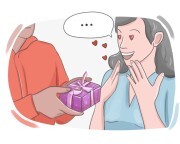
temporarily unable to think of what to say or how to express oneself, often due to shock, surprise, or intense emotion
sin palabras, quedarse sin palabras
Cuando me ofrecieron el trabajo, me quedé sin palabras.
![to [raise] (some|a few|many|) eyebrows](https://cdn.langeek.co/photo/44836/thumb/350?type=jpeg "to [raise] (some|a few|many|) eyebrows")
to cause surprise, curiosity, or mild shock among people due to something unconventional, unexpected, or controversial
levantar cejas, causar sorpresa
Su pregunta inusualmente directa levantó cejas en la reunión.
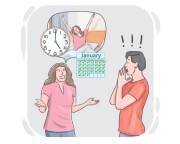
news or an event that causes a great surprise
sorpresa inesperada, golpe inesperado
El hundimiento de la empresa llegó de forma totalmente inesperada.
to survive or endure until a particular moment or event occurs, especially one that was uncertain, significant, or eagerly anticipated
vivir para verlo, llegar a ver ese día
Muchos aficionados dudaban que llegaran a ver el día en que el equipo ganara otro título.
![to [drop] {one's} teeth](https://cdn.langeek.co/photo/45208/thumb/350?type=jpeg "to [drop] {one's} teeth")
to be extremely surprised or shocked, causing one's mouth to open wide in astonishment
quedarse con la boca abierta, quedarse de piedra
El público se quedó con la boca abierta cuando el cantante desconocido alcanzó la nota alta.
![to [knock] {sb} down with a feather](https://cdn.langeek.co/photo/46239/thumb/350?type=jpeg "to [knock] {sb} down with a feather")
to cause a person to become very shocked, amazed, or confused
dejar de piedra, dejar boquiabierto
Se quedó de piedra al enterarse de que su vecino callado era un actor famoso.
![words [fail] {sb}](https://cdn.langeek.co/photo/47434/thumb/350?type=jpeg "words [fail] {sb}")
used to say one is unable to say anything due to being extremely surprised, angry, or shocked
faltarle las palabras, no saber qué decir
Su amabilidad fue tan inesperada que me quedé sin palabras.
![to [stop] (dead|right|) in {one's} tracks](https://cdn.langeek.co/photo/46310/thumb/350?type=jpeg "to [stop] (dead|right|) in {one's} tracks")
to suddenly stop moving or doing something due to being extremely surprised, frightened, or impressed
quedarse clavado, pararse en seco
Se quedó clavado cuando vio su nombre en la lista de ganadores.

(of a particular idea, statement, or situation) challenging to accept as true
