pattern

Vocabolario per IELTS Academic (Punteggio 5) - Legge

Qui, imparerai alcune parole inglesi relative alla Legge che sono necessarie per l'esame accademico IELTS di base.

Revisione

Flashcard

forme

Ortografia

Quiz

Inizia a imparare
Vocabulary for IELTS Academic (Band 5)
law
law
[sostantivo]

a country's rules that all of its citizens are required to obey

legge

legge

Ex: It's important to know your rights under the law. 
Chiudi
Accedi
lawyer
lawyer
[sostantivo]

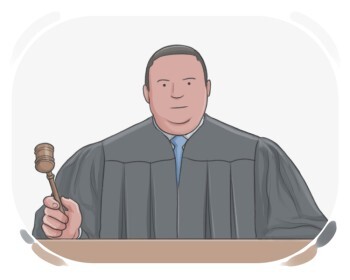
a person who practices or studies law, advises people about the law or represents them in court

avvocato
avvocato

Ex: During the consultation, the lawyer explained the legal process and what steps she needed to take next. 
Chiudi
Accedi
judge
judge
[sostantivo]

the official in charge of a court who decides on legal matters

giudice

giudice

Ex: She retired after serving as a judge for over thirty years. 
Chiudi
Accedi
witness
witness
[sostantivo]

a person who sees an event, especially a criminal scene

testimonianza

testimonianza

Ex: The only witness to the crime was hesitant to come forward out of fear for their safety. 
Chiudi
Accedi
testimony
testimony
[sostantivo]

a formal statement saying something is true, particularly made by a witness in court

testimonianza

testimonianza

Ex: The defense attorney cross-examined the witness to challenge the credibility of their testimony. 
Chiudi
Accedi
evidence
evidence
[sostantivo]

a statement, document, or object that is used in a law court for establishing facts

prova

prova

Ex: The evidence was overwhelming, and the jury quickly reached a verdict, convicting the defendant of all charges. 
Chiudi
Accedi
oath
oath
[sostantivo]

a serious promise or statement made by someone to tell the truth, often with the belief that breaking the promise will have serious consequences

giuramento, promessa solenne

giuramento, promessa solenne

Ex: Breaking an oath can lead to severe consequences and loss of trust. 

Infrangere un giuramento può portare a gravi conseguenze e perdita di fiducia.

Chiudi
Accedi
right
right
[sostantivo]

a thing that someone is legally, officially, or morally allowed to do or have

diritto

diritto

Ex: Human rights include the right to life, liberty, and security. 
Chiudi
Accedi
duty
duty
[sostantivo]

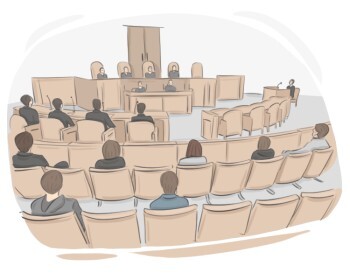
an obligatory task that must be done as one's job

dovere
dovere

Ex: They emphasized the importance of performing one's duty with integrity. 
Chiudi
Accedi
trial
trial
[sostantivo]

a legal process where a judge and jury examine evidence in court to decide if the accused is guilty

processo

processo

Ex: The lawyer prepared extensively for the trial, gathering all necessary documents and witness statements. 
Chiudi
Accedi
jury
jury
[sostantivo]

a group of people chosen to hear the evidence in a court case and reach a verdict

giuria

giuria

Ex: The judge instructed the jury to consider only the evidence presented in court. 
Chiudi
Accedi
justice
justice
[sostantivo]

the exercise of judgment in determining rights, duties, or assigning rewards and punishments

giustizia

giustizia

Ex: Justice requires evidence-based decisions. 
Chiudi
Accedi
sentence
sentence
[sostantivo]

the punishment that the court assigned for a guilty person

sentenza

sentenza

Ex: He received a ten-year sentence for robbery. 
Chiudi
Accedi
bill
bill
[sostantivo]

a new law that is proposed to a parliament to be discussed about

disegno di legge

disegno di legge

Ex: The Senate voted on the bill yesterday. 
Chiudi
Accedi
jurisdiction
jurisdiction
[sostantivo]

the legal authority of a court, government, or official organization to make decisions and judgments

giurisdizione

giurisdizione

Ex: Local courts have jurisdiction in most cases of this kind. 
Chiudi
Accedi
will
will
[sostantivo]

a legal document that a person writes to decide what happens to their belongings after their death

testamento, volontà testamentaria

testamento, volontà testamentaria

Ex: The will stated that all his savings would go to charity. 
Chiudi
Accedi
petition
petition
[sostantivo]

a document signed by many people formally requesting action from a person or organization in authority

petizione

petizione

Ex: The online petition collected thousands of signatures within a week. 
Chiudi
Accedi
plea
plea
[sostantivo]

a formal answer given in court to a criminal charge, stating whether the accused is guilty or not guilty

supplica

supplica

Ex: The court accepted her plea and scheduled sentencing for the following month. 
Chiudi
Accedi
to sentence

to officially state the punishment of someone found guilty in a court of law

condannare

condannare

Ex: After the trial, the judge carefully sentenced the convicted murderer. 
Chiudi
Accedi
to charge
to charge
[Verbo]

to officially accuse someone of an offense

accusare

accusare

Ex: Right now, the legal team is charging individuals involved in the corruption scandal. 
Chiudi
Accedi
to condemn
to condemn
[Verbo]

to officially sentence someone to a particular punishment

condannare

condannare

Ex: The defendant was condemned to pay a substantial fine. 
Chiudi
Accedi
to violate
to violate
[Verbo]

to disobey or break a regulation, an agreement, etc.

violare

violare

Ex: The organization was fined for violating data protection laws. 

L'organizzazione è stata multata per violare le leggi sulla protezione dei dati.

Chiudi
Accedi
to enforce
to enforce
[Verbo]

to make sure that a law, rule, or regulation is obeyed

applicare

applicare

Ex: The city has struggled to enforce the ban on illegal parking. 
Chiudi
Accedi
to reform
to reform
[Verbo]

to make a society, law, system, or organization better or more effective by making many changes to it

riformare

riformare

Ex: The school board is considering reforming the grading system to better reflect student performance. 
Chiudi
Accedi
to interrogate

to question someone in an aggressive way for a long time in order to get information

interrogare

interrogare

Ex: The detective decided to interrogate the suspect to uncover details about the crime. 

Il detective decise di interrogare il sospettato per scoprire dettagli sul crimine.

Chiudi
Accedi
to convict
to convict
[Verbo]

to officially find someone guilty of a crime in a court of law

condannare

condannare

Ex: She has been convicted twice for driving under the influence. 
Chiudi
Accedi
counsel
counsel
[sostantivo]

a lawyer who advises and represents someone in a legal case

avvocato,  difensore

avvocato, difensore

Ex: His counsel argued that the evidence had been obtained unlawfully. 
Chiudi
Accedi
redress
redress
[sostantivo]

a sum of money paid to someone to make up for the damage or harm done to them

risarcimento, indennizzo

risarcimento, indennizzo

Ex: The insurance company offered redress to cover the cost of the stolen goods. 

La compagnia di assicurazione ha offerto risarcimento per coprire il costo dei beni rubati.
Chiudi
Accedi
to abolish
to abolish
[Verbo]

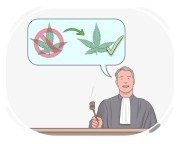
to officially put an end to a law, system, practice, or institution

abolire
abolire

Ex: The company abolished several unnecessary procedures. 
Chiudi
Accedi
to legalize

to permit something by law, granting people the right or freedom to do it

legalizzare, permettersi per legge

legalizzare, permettersi per legge

Ex: Some countries are looking to legalize the use of cryptocurrency for everyday transactions. 

Alcuni paesi stanno valutando di legalizzare l'uso delle criptovalute per le transazioni quotidiane.

Chiudi
Accedi
LanGeek
Scarica l'app LanGeek